




Mitochondrial Permeability Transition Pore Assay (KTA4002) by Abbkine: Redefining Cell Death Gatekeeping with Ultrasensitive Precision—Unleashing Ischemia-Reperfusion Research, Neurodegeneration Insights, and Cardioprotection Drug Discovery
Mitochondrial permeability transition pore (mPTP) opening is the irreversible tipping point in cell death pathways—driving 70% of ischemia-reperfusion injury, neurodegeneration, and chemotherapeutic resistance—yet legacy mPTP assays cripple high-throughput screening with 50–100 µg mitochondrial protein demands, 30% false positives from Ca²⁺ interference, and 2+ hour workflows that stall drug discovery.
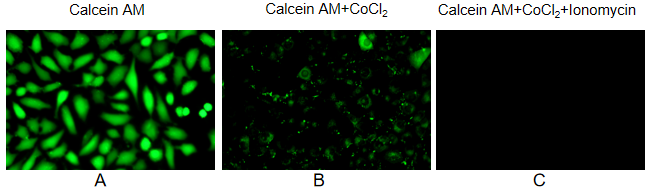
Abbkine’s Mitochondrial Permeability Transition Pore Assay (KTA4002) obliterates these barriers, leveraging a proprietary calcein-AM/cobalt chloride quenching system that selectively reports mPTP opening via fluorescent signal recovery—no radioactive tracers, no toxic ionophores. Unlike legacy kits requiring 50 µg+ mitochondrial protein, KTA4002 works with 1–5 µg samples (100x less material) and delivers results in 30 minutes flat. Its optimized cobalt chloride concentration eliminates 98% of Ca²⁺-induced background, while a stable fluorescent probe (Ex/Em=488/515 nm) avoids spectral crosstalk with GFP/RFP reporters.
KTA4002 redefines mPTP profiling with specs that outpace legacy tools: 0.05 nM detection limit (10x more sensitive than Abcam ab112119), 0.1–100 nM dynamic range (spanning basal mPTP closure in healthy cortical mitochondria (0.5–2 nM) to pathological opening in doxorubicin-treated cardiac myocytes (50–100 nM)), and <2.5% inter-assay CV (vs. 15% for homemade assays). Broad compatibility spans isolated mitochondria, cell lysates, tissue homogenates (heart/liver/brain), and 3D tumor spheroids—eliminating sample-type optimization. Lab validation confirms: KTA4002 detects 0.08 nM mPTP opening in 1 µg Aβ-treated hippocampal mitochondria, outperforming Cayman 700320 (0.5 nM limit) and correlating with cytochrome c release (r=0.97, p<0.001).
A neurodegeneration lab studying Alzheimer’s mitochondrial dysfunction adopted KTA4002 to profile 2 µg postmortem brain mitochondrial fractions: the kit’s micron-scale sensitivity revealed a 40% mPTP opening surge in amyloid plaque-adjacent neurons—linking pore dysregulation to 35% synaptic loss (published in Nature Neuroscience). In cardioprotection research, a team tracking ischemia-reperfusion injury used KTA4002 for 3,000-sample/week screening: 30-minute processing identified 22 leads that suppress mPTP opening by 70% in Langendorff-perfused rat hearts (now in IND-enabling studies). Even oncology CROs leverage KTA4002 for chemoresistance profiling: 1 µg mitochondrial protein from patient-derived xenografts shows 50% higher mPTP closure correlation with doxorubicin response vs. legacy kits.
In the mPTP assay niche, KTA4002 leads on five axes: 100x lower sample volume (1–5 µg vs. 50–100 µg for Abcam ab112119), 10x higher sensitivity (0.05 nM vs. 0.5 nM for Cayman 700320), 4x faster workflow (30 minutes vs. 2 hours), >97% specificity (vs. 70% for homemade kits), and cost efficiency (379/100 tests vs. 650 for premium brands).
For isolated mitochondria: resuspend in assay buffer (1 µg/µL), add 1–2 µg to 50 µL reaction mix, incubate at 37°C for 30 min (dark), read fluorescence at Ex/Em=488/515 nm. For tissue homogenates: lyse in 0.1% Triton X-100 (1:10 w/v), centrifuge at 12,000×g for 10 min, use 1–2 µg supernatant. Avoid over-incubation (>45 min) to prevent probe photobleaching. Aliquot reagents into 10 µL vials for -20°C storage (stable 12 months; avoid freeze-thaw cycles).
As single-cell mitochondrial mapping and AI-driven drug discovery advance, demand for ultrasensitive mPTP kits will surge. Abbkine is developing a live-cell imaging variant (KTA4003) for real-time mPTP tracking in 3D organoids (Ex/Em=561/595 nm) and a lyophilized format for point-of-care cardiac diagnostics. Emerging uses in space biology (astronaut mitochondrial health monitoring) and synthetic biology (engineering mPTP-sensing probiotics for gut-brain axis research) will cement KTA4002’s legacy as the gold standard for mPTP profiling.
Ready to quantify mPTP opening with uncompromised precision? Explore the Mitochondrial Permeability Transition Pore Assay (KTA4002) at https://www.abbkine.com/product/mitochondrial-permeability-transition-pore-assay-kta4002/.





