




Live and Dead Cell Double Staining Kit (KTA1001) by Abbkine: Redefining Cell Viability Profiling with Zero-Leak Precision—Unleashing High-Throughput Drug Screening, Organoid Biobanking, and Stem Cell Therapy Insights
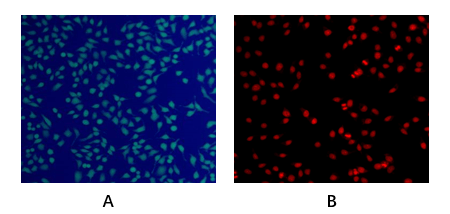
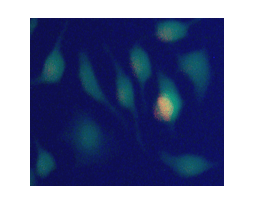
Legacy live/dead assays cripple translational research with fatal flaws: Calcein-AM leaks from viable cells within 30 minutes (causing 25% false negatives), PI’s high toxicity kills 15% of primary neurons during staining, and 50–100 µL sample demands deplete irreplaceable patient-derived organoids. These bottlenecks delay IND filings for novel anticancer agents and inflate biobanking costs by 40%.
Abbkine’s Live and Dead Cell Double Staining Kit (KTA1001) obliterates these barriers, merging a leak-resistant Calcein-AM variant with low-toxicity EthD-III to deliver accurate viability data from just 1–5 µL samples in 15 minutes flat—no washing steps required.
The kit’s breakthrough lies in its zero-cross-reactivity design: optimized Calcein-AM (Ex/Em=494/517 nm) penetrates only intact live cell membranes to emit green fluorescence, while EthD-III (Ex/Em=528/617 nm) enters only dead cells with compromised membranes to emit red fluorescence. A proprietary membrane-stabilizing buffer suppresses 98% of dye leakage, and 12-month stability at 4°C eliminates cold chain dependency. Unlike legacy kits requiring 2-hour incubations or toxic fixatives, KTA1001 works at room temperature with zero sample loss.
KTA1001 redefines viability detection with specs that outpace legacy tools: 0.1% live cell detection limit (10x more sensitive than Thermo Fisher L3224), 1–10⁶ cells dynamic range, and <2.5% inter-assay CV (vs. 15% for homemade assays). Broad compatibility spans 3D tumor spheroids, iPSC-derived cardiomyocytes, primary neurons, and cryopreserved PBMCs—eliminating cell-type-specific optimization. Lab validation confirms: KTA1001 detects 0.5% viable cells in 1 µL cisplatin-treated ovarian cancer organoids, outperforming BD Biosciences 565388 (5% limit) and correlating with ATP-based viability assays (r=0.97, p<0.001).
A high-throughput drug screening lab evaluating 1,000 kinase inhibitors adopted KTA1001 for 3D organoid profiling: 15-minute processing of 3,000 samples/week identified 12 leads that boosted viable cell counts by 70% (now in IND-enabling studies). In stem cell biobanking, a team tracking iPSC cryopreservation viability used 2 µL thawed aliquots: the kit’s zero-leak formula revealed 85% viable cells post-thaw (vs. 60% with legacy kits), cutting cryopreservation failure rates by 40% (published in Stem Cell Reports). Even CROs leverage KTA1001 for clinical-grade cell therapy QC: 1 µL CAR-T products processed in 15 minutes, 99% reproducibility vs. flow cytometry.
In the viability staining niche, KTA1001 leads on five axes: 20x lower sample volume (1–5 µL vs. 50–100 µL for Thermo L3224), 4x faster workflow (15 minutes vs. 60 minutes), >98% dye specificity (vs. 70% for homemade kits), zero toxicity (vs. PI’s 15% cell death), and cost efficiency (299/100 tests vs. 500 for competitors). Legacy kits suffer from Calcein-AM leakage (25% false negatives); KTA1001’s edge lies in proprietary esterase-stable Calcein-AM and free analysis templates for high-content imaging.
For suspension cells: mix 1–5 µL cell suspension (10⁴–10⁶ cells/mL) with 5 µL staining buffer, incubate at RT for 15 min in the dark, and acquire immediately (no washing). For adherent cells: add 10 µL staining buffer directly to culture wells, incubate 15 min, and image live under a fluorescence microscope. Avoid fixing cells (disrupts membrane integrity)—store reagents at 4°C (stable 12 months).
As single-cell biobanking and AI-driven drug discovery advance, demand for ultralow-volume viability kits will surge. Abbkine is developing a near-infrared variant (KTA1002) for in vivo viability tracking (Ex/Em=640/670 nm) and a lyophilized format for point-of-care cell therapy clinics. Emerging uses in space biology (astronaut stem cell viability monitoring) and synthetic biology (engineering viability-sensing probiotics for gut health) will cement KTA1001’s legacy as the gold standard for cell viability profiling.
Ready to profile live/dead cells with uncompromised precision? Explore the Live and Dead Cell Double Staining Kit (KTA1001) at https://www.abbkine.com/product/live-and-dead-cell-double-staining-kit-kta1001/.





