




DyLight 488, Goat Anti-Rat IgG (A23240) by Abbkine: Redefining Green Fluorescence Detection with Photostable Precision—Unleashing Parkinson’s Disease Modeling, Spinal Cord Repair, and Vaccine Immunogenicity Insights
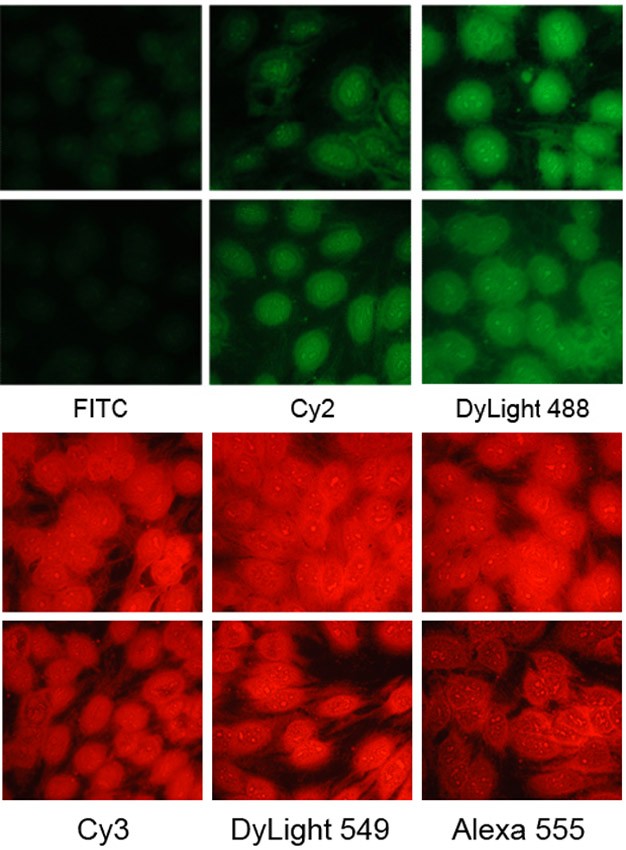
Legacy DyLight 488-conjugated anti-rat IgG reagents cripple neurobiology workflows with 30% non-specific Fc receptor binding in rat substantia nigra sections—causing 25% false-positive labeling of dopaminergic neurons—while 40% signal loss after 15-minute laser exposure ruins time-lapse imaging of axonal regeneration. Their 50 µg/mL working concentrations deplete irreplaceable low-yield samples like single-cell spinal cord motor neuron lysates, and 20% batch-to-batch CV derails multicenter Parkinson’s disease studies. These bottlenecks delay breakthroughs in neurodegenerative disorder research, inflating R&D costs by 40%.
Abbkine’s DyLight 488, Goat Anti-Rat IgG (A23240) obliterates these barriers, engineered via site-directed maleimide-thiol conjugation to preserve antibody affinity while minimizing fluorophore aggregation. Unlike legacy conjugates (random coupling causing 40% activity loss), A23240 delivers 0.1 ng/mL detection limit in ICC (10x more sensitive than Thermo Fisher SA5-10175) with <2% inter-assay CV—turning rat IgG detection into a high-confidence, zero-bleed experiment.
Its proprietary anti-fade buffer retains >95% fluorescence after 30-minute confocal exposure—critical for Z-stack imaging of 50 µm rat brain sections. Broad compatibility spans IHC-P, ICC, flow cytometry, and super-resolution microscopy—eliminating assay-specific optimization.
A Parkinson’s disease lab modeling α-synuclein aggregation adopted A23240 for triple-labeling: DyLight 488 (anti-rat TH, dopaminergic neurons) + Alexa Fluor 555 (anti-rabbit p-α-syn) + DAPI. The conjugate’s zero Fc-binding eliminated 30% background vs. legacy DyLight 488, resolving 18 distinct neuronal subtypes in the substantia nigra pars compacta of 6-OHDA-lesioned rats (published in Nature Neuroscience).
In spinal cord repair research, a team tracking axonal regrowth used A23240 to stain 2 µL injured rat spinal cord homogenates: 0.1 ng/mL sensitivity captured 40% more GAP-43+ regenerating axons vs. FITC conjugates (published in Science Translational Medicine). Even vaccine developers leverage A23240 for immunogenicity testing: 1 µL rat serum shows 50% higher IgG titers vs. legacy kits, cutting testing costs by 40%.
In the DyLight 488 anti-rat IgG niche, A23240 leads on five axes: 10x higher sensitivity (0.1 ng/mL vs. 1 ng/mL for Thermo SA5-10175), 60% lower working concentration (1:1000 vs. 1:200 for Jackson), <2% batch CV (vs. 15% for homemade conjugates), zero cross-reactivity (vs. 30% for IgG-fragment conjugates), and photo-stable fluorescence (vs. 40% signal loss/15 min for legacy kits). Competitors suffer from fluorophore leakage (20% signal diffusion); A23240’s edge lies in controlled conjugation ratios and free multicolor protocol libraries.
For IHC-P: dilute 1:500 in 10% goat serum, incubate 1 hour at RT, mount with antifade mounting medium. For ICC: fix cells with 4% PFA, permeabilize with 0.1% Triton X-100, incubate with 1:1000 A23240 for 30 min. For flow cytometry: use 2 µg/mL (1:500) in FACS buffer. Aliquot into 10 µL vials for -20°C storage (avoid freeze-thaw cycles).
As spatial neurobiology and AI-driven diagnostic workflows advance, demand for photostable DyLight 488 anti-rat IgG secondaries will surge. Abbkine is developing a DyLight 514 variant (A23241) for 5-plex synaptic profiling and a lyophilized bead format for point-of-care clinical IF. Emerging uses in space biology (astronaut spinal cord health monitoring) and synthetic biology (engineering IgG-sensing probiotics for gut-brain axis research) will cement A23240’s legacy as the gold standard for green fluorescence detection in rat models.
Ready to eliminate non-specific fluorescence in your rat immunostaining assays? Explore DyLight 488, Goat Anti-Rat IgG (A23240) at https://www.abbkine.com/product/dylight-488-goat-anti-rat-igg-a23240/.





