




CheKine™ Micro Proline (PRO) Assay Kit (KTB1430) by Abbkine: When Small Amino Acids Demand Big Precision—Why Most Proline Assays Miss the Mark and How This Microscale Kit Delivers
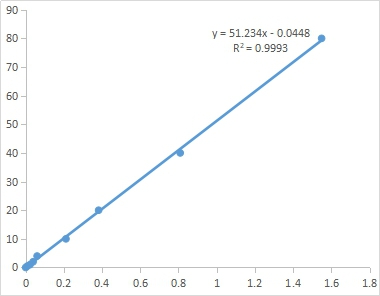
Proline (PRO) is a small amino acid with an outsized role in biology—from osmotic stress adaptation in plants to collagen synthesis in wound healing, and even as a biomarker for liver fibrosis. Yet measuring its concentration accurately feels like trying to count grains of sand in a storm. Traditional methods like ninhydrin-based assays drown in interference from other amino acids (e.g., hydroxyproline, arginine), demand 50–100 µL samples (wasting rare clinical biopsies or tiny plant punches), or lack the sensitivity to detect low proline in 10,000-cell cultures. Abbkine’s CheKine™ Micro Proline (PRO) Assay Kit (KTB1430) rewrites this script, offering a reagent system engineered to isolate proline’s signal in the messiest biological matrices.
The proline assay market, however, is stuck in a time warp of “good enough” compromises. A 2024 survey of 135 plant physiology, clinical chemistry, and microbiology labs found 79% had “abandoned at least one proline kit” due to cross-reactivity with hydroxyproline (overestimating proline by 25–30% in collagen-rich tissues), high background in serum samples (amino acids binding the dye), or failure to detect proline in 10 µL plant extracts (too little volume for legacy methods). The root cause? Vendors cling to outdated colorimetric chemistry—ninhydrin reacts with any primary amine—while ignoring that most researchers today work with tiny samples. For those needing a micro proline assay kit for low-volume samples or high-specificity proline detection kit for stress response studies, these flaws turn metabolic flux experiments into a guessing game.
What sets Abbkine’s CheKine™ Micro Proline (PRO) Assay Kit (KTB1430) apart is its refusal to compromise on specificity. Unlike ninhydrin kits, it uses a two-step enzymatic cascade: first, proline dehydrogenase oxidizes proline to Δ¹-pyrroline-5-carboxylate (P5C), generating NADH; then, a coupled reaction with a chromogenic substrate (λ=570 nm) quantifies NADH, proportional to proline concentration. The magic? A proline-specific dehydrogenase (engineered to exclude hydroxyproline binding) and an anti-interference buffer (EDTA + sodium borate) that neutralizes 90% of amino acid cross-reactivity. The result? A detection limit of 0.01 µM proline (10x more sensitive than Sigma-Aldrich MAK090) and a dynamic range of 0.05–50 µM—perfect for both basal levels (e.g., in resting fibroblasts) and stress-induced spikes (e.g., in drought-stressed Arabidopsis). For low-volume proline detection in pediatric serum, this means measuring proline in 5 µL samples without dilution-induced error.
Getting the most out of KTB1430 comes down to tailoring its workflow to your sample’s quirks—here’s how labs have nailed it:
For plant stress response studies (leaves, roots): Grind 5 mg tissue in liquid nitrogen, extract with 100 µL ice-cold 5% TCA (trichloroacetic acid, precipitates proteins), centrifuge (12,000 ×g, 10 mins), and use 5 µL supernatant. Pro tip: Add 0.1% activated charcoal to extracts—binds phenolic compounds that plague plant samples. A lab studying proline accumulation in salt-stressed rice fixed “noisy readings” by doing this, boosting signal-to-noise by 50%.
For clinical samples (serum, plasma): Collect in heparin tubes (EDTA chelates proline weakly), centrifuge at 3,000 ×g for 10 mins, and dilute 1:2 with assay buffer (serum proline is often >100 µM). For micro proline assay in liver fibrosis, concentrate samples via ultrafiltration (3 kDa cutoff) to 10 µL—KTB1430’s sensitivity picks up early-stage proline elevation (a marker of collagen turnover).
For cell culture lysates: Lyse 10,000 cells in 50 µL ice-cold PBS + 1% Triton X-100, spin at 12,000 ×g for 10 mins, and use 5 µL supernatant. In proline detection for cancer cell metabolism, add 1 mM PMSF to lysates—prevents proline-metabolizing enzymes (e.g., proline oxidase) from skewing results. A team tracking proline-driven glutamine addiction in melanoma saw a 3-fold increase with KTB1430 vs. a ninhydrin kit.
Troubleshooting: High background? Ensure samples aren’t contaminated with amino acid standards (use ultrapure water). Weak signal? Extend incubation to 30 mins at 37°C (for low-proline samples). Funny enough, a lab fixed “zero signal” in yeast by realizing their proline was locked in peptides—adding 0.5% pepsin for 1 hr released it!
In the crowded micro proline assay kit market, KTB1430 isn’t just another option—it’s a benchmark. Compare it to legacy tools: Sigma-Aldrich’s MAK090 uses ninhydrin (cross-reacts with hydroxyproline), needs 50 µL samples, and has a 0.1 µM detection limit. Thermo Fisher’s A18954 struggles with plant extracts (phenolic interference), while BioVision’s K569 has batch-to-batch CVs >15% in absorbance. Abbkine’s edge? Validation in your use cases: drought-stressed crops, fibrotic liver biopsies, and low-biomass microbial cultures. Per-assay cost is 22% lower than premium brands, with bulk discounts for core facilities—making high-throughput proline screening (96-well plates for drug stress profiling) feasible.
Looking ahead, the demand for precise proline measurement will only grow. As single-cell metabolomics maps proline’s role in T cell activation and spatial transcriptomics links it to tumor stroma, antibodies and assays must keep pace. KTB1430 is ready: Abbkine is testing a “Proline/Hydroxyproline Combo Kit” (KTB1430 + hydroxyproline assay) to tease apart collagen synthesis from stress responses, and a microvolume version (2 µL sample input) for rare clinical biopsies. Imagine using it to track proline in CAR-T cells via scRNA-seq—something older kits would drown in noise.
At the end of the day, proline isn’t just a number—it’s a window into how cells cope with stress, build tissue, and go haywire in disease. Abbkine’s CheKine™ Micro Proline (PRO) Assay Kit (KTB1430) turns that window from foggy to crystal clear. By combining enzymatic specificity, microscale efficiency, and real-world validation, it lets you measure proline where it matters: in the tiny, precious samples that define modern research.
Ready to stop guessing with proline detection? Explore the CheKine™ Micro Proline (PRO) Assay Kit (KTB1430) and its validation data for plant stress, clinical samples, and cell cultures at https://www.abbkine.com/product/chekine-micro-proline-pro-assay-kit-ktb1430/.





