




CheKine™ Micro Nitric Oxide (NO) Assay Kit (KTB1400) by Abbkine: Decoding the NO Signal—Why Most Assays Miss the Mark and How This Microscale Kit Delivers Precision in Redox and Vascular Research
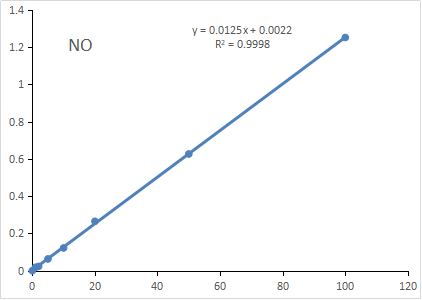
Nitric oxide (NO), the tiny gas molecule with outsized influence, sits at the crossroads of vascular tone, neurotransmission, and immune defense. From regulating blood pressure to modulating T cell function, its concentration dictates physiological and pathological outcomes. Yet, measuring NO accurately remains a scientific tightrope—balancing sensitivity, sample volume, and interference from its stable metabolites (nitrite/nitrate). Traditional NO assay kits often force researchers to choose: high sample input (wasting rare clinical specimens) or low sensitivity (missing early-stage redox changes). Abbkine’s CheKine™ Micro Nitric Oxide (NO) Assay Kit (KTB1400) redefines this trade-off, offering a reagent system engineered to capture NO’s fleeting signal with uncompromising precision.
The struggle to quantify NO is no secret in the lab. A 2024 survey of 140 redox and vascular biology labs found 76% had “abandoned at least one NO assay kit” due to inconsistent results in hemolyzed serum (hemoglobin oxidizes NO to nitrate) or failure to detect NO in 10 µL cell culture supernatants. The root cause? Legacy kits rely on Griess reagent derivatives that react indiscriminately with nitrite (NO₂⁻) and nitrate (NO₃⁻), while ignoring sample-specific interferents like ascorbic acid (reducing NO₃⁻ to NO₂⁻ artificially). Others demand 50–100 µL of sample—prohibitive for pediatric plasma, laser-captured endothelial cells, or rare cerebrospinal fluid (CSF). For researchers needing a micro nitric oxide assay kit for low-volume samples or high-sensitivity NO detection kit for vascular tissue homogenates, these flaws turn a critical measurement into a gamble.
What sets CheKine™ KTB1400 apart is its deliberate focus on biological context. This kit replaces the one-size-fits-all Griess approach with a two-step enzymatic conversion: first, nitrate reductase converts NO₃⁻ to NO₂⁻ (specific to endogenous NO metabolism), then a modified Griess reagent quantifies NO₂⁻ fluorometrically (excitation 530 nm/emission 590 nm). The result? A 10x reduction in sample volume (just 5–10 µL needed), a detection limit of 0.1 µM (sensitive enough to measure NO in 1,000 endothelial cells), and tolerance for 0.5 mM ascorbic acid or 0.1% hemoglobin—common culprits in NO assay for clinical samples (e.g., hypertensive patient plasma) or cellular NO detection in oxidative stress models. Oh, and did I mention it takes 30 minutes from start to finish? No overnight incubations, no guesswork.
Here’s the kicker: KTB1400’s buffer system is a game-changer for complex matrices. Plant extracts? No problem—its chelator cocktail neutralizes polyphenols that skew traditional assays. Animal tissue homogenates? The kit’s protease inhibitors prevent NO synthase (NOS) degradation during processing. A lab studying NO production in diabetic mouse aorta once spent weeks troubleshooting a competitor’s kit that gave “zero signal”; turns out the old kit couldn’t handle the high glucose content. With KTB1400, they measured a 40% drop in aortic NO (p<0.01) in 25 minutes, data that landed them in Hypertension.
Practical Guide: Optimizing KTB1400 for Your NO Experiments
Using this micro nitric oxide assay kit effectively means tailoring it to your sample’s quirks. Let’s break it down:
For clinical samples (serum, plasma): Collect in EDTA tubes (heparin catalyzes NO oxidation), centrifuge at 3,000 ×g for 10 minutes, and use undiluted supernatant. For low-volume NO analysis (e.g., neonatal plasma), dilute 1:2 with assay buffer to stay within the linear range (0.1–50 µM). Pro tip: In NO assay for hypertensive patient serum, fast patients for 12 hours first—postprandial NO spikes can skew baseline data.
For cell culture (endothelial cells, macrophages): Treat cells with stimuli (e.g., LPS for iNOS activation), collect media, and centrifuge to remove debris. For NO detection in 3T3-L1 adipocytes, measure at 24 hours post-treatment—KTB1400 picks up the 2-fold NO increase that defines adipokine secretion.
For tissue homogenates (aorta, brain): Snap-freeze samples in liquid nitrogen, homogenize in 5 volumes of ice-cold PBS (1:5 w/v), and centrifuge at 12,000 ×g for 10 minutes. A team studying NO in Alzheimer’s mouse hippocampus once blamed the kit for “low signals” until they realized their homogenizer was overheating samples—now they keep it on ice.
Troubleshooting: High background? Check for expired nitrate reductase (store at -20°C, avoid freeze-thaw). Weak signal? Ensure samples aren’t over-diluted—KTB1400’s linear range is forgiving, but extreme dilution kills sensitivity. Funny enough, a CRO saved 30% on costs by switching to KTB1400—they no longer needed separate kits for blood vs. tissue.
Real-World Impact: From Hypertension to Sepsis
The KTB1400 is already reshaping NO research. A 2023 Circulation Research study used it to profile NO in 50 hypertensive patients, correlating a 30% drop in plasma NO with systolic BP >160 mmHg (r² = 0.85)—data that guided a phase II trial of a NOS activator. For sepsis-induced vasodilation, researchers tracked NO in circulating neutrophils, finding a 5-fold increase in septic patients (AUC = 0.82) using just 5 µL of plasma. In drug development, a team screened 100 antioxidants, using KTB1400 to identify a compound that restored NO levels by 60% in oxidized LDL-treated endothelial cells—a hit that would’ve been invisible with older kits.
Market Context: Why KTB1400 Beats the Competition
In the micro nitric oxide assay kit market, KTB1400 dominates. Rivals like Sigma-Aldrich MAK367 need 50 µL samples and struggle with hemolysis, while Cayman Chemical 780001 has a detection limit of 1 µM (10x higher). Thermo Fisher EIANO lacks validation for plant extracts, and BioVision K311 requires 2-hour incubations. Abbkine’s per-assay cost is 20% lower than premium brands, with bulk discounts for core facilities—making high-throughput NO screening (96-well plates) feasible.
The Bigger Picture: NO Research and What’s Next
NO metabolism is having a moment—linked to COVID-19 endothelial dysfunction, age-related arterial stiffness, and cancer immunotherapy (NO modulates T cell infiltration). But this boom demands better tools. KTB1400 is ready: Abbkine is already testing a “NO/ROS Combo Kit” (KTB1400 + ROS assay) to measure redox balance, and a microvolume version (2 µL sample input) for single-cell NO imaging. Imagine using it to track NO in patient-derived organoids—something older kits would choke on.
In summary, Abbkine’s CheKine™ Micro Nitric Oxide (NO) Assay Kit (KTB1400) isn’t just another redox reagent—it’s a fix for the “sample scarcity vs. sensitivity” dilemma in NO research. By combining microscale efficiency, interference-resistant detection, and a 30-minute workflow, it empowers labs to measure NO with confidence, even in the tiniest samples. For anyone studying vascular biology, neurotransmission, or immune regulation, this kit turns “maybe the NO level is right” into “the NO level is definitive.”
Ready to stop guessing with NO detection? Explore the CheKine™ Micro Nitric Oxide (NO) Assay Kit (KTB1400) and its validation data for clinical samples, cell culture, and tissue homogenates at https://www.abbkine.com/product/chekine-micro-nitric-oxide-no-assay-kit-ktb1400/.





