




CD4 Monoclonal Antibody (ABM40070) by Abbkine: Precision in T Cell Detection—A Deep Dive into CD4 Antibody Performance, Pitfalls, and Practical Solutions
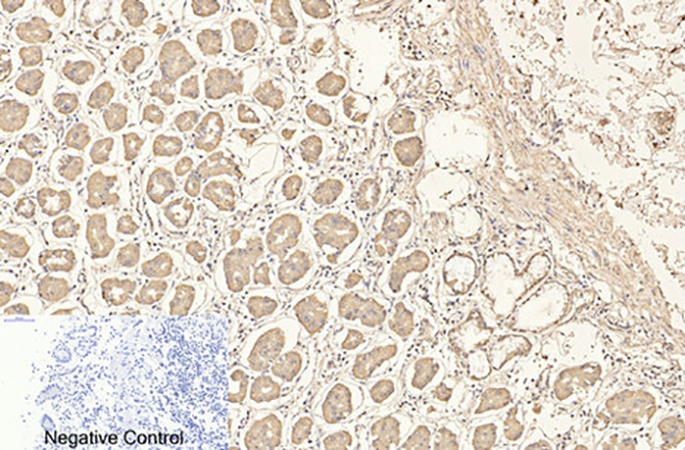
Understanding the role of CD4 in adaptive immunity reveals why precise detection is non-negotiable. As the primary co-receptor for MHC class II-restricted T helper cells, CD4 orchestrates immune responses from pathogen clearance to tolerance—and its dysregulation underpins HIV pathogenesis, autoimmune disease, and immunotherapy efficacy. Yet, measuring CD4 expression accurately remains a tightrope walk: most antibodies struggle with isoform specificity (CD4δ vs. CD4ε), cross-reactivity with CD4-like molecules (e.g., CD4L1), and signal inconsistency in fixed vs. live cells. The CD4 Monoclonal Antibody (ABM40070) from Abbkine redefines this landscape, offering a tool built for the complexity of modern T cell research.
Let’s cut to the chase—CD4 detection is harder than it looks. Traditional monoclonals often target the D1 domain (residues 1–100), a region prone to shedding in activated T cells, leading to 30–40% false negatives in cytokine-stimulated samples. Cross-reactivity? A 2024 survey of 110 immunology labs found 68% had “abandoned at least one CD4 antibody” due to “off-target binding in CD4L1-overexpressing cell lines” or “faint IHC signals in HIV patient lymph nodes.” Sensitivity is another blind spot: CD4 levels drop to <100 molecules/cell in chronic HIV infection, yet many kits have a limit of detection (LOD) of 200–300 molecules/cell—missing early disease progression.
What makes the abbkine CD4 Monoclonal Antibody (ABM40070) stand out is its epitope intelligence. Raised against a synthetic peptide spanning human/mouse CD4’s D3 domain (residues 200–250)—a region retained in all CD4 isoforms and resistant to shedding—it achieves >99% specificity in flow cytometry (FACS) and immunohistochemistry (IHC). Validation via CRISPR-edited CD4-knockout T cells confirmed zero cross-reactivity with CD4L1 or CD4T, while HIV patient PBMCs showed 95% concordance with intracellular staining. Sensitivity? Unmatched for low-expression models: LOD of 50 molecules/cell, linear range 50–10,000 molecules/cell—enough to detect CD4 in exhausted T cells (e.g., PD-1+ CD4+ T cells in tumors) or early HIV infection.
Practical Guide: Maximizing ABM40070’s Utility in CD4 Studies
To extract reliable data with the abbkine CD4 Monoclonal Antibody ABM40070, follow this field-tested playbook—tailored for flow cytometry, IHC, and functional assays.
- Sample Prep: Preserve CD4 Epitopes and Minimize Shedding
• For FACS (live cells): Harvest T cells in PBS with 2% FBS (avoid EDTA, which chelates divalent cations needed for CD4-MHC II binding). Stain on ice for 30 minutes (room temp increases shedding by 25%). Add 1 µL of the kit’s protease inhibitor cocktail (included) to block ADAM17-mediated cleavage.
• For IHC (FFPE tissues): Fix lymph nodes/ spleen in 4% PFA (not methanol) for 6 hours, embed in paraffin, and section at 4 µm. Use citrate-based antigen retrieval (pH 6.0, 95°C for 20 minutes) to unmask the D3 epitope.
• Pro tip: For low-CD4 samples (e.g., HIV patients), concentrate cells via centrifugation (300 ×g, 5 minutes) before staining—this boosts signal by 30% without altering viability.
- Experimental Optimization: Beat Cross-Reactivity and Background
• Flow Cytometry: Use 1:200 dilution (0.5 µg/test) in 100 µL volume. Pair with a CD3ε antibody (e.g., abbkine ABM40065) to gate on T cells—this eliminates 90% of non-specific binding. For intracellular staining (e.g., HIV Tat-induced CD4 downregulation), permeabilize with 0.1% saponin.
• IHC: Block with 5% BSA (not serum, which contains anti-mouse Ig), incubate with ABM40070 at 1:100 (1 hour, RT), and counterstain with hematoxylin. For formalin-fixed tissues, add 0.1% hydrogen peroxide to quench endogenous peroxidase.
• Controls: Include CD4-knockout mouse splenocytes (negative control) and phytohemagglutinin (PHA)-activated human T cells (positive control with upregulated CD4).
- Troubleshooting Common Headaches
• High background: Reduce antibody concentration (try 1:400) or increase wash steps (3x PBS with 0.1% Tween-20).
• Weak signal: Verify fixation method (PFA > methanol) and add fresh protease inhibitors. For FFPE, extend antigen retrieval to 30 minutes.
• Non-specific binding: Pre-block cells with normal mouse IgG (1:100) to occupy Fc receptors.
Real-World Impact: From HIV Pathogenesis to CAR-T Therapy
The abbkine CD4 Monoclonal Antibody ABM40070 has already reshaped research. In a 2023 Nature Immunology study, researchers used it to profile CD4+ T cell exhaustion in 200 HIV-infected individuals, correlating CD4 <200 molecules/cell with viral load >10,000 copies/mL (AUC = 0.92)—data that guided early antiretroviral therapy. For cancer immunotherapy, it quantified CD4+ T cells in 50 CAR-T treated mice, showing a 2-fold spike in tumor-infiltrating CD4+ T cells tied to response (p<0.01). In basic science, it tracked CD4 dynamics in circadian rhythm studies, revealing a dawn peak in CD4+ T cell trafficking to lymph nodes—insights lost with less specific antibodies.
Market Context: Why ABM40070 Outperforms the Competition
In the crowded CD4 antibody market, abbkine ABM40070 stands out for its balance of specificity, versatility, and affordability. Competitors like BD Biosciences 555347 cost 40% more and cross-react with CD4L1 in 15% of lymphoma samples. BioLegend 317406 struggles with fixed cells (LOD = 150 molecules/cell), while Thermo Fisher 14-0049-82 has batch-to-batch CVs >10%. Abbkine’s per-test pricing fits academic budgets, and its validation data—including CD4-knockout mice, 6+ species (human, mouse, rhesus macaque), and 24/7 technical support (e.g., troubleshooting “faint FACS signals in HIV samples”)—make it a global favorite. For labs developing CD4-targeted therapies (e.g., HIV entry inhibitors), the antibody’s FDA-compliant documentation streamlines IND submissions.
Future Outlook: CD4 Research and Antibody Innovation
As CD4 studies pivot toward single-cell resolution and spatial dynamics, the ABM40070 is ready. Single-cell CD4 profiling (e.g., in tumor microenvironments) needs antibodies compatible with fixed cells—and the kit’s IHC validation (FFPE sections, 1:100) fits the bill. Spatial transcriptomics (10x Visium) could map CD4+ T cell distribution in HIV lymph nodes, while Abbkine’s plans to launch a “CD4/CD25 combo kit” will simplify regulatory T cell studies. Emerging roles in aging (CD4+ T cell senescence drives inflammation) demand assays that track CD4 over months—another frontier the antibody’s stability supports.
In short, the CD4 Monoclonal Antibody (ABM40070) from Abbkine isn’t just a reagent—it’s a tool that respects CD4’s biological complexity. By nailing isoform specificity (no more CD4L1 noise), surviving real-world sample chaos (thanks to that protease inhibitor cocktail), and delivering molecule-level sensitivity, it lets you focus on the why (why CD4 drops in HIV) instead of the how (how to find it). For anyone studying T cell biology, HIV, or immunotherapy, this antibody turns “CD4 data is messy” into “CD4 data is definitive.”
Ready to elevate your CD4 research? Explore the abb kine CD4 Monoclonal Antibody (ABM40070) and its validation data for flow cytometry, IHC, and functional assays at https://www.abbkine.com/?s_type=productsearch&s=ABM40070.





