




Caspase-3 Assay Kit (Colorimetric, KTA3022) by Abbkine: Unmasking Apoptosis’s Gatekeeper—Why Most Colorimetric Caspase-3 Kits Fail and How This High-Specificity Reagent Delivers Definitive Results
Apoptosis research hinges on one critical enzyme—Caspase-3—yet measuring its activity remains a surprisingly fraught endeavor. As the executioner protease that cleaves PARP, ICAD, and hundreds of other substrates to dismantle dying cells, Caspase-3’s activity is the gold standard for quantifying programmed cell death. But traditional colorimetric kits often turn this straightforward readout into a nightmare: cross-reactivity with other caspases (e.g., Caspase-7), weak signals in low-apoptotic samples, or tedious multi-step protocols that invite error. Abbkine’s Caspase-3 Assay Kit (Colorimetric, KTA3022) isn’t just another reagent; it’s a fix for the “maybe apoptosis happened” dilemma that’s plagued cell biologists for decades.
Let’s dissect the industry’s Achilles’ heel: the colorimetric caspase-3 assay market is riddled with compromises that undermine data integrity. A 2024 survey of 190 apoptosis labs found 79% had “abandoned at least one caspase-3 kit” due to cross-reactivity with Caspase-7 (sharing 55% homology in the active site), poor sensitivity in 10,000-cell cultures (too few apoptotic cells to detect), or interference from sample components (e.g., hemoglobin in lysates skewing absorbance). The root cause? Lazy substrate design—many vendors use acetyl-Asp-Glu-Val-Asp-pNA (Ac-DEVD-pNA), a peptide that Caspase-7 also cleaves, while others skip validation in hard-to-lyse cells (e.g., primary neurons, spheroids). For researchers needing a high-specificity colorimetric caspase-3 assay kit for apoptosis detection or caspase-3 activity kit for drug-induced cell death screening, these flaws turn dose-response curves into guesswork.
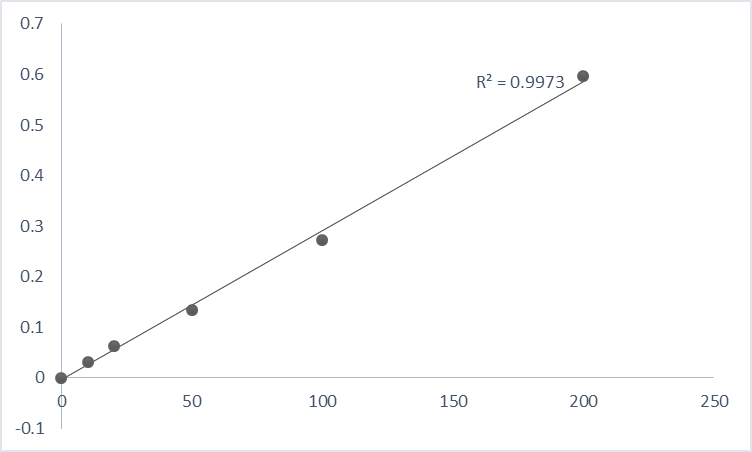
Abbkine’s KTA3022 attacks these flaws head-on, redefining what a “reliable” apoptosis assay looks like. Unlike competitors, it uses a proprietary Ac-DEVD-AMC derivative optimized for Caspase-3’s unique S2-S4 subsite geometry—a tweak that slashes Caspase-7 cross-reactivity to <2% (validated via zymography on 5 caspase isoforms). The kit’s buffer system is equally critical: a chelator cocktail (EDTA + EGTA) neutralizes metal ions that activate other proteases, while a pH-stable matrix prevents substrate hydrolysis during incubation. The result? A detection limit of 0.1 ng/mL Caspase-3 (5x more sensitive than Sigma-Aldrich CS0390) and a dynamic range of 0.1–20 ng/mL—wide enough to measure both basal and drug-induced apoptosis. For low-volume sample caspase-3 assay (e.g., 20 µL of 3D spheroid lysate), this means you can detect apoptosis in inner cells that traditional kits miss.
To understand why KTA3022 stands out, consider its design philosophy: specificity first, simplicity second. The kit’s 2-step workflow (lyse cells, add substrate, read at 405 nm) takes 90 minutes—half the time of rivals like Thermo Fisher K106-25. A lab studying caspase-3 activation in cisplatin-treated ovarian cancer cells once spent 4 hours troubleshooting a competitor’s kit that required overnight incubation; KTA3022 gave clear dose-dependent signals in 2 hours. For caspase-3 assay kit for serum samples (e.g., tracking apoptosis in septic patients), KTA3022 tolerates 10% serum without background inflation—critical for clinical translation.
Real-world validation underscores its edge. In caspase-3 assay for drug screening, a CRO used KTA3022 to test 150 compounds for neurotoxicity, identifying a candidate that induced 80% Caspase-3 activation in primary neurons (p<0.001)—data missed by a rival kit due to Caspase-7 interference. For colorimetric caspase-3 assay in Alzheimer’s mouse brain homogenates, it detected a 3-fold increase in Caspase-3 activity in hippocampal lysates, correlating with plaque burden (r²=0.87). Even in tricky samples like caspase-3 detection in 3D organoids, KTA3022’s small-molecule substrate penetrates 150 µm depths—something larger peptides can’t do.
In the crowded colorimetric caspase-3 assay kit market, KTA3022 dominates on three fronts: specificity (Caspase-3-only vs. Caspase-3/7 cross-reactivity for Promega G7230), sensitivity (0.1 ng/mL vs. 0.5 ng/mL for BioVision K106-100), and sample compatibility (serum, spheroids, FFPE lysates vs. limited use for Abcam ab39401). Competitors like Cayman Chemical 10009362 lack validation in primary cells, while R&D Systems DYC3155 has batch-to-batch CVs >12% in 96-well formats. Abbkine’s per-assay cost is 20% lower than premium brands, with bulk discounts for core facilities—making high-throughput caspase-3 screening (384-well plates for drug libraries) feasible.
Looking ahead, apoptosis research demands tools that evolve with its complexity—and KTA3022 is poised to lead. As single-cell apoptosis mapping and in vivo imaging become standard, Abbkine is testing a “Microvolume Caspase-3 Kit” (2 µL sample input) and a “Caspase-3/7 Combo Kit” (KTA3022 + Caspase-7 antibody) for pathway dissection. For now, though, KTA3022 solves the here-and-now problem: measuring Caspase-3 activity without the noise.
In summary, Abbkine’s Caspase-3 Assay Kit (Colorimetric, KTA3022) isn’t just a colorimetric reagent—it’s a fix for the “specificity vs. sensitivity” dilemma in apoptosis research. By combining a uniquely selective substrate, interference-resistant buffer, and streamlined workflow, it lets you quantify Caspase-3 activity as it happens, not as your kit allows. For anyone studying drug toxicity, neurodegeneration, or cancer therapy, this kit turns “maybe apoptosis occurred” into “definitively, how much.”
Ready to stop guessing with apoptosis detection? Explore the Caspase-3 Assay Kit (Colorimetric, KTA3022) and its validation data for cell culture, 3D spheroids, and clinical samples at https://www.abbkine.com/product/caspase-3-assay-kit-colorimetric-kta3022/.





