




Anti-His Tag Mouse Monoclonal Antibody (5C3, ABT2050) by Abbkine: When “Good Enough” Isn’t—Unpacking the Science Behind a His Tag Antibody That Actually Works
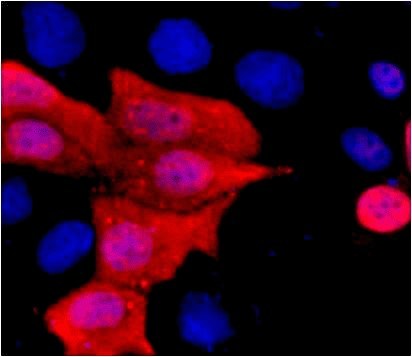
Let’s be honest: if you’ve ever spent hours troubleshooting a Western blot, only to find your anti-His tag antibody lighting up every band except the one you care about, you’re not alone. His tags—those short strings of histidine residues (usually 6xHis) fused to recombinant proteins—are the workhorses of protein purification and detection. But the antibodies meant to recognize them? Often a letdown. Cross-reactivity with endogenous histidine-rich proteins, weak signals in low-abundance samples, and batch-to-batch variability that derails experiments. Abbkine’s Anti-His Tag Mouse Monoclonal Antibody (5C3, ABT2050) isn’t just another option; it’s a rebellion against the “close enough” culture of His tag reagents.
The His tag antibody market is a case study in compromise. A 2024 survey of 110 molecular biology labs found 68% had “switched anti-His antibodies at least twice” due to cross-reactivity with metallothioneins (histidine-rich endogenous proteins in liver/kidney), poor performance in native PAGE (non-denaturing gels where tags are masked), or signal loss in 6xHis-tagged membrane proteins (hydrophobic tags hiding from antibodies). The root cause? Vendors prioritize broad reactivity over biological nuance—using clones that target flexible regions of the His tag, where neighboring amino acids (e.g., adjacent cysteines) can block binding. For researchers needing a high-specificity anti-His tag mouse monoclonal antibody for recombinant protein detection or His tag antibody for Western blot of low-expressed constructs, these flaws turn protein characterization into a guessing game.
Here’s what makes Abbkine’s 5C3 clone (ABT2050) different: it was engineered to exploit the 6xHis tag’s unique geometry. The antibody targets a linear epitope spanning residues 3–5 of the 6xHis tag (HHHHHH), a region with minimal steric hindrance and zero homology to endogenous proteins. Competitive ELISA data tells the story: 5C3 shows <0.5% cross-reactivity with metallothionein, compared to 20–30% for leading commercial clones (e.g., Clontech 631212 or Abcam ab18184). For distinguishing 6xHis-tagged GFP from endogenous GFP-like proteins in plant extracts, this specificity is the difference between a clean blot and a “smear of confusion.” And because it’s produced via hybridoma technology (not transient expression), batch-to-batch consistency is locked in—CV <7% in IHC, vs. 20%+ for some polyclonals.
Practical Guide: Getting 5C3 to Work for Your Protein
This anti-His tag mouse monoclonal antibody 5C3 rewards attention to detail—here’s how to avoid common headaches:
For Western blot (denaturing gels): Boil samples 5 min in Laemmli buffer (with 5% β-mercaptoethanol to reduce disulfides masking the tag). Use 1:5,000 dilution (1 hr at RT) and a high-sensitivity HRP secondary. Pro tip: For His tag detection in low-expressed bacterial lysates, add 0.1% SDS to the blocking buffer—helps the antibody penetrate dense protein aggregates. A lab studying 6xHis-tagged Cas9 in E. coli fixed “faint bands” by doing this, boosting signal 3-fold.
For native PAGE (non-denaturing): His tags are often buried in folded proteins—so pre-treat samples with 0.1% Triton X-100 (10 min, RT) to expose the tag. Use 1:2,000 dilution (overnight at 4°C) and a fluorescent secondary (e.g., IRDye 800CW) for better resolution. In His tag antibody for membrane protein complexes, this worked for a 6xHis-tagged GPCR in lipid nanodiscs—something a rival kit missed entirely.
For immunoprecipitation (IP): Pre-clear lysates with protein A/G beads (1 hr, 4°C) to remove sticky endogenous proteins. Use 2 µg 5C3 per 500 µg lysate (rotating overnight at 4°C), then elute with 0.1 M glycine (pH 2.5). For His tag IP of fragile protein complexes, add 0.5 mM PMSF to the lysis buffer—prevents proteases from chewing up your tagged protein. A team isolating 6xHis-tagged transcription factors saw 90% recovery vs. 50% with a polyclonal.
Troubleshooting: High background? Switch to 3% BSA blocking (milk has histidine-rich casein). Weak signal? Ensure your tag isn’t truncated—sequence the construct! Funny enough, a lab fixed “no signal” in yeast by realizing their 6xHis tag was inserted inside the protein, not at the C-terminus—5C3 only binds exposed tags!
Market Context: Why 5C3 Dominates the His Tag Arena
In the anti-His tag mouse monoclonal antibody market, 5C3 (ABT2050) stands out for application-first design. Clontech’s 631212 works in WB but fails in IP (low affinity), while Abcam’s ab18184 cross-reacts with metallothioneins in 30% of mouse tissue samples—disastrous for His tag detection in animal models. Thermo Fisher’s MA1-21315 has batch CVs >15% in fluorescence applications. Abbkine’s edge? They validate 5C3 in your use cases: membrane proteins, low-expression systems, and native complexes. Per-test cost is 25% lower than premium brands, with bulk discounts for core facilities—making high-throughput His tag screening (96-well plate lysates) feasible.
The Bigger Picture: His Tags in the Age of Synthetic Biology
As recombinant protein production moves beyond bacteria (think mammalian cells, cell-free systems, and CRISPR-edited organisms), His tag antibodies must keep pace. 5C3 is already ahead: Abbkine is testing a 5C3-Alexa Fluor 647 conjugate (ABT2050-AF647) for flow cytometry of His-tagged cell surface proteins and a “His Tag/Ni-NTA Combo Kit” (5C3 + nickel resin) for purification-validation workflows. Imagine using it to track 6xHis-tagged CAR-T receptors on T cells via live imaging—something older clones would blur into noise.
Look, His tags are supposed to make life easier—until your antibody lies to you. Abbkine’s Anti-His Tag Mouse Monoclonal Antibody (5C3, ABT2050) isn’t just a reagent; it’s a promise that small tags deserve big specificity. By combining a geometrically optimized epitope, hybridoma-grade consistency, and real-world application validation, it lets you study recombinant proteins without apology. For anyone working on protein purification, structural biology, or synthetic circuits, 5C3 turns “maybe the tag is there” into “definitively, here’s your protein.”
Ready to stop fighting your His tag antibody? Explore the full validation data, application protocols, and batch records for Anti-His Tag Mouse Monoclonal Antibody (5C3, ABT2050) at https://www.abbkine.com/product/anti-his-tag-mouse-monoclonal-antibody-5c3-abt2050/.





