




Your "Inflammasome Activation" Figure Looks Beautiful—Until the Reviewer Asks for Direct IL-18 Evidence. Here's Why a Pre-Coated Sandwich ELISA (KTE6023) Is the One Reagent Your Macrophage & Pyroptosis Panels Can't Afford to Cheap Out On
Every lab working on NLRP3 biology, caspase-1 processing, or sterile inflammation knows the unspoken hierarchy of cytokines: IL-1β gets the glory (it's the effector that actually drives fever, endothelial adhesion, and tissue damage), but IL-18 (IFN-γ–inducing factor, IGF; UniProt Q14116, Gene ID 3606) is the co-conspirator that determines whether your inflammasome response tips into a productive antimicrobial state or a catastrophic cytokine storm. The uncomfortable truth? Most labs measure IL-1β beautifully, write "IL-18 was also elevated" in the discussion, but when Reviewer #2 explicitly requests quantified IL-18 data to support the caspase-1 activation claim, they scramble—because their IL-18 detection is either a leftover generic "multi-cytokine bead array" with marginal sensitivity in the low range, or a hand-me-down sandwich ELISA with drifting standard curves that can't defend a <100 pg/mL basal-to-activated jump.
Why IL-18 Punishes Generic Cytokine Detection More Than You Think
Unlike IL-1β, which is synthesized as a pro-form (31 kDa) and only becomes active after caspase-1 cleavage, IL-18 is similarly produced as a precursor (pro-IL-18, ~24 kDa precursor) that requires caspase-1–mediated cleavage between Gly¹²⁵ and Ala¹²⁶ to release the mature, bioactive ~17.5 kDa cytokine. In short: intracellular pro-IL-18 is constitutively expressed, but secretion of mature IL-18 is the specific readout of active inflammasome assembly. That makes it a mechanistic linchpin — not just "another pro-inflammatory number."
The detection problem is structural. IL-18 operates in a low-baseline / steep-induction regime (healthy human serum often <100 pg/mL, while LPS + nigericin can push supernatants into several ng/mL). Your assay needs ≤50 pg/mL sensitivity, a clean 50–3,200 pg/mL dynamic range, and — critically — zero cross-reactivity with IL-1β, IL-1α, or other IL-1SF members that share structural folds.
Enter EliKine™ Human IL-18 ELISA Kit — KTE6023 (Abbkine)
This is a quantitative two-site (sandwich) ELISA engineered so the parts that usually drift can't:
Parameter KTE6023 Specification
Assay type Sandwich ELISA (capture mAb pre-coated on 96-well plate)
Target Human IL-18 / IGF (UniProt Q14116, Gene ID 3606)
Aliases IL18 · IGF · IL-1γ · IL1F4 · Interferon-γ–inducing factor
Samples Cell culture supernatants · Serum · Plasma (heparin/citrate) · other biological fluids
Sensitivity (LOD) 50 pg/mL
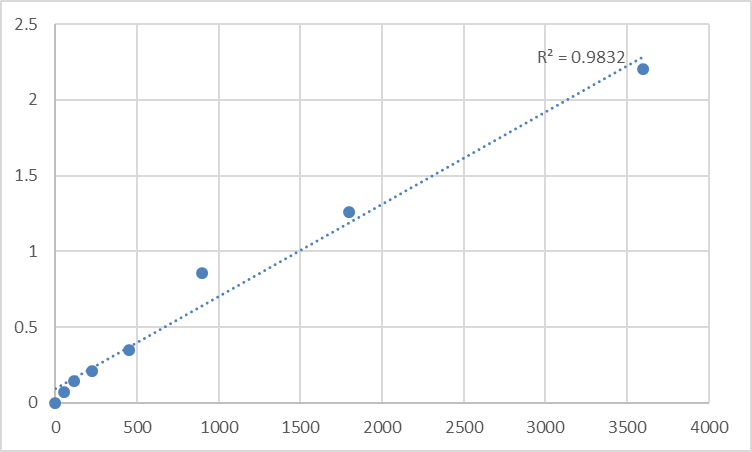
Dynamic range 50 – 3,200 pg/mL (7-point standard curve)
Detection TMB → 450 nm (620–650 nm optional reference)
Key components Pre-coated anti-IL-18 96-well plate · IL-18 protein standard · Biotin-anti-IL-18 detection Ab · EliKine™ Streptavidin-HRP · Standard/sample diluents · Wash buffer · TMB substrate · Stop solution · Sealing films
Storage / Ship 2–8°C (unopened); ship blue-ice gel pack; For research use only
The competitive edge is the same story we keep coming back to with pre-coated formats: plate-to-plate binding variance is eliminated, the biotin-detection epitope is non-overlapping with the capture epitope, and the supplied recombinant IL-18 standard means you interpolate unknowns from a lot-calibrated curve, not a theoretical extinction coefficient. The result is a 50 pg/mL floor that actually holds, and a 3,200 pg/mL ceiling that lets your LPS+nigericin supernatants land on the curve instead of saturating off it.
What Changes When Your IL-18 Is Actually Defensible
① Your caspase-1 / NLRP3 story stops being "correlative."
When you can write: "Mature IL-18 secretion was quantified by sandwich ELISA (EliKine™ KTE6023; Abbkine; LOD 50 pg/mL; range 50–3,200 pg/mL) and tracked in parallel with pro-caspase-1 and IL-1β," the reviewer sees a mechanistic chain, not two disconnected observations. The pre-cleaved pro-IL-18 pool is nuclear biology; the secreted mature IL-18 your kit catches is the functional output.
② Your dose–response on NLRP3 inhibitors (MCC950, CRID3, glycine, K+ efflux modulators) survives audit.
Nothing embarrasses a revised manuscript faster than an NLRP3 inhibitor panel where the "partial inhibition" bars have error bars wider than the effect — because the ELISA underneath it was running on a generic capture antibody and a hand-cut standard. Pre-coated + lot-controlled = CV you can sign your name to.
③ PBMC donor screens and clinical-pilot studies become viable.
Working with human serum or heparinized plasma? The 50 pg/mL floor means you can actually resolve donor-to-donor basal variance (not just code everyone as "<LOD"), and the no-EDTA-conflict design keeps your downstream normalization honest.
The Bench-Level Rules That Keep Your 450 nm Curve Honest
These come straight out of the operational discipline Abbkine builds into every EliKine kit — and they're exactly the lines reviewers wish every Methods section included:
• RT balance: Bring all components to room temperature (≥30 min) before opening. Cold droplets on a warm lid = condensation = drift. Don't skip this.
• Never cross-mix lot numbers. Don't "borrow" wash buffer or Streptavidin-HRP from a different batch. The standard curve is lot-calibrated.
• Fresh tips, every well. IL-18 is small, sticky, and one contaminated well cascades through your entire standard curve.
• Seal unused strips immediately back into the foil pouch with desiccant → 2–8°C. Moisture is the silent killer of pre-coated plates.
• Gentle mixing only: low-speed orbital shake or a manual tap every ~10 min during incubations — no vortex-the-plate chaos.
• Duplicates/triplicates: Always. The kit documentation explicitly recommends it. Your CV will thank you.
Where KTE6023 Earns Its Spot in Real, Funded Work
Research Context Why IL-18 + This Format Is Non-Negotiable
NLRP3 inflammasome validation (LPS ± nigericin / ATP / MSU / alum) Mature IL-18 secretion = the caspase-1–dependent readout that proves the inflammasome fired
Sepsis / cytokine release syndrome models IL-18 and IL-1β travel together; separating their kinetics needs a 50 pg/mL-sensitive, specific sandwich assay
Atherosclerosis & vascular inflammation (macrophage foam cells, senescent vascular smooth muscle) Local IL-18 in plaque microenvironments is low-abundance — needs the floor KTE6023 provides
Neuroinflammation (microglia activation, Alzheimer's β-amyloid models) IL-18 can induce β-amyloid production in neurons; quantitating it in microglia-conditioned media demands lot-consistent precision
PBMC donor-variability & immunosuppressive drug screening Pre-coated format = inter-plate reproducibility across 20+ donors without "who ran Monday's plate?" variance
A Clean Methods Paragraph You Can Drop Straight In
Human IL-18 was quantified using a quantitative sandwich ELISA (EliKine™ Human IL-18 ELISA Kit, KTE6023; Abbkine) according to the manufacturer's protocol. A microplate pre-coated with capture anti-IL-18 was incubated with standards and samples; following washing, a biotinylated anti-IL-18 detection antibody and Streptavidin-HRP were applied, developed with TMB, stopped, and read at 450 nm (620–650 nm reference). Values were interpolated from the supplied recombinant IL-18 standard curve and expressed as pg/mL (or normalized to cell number/protein as indicated).
Explore the EliKine™ Human IL-18 ELISA Kit (KTE6023) full specs, manual & ordering options here:
🔗 https://www.abbkine.com/product/elikine-human-il-18-elisa-kit-kte6023/
(For research use only. Not for human or clinical diagnostic use.)





