




Why the Most Underestimated Amino Acid Deserves a Kit That Sees Only It
Lysine has spent most of its biochemical career being described by what it lacks. It lacks a sulfur atom, so it cannot form disulfide bonds. It lacks a ring structure, so it cannot intercalate between DNA bases. It lacks the sulfur-containing redox sensitivity of cysteine and the branched-chain bulk of leucine, and for decades, the metabolism field treated it accordingly—as a neutral, unremarkable, constitutively abundant amino acid whose primary job was to occupy position 27 in a histone tail and wait for acetylation. Then histone lysine lactylation was discovered in 2019, and the molecule everyone had been ignoring turned out to be the direct chemical link between the Warburg effect and chromatin remodeling. Lysine residues on histones are modified by lactate—the very metabolite that cancer cells overproduce—to generate a novel epigenetic mark that directly couples metabolic state to gene expression. A 2024 review in Cellular Oncology concluded that lactylation has provided a new opportunity to investigate metabolic epigenetic regulation, and studies of this process have been initiated in a wide range of cancer cells, cancer-associated immune cells, and embryonic stem cells. Simultaneously, lysine β-hydroxybutyrylation was shown to reshape cancer metabolism under ketogenic diet conditions, and lysine demethylases were demonstrated to play a role in drug resistance in numerous cancers by modulating the metabolic profile of cancer cells and enhancing the ratio of cancer stem cells. The amino acid that nobody bothered to measure specifically is now recognized as the substrate for an entire layer of metabolic-epigenetic regulation, and the quality of every conclusion in that field depends on a measurement that most laboratories have never performed correctly.
The measurement gap is not hypothetical. Traditional lysine assay methods often suffer from poor selectivity, cross-reacting with other amino acids in complex samples and producing misleading concentration readings. The free ε-amino group of lysine—the very functional group that is acetylated, methylated, lactylated, ubiquitinated, and SUMOylated to control virtually every chromatin-based process in the nucleus—is chemically similar enough to the guanidino group of arginine and the δ-amino group of ornithine that conventional colorimetric reagents detect them as a pooled cationic amine signal rather than as lysine. In a typical mammalian cell lysate, arginine and ornithine together can exceed lysine concentration by several-fold, and a measurement that sums all three is not a lysine measurement. It is a basic amino acid summation, and the ratio of lysine to its cross-reactive neighbors shifts with urea cycle activity, arginase expression, and polyamine metabolism—all of which are independently regulated in cancer, liver disease, and immune activation. The field has been building mechanistic conclusions about lysine metabolism on a signal that includes a variable fraction of non-lysine amines, and reviewers are beginning to notice.
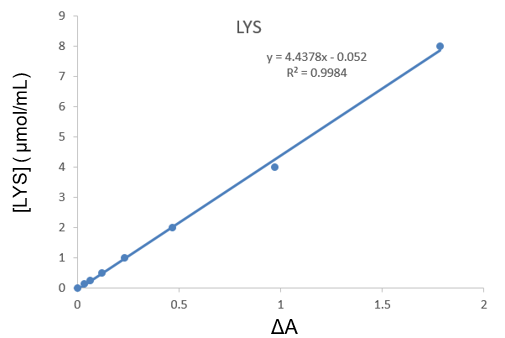
Abbkine's CheKine™ Micro Lysine (LYS) Assay Kit (KTB1470) was engineered to resolve this specificity gap at the chemistry level, and the product page documentation states the design principle with admirable clarity: the lysine in protein has a free ε-NH₂, which can react with ninhydrin hydrate to produce blue-purple substances with a maximum absorption peak at 570 nm. The absorbance at 570 nm is directly proportional to the lysine content of the sample within a defined concentration range, and the calculation requires nothing beyond a standard curve. No HPLC column. No mass spectrometer. No enzymatic cascade that must survive exposure to the protease cocktails, phenolic compounds, and secondary metabolites present in plant tissue homogenates and bacterial lysates. The ninhydrin reaction under the kit's proprietary conditions selectively detects the ε-amino group of lysine while minimizing interference from the α-amino groups of other amino acids—an optimization that generic ninhydrin-based protocols, which report total amino acid content rather than lysine specifically, cannot achieve. The detection principle has been independently validated in two peer-reviewed publications already citing KTB1470, confirming that the blue-violet chromophore at 570 nm reflects lysine content rather than a pooled amino acid signal.
The analytical specifications of KTB1470 are calibrated to the biological reality of lysine quantification rather than to marketing convenience. The calibration range spans 0.125–8 μmol/mL, and the limit of detection reaches 0.03125 μmol/mL. At 0.03125 μmol/mL—equivalent to 31.25 nM—the kit detects lysine at concentrations below the noise floor of conventional ninhydrin-based amino acid assays, which typically cluster their lower limits of quantification around 0.1–0.5 μmol/mL under standard conditions. This sensitivity margin enables the quantification of lysine in dilute biological matrices such as cerebrospinal fluid, plant xylem sap, bacterial culture supernatants, and the low-protein food matrices that nutrition scientists routinely analyze, without requiring sample concentration, lyophilization, or pooling strategies that introduce systematic error. The upper boundary of 8 μmol/mL accommodates the elevated lysine concentrations encountered in protein hydrolysates, animal feed formulations, and clinical serum samples from patients on lysine supplementation, meaning a single kit serves the researcher who needs to quantify lysine across the full spectrum from trace deficiency to nutritional excess.
The kit components are deliberately minimal: Extraction Buffer, Assay Buffer, Substrate, Substrate Cofactor, and Standard—five items. No enzyme cocktails to reconstitute from individually sourced components. No cofactor solutions requiring fresh preparation within two hours of use. No ninhydrin powder to weigh, dissolve in ethanol, combine with acetate buffer, and protect from light with the paranoid urgency that organic reagent preparation demands. The ninhydrin-based detection reagent arrives pre-formulated and pre-stabilized, eliminating the largest single source of inter-laboratory variability in legacy ninhydrin protocols—the manual preparation of ninhydrin working solution, a procedure documented to generate batch-to-batch variation exceeding 15% even in experienced hands. Storage is at 4°C protected from light, with a 12-month stability window from receipt, and shipping occurs on gel packs with blue ice. The protocol includes detailed sample preparation and result calculation methods, and the standard curve is provided, enabling a technician unfamiliar with amino acid biochemistry to produce publication-grade lysine data on the first attempt.
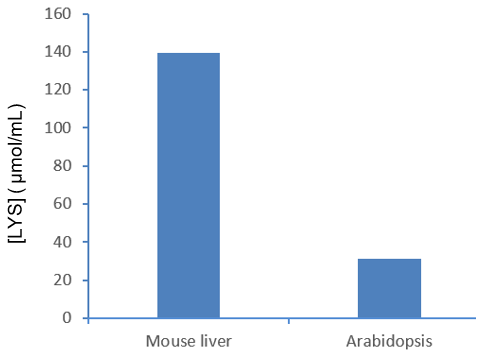
Sample compatibility spans the full range of biological matrices in which lysine is biologically and clinically relevant: serum, plasma, animal and plant tissues, cells, cell supernatant, and bacteria. This breadth is not a marketing flourish. Lysine is one of the essential amino acids of the human body, capable of promoting human development, enhancing immune function, and improving the function of the central nervous system, and because the lysine content in cereal food is very low and it is easily destroyed during processing, it is called the first limiting amino acid in grain-based diets. In plant biology, lysine content is a core nutritional quality parameter for crop breeding programs, and its quantification across genotypes and growth conditions is essential for evaluating protein quality in staple foods. In animal nutrition, lysine is the first limiting amino acid in swine and poultry feed formulations, and its precise quantification in feed ingredients determines whether animals receive adequate protein nutrition or suffer deficiency-induced growth retardation. In clinical biochemistry, plasma lysine levels are altered in urea cycle disorders, liver disease, and certain inborn errors of metabolism, and its measurement provides diagnostic information that total amino acid panels cannot supply. In every one of these contexts, lysine quantification is not a supplementary endpoint—it is the primary biochemical readout that determines whether a nutritional intervention, a genetic modification, or a clinical diagnosis is correctly assigned.
The publication record for KTB1470 currently includes two peer-reviewed citations, and the identity of those publications is substantially more significant than the number alone would suggest. One study, published in Cellular and Molecular Life Sciences (IF 6.2), deployed the kit while investigating circ0066187 promotion of pulmonary fibrogenesis through targeting STAT3-mediated metabolism signal pathways—a context in which amino acid metabolism intersects with fibrotic disease progression and where accurate lysine quantification was analytically essential to the paper's conclusions. A second publication, appearing in the Journal of Leukocyte Biology, used KTB1470 in a feasibility study of Djulis (Chenopodium formosanum) stems as a sustainable sawdust alternative for Pleurotus sajor-caju cultivation—a plant and fungal biology application that required lysine quantification in complex lignocellulosic matrices where cross-reacting amino acids are abundant. Two independent laboratories, operating in mammalian disease biology and plant-fungal biotechnology respectively, chose to build their lysine measurements on this specific kit, and those data survived editorial scrutiny in journals with impact factors of 6.2 and 3.6 respectively. Independent validation from laboratories operating under the pressures of peer review provides a level of real-world performance evidence that no manufacturer's internal QC dataset can replicate.
The broader biomedical context makes the case for reliable, specific lysine quantification increasingly urgent across multiple research domains. In epigenetic research, the discovery of histone lysine lactylation has opened an entirely new field of metabolic-epigenetic regulation, and quantifying free lysine pools in tumor tissue, immune cells, and embryonic stem cells is essential for understanding how substrate availability constrains or enables lactylation dynamics. In cancer metabolism, lysine degradation through the saccharopine pathway and lysine utilization for carnitine biosynthesis intersect with mitochondrial function and fatty acid oxidation, and lysine pool sizes shift under the influence of oncogenic signaling pathways. In nutritional epidemiology, lysine intake and plasma lysine concentrations are associated with cardiovascular risk, and the relationship between dietary lysine and disease outcomes cannot be evaluated without accurate lysine measurements in food composition databases and clinical samples. In livestock science, lysine is the most economically significant amino acid in feed formulation, and feed manufacturers require lysine quantification at scale to verify that their products meet nutritional specifications. In plant biotechnology, engineering crops for elevated lysine content has been a long-standing goal of biofortification research, and screening transgenic events for enhanced lysine accumulation demands an assay that distinguishes lysine from other amino acids in crude seed extracts. None of these research domains can reach valid conclusions if the "lysine" measurement is actually a pooled basic amino acid signal that shifts with arginine and ornithine concentrations independently of lysine.
The economic accessibility of KTB1470 deserves direct statement because it differentiates the kit from the premium-priced HPLC and LC-MS/MS alternatives with which its analytical specificity competes. The product is priced at $128 for a 96-test format, placing quantitative, specific lysine measurement within the reach of laboratories for whom dedicated amino acid analyzers, HPLC systems with fluorescence detection, and mass spectrometry-based metabolomics are financially inaccessible. For a crop breeding program in a developing country screening lysine content across a mapping population, a feed formulation laboratory verifying lysine levels in raw ingredients, a nutrition research group studying lysine deficiency in cereal-based diets, or a plant molecular biology laboratory characterizing transgenic events for enhanced lysine accumulation, the availability of a $128, 96-test, ninhydrin-based colorimetric lysine assay converts lysine quantification from a specialized analytical procedure into a routine metabolite measurement. The amino acid that was underestimated for decades—that serves as the substrate for histone modifications coupling metabolism to gene expression, that limits the nutritional quality of the staple grains that feed half the world's population, that determines whether livestock feed supports growth or causes deficiency, and that shifts in concentration under cancer, fibrosis, and metabolic disease—can now be quantified with a kit that requires nothing beyond a visible-wavelength microplate reader, a pipette, and a sample. The 570 nm absorbance is proportional to the lysine concentration. The signal does not include arginine. The kit has already been cited in two publications. The chemistry is ninhydrin. The storage is 4°C. The shelf life is twelve months.
Explore specifications, access the protocol, and place your order here: https://www.abbkine.com/product/chekine-micro-lysine-lys-assay-kit-ktb1470/





