




Unlocking the Matrix Code: The Human Testican-1 (SPOCK1) ELISA Kit for Pioneering Extracellular Matrix and Cancer Research
The extracellular matrix (ECM) is far more than a passive scaffold; it is a dynamic signaling hub that dictates cell fate, tissue architecture, and disease progression. Within this complex molecular network, Testican-1, encoded by the SPOCK1 gene, emerges as a critical matricellular protein with multifaceted roles in regulating cell adhesion, proliferation, migration, and protease activity . Originally identified in the testis, SPOCK1 is now recognized as a key player in a wide array of physiological and pathological processes, most notably in cancer metastasis, neurological disorders, and bone metabolism . For researchers and clinicians navigating these fields, the ability to accurately and sensitively quantify SPOCK1 protein levels in biological fluids and tissue lysates is indispensable. It serves as a potential diagnostic biomarker, a prognostic indicator, and a therapeutic target monitoring tool . However, detecting SPOCK1 presents challenges due to its complex interactions and potential low abundance in circulation. The Human Testican-1 (SPOCK1) ELISA Kit (KTE60335) from Abbkine is engineered to meet this challenge head-on, providing a highly sensitive, specific, and reproducible sandwich enzyme-linked immunosorbent assay for the precise measurement of human SPOCK1 in serum, plasma, cell culture supernatants, and tissue homogenates . Whether you are investigating SPOCK1's role in epithelial-mesenchymal transition (EMT), correlating its serum levels with tumor stage and patient survival, exploring its function in neural development, or screening drug candidates that modulate its expression, this kit delivers the reliability and performance required for groundbreaking discoveries and translational applications.
SPOCK1: A Multifunctional Matricellular Architect in Health and Disease
SPOCK1 (also known as Testican-1) is a secreted, calcium-binding proteoglycan belonging to the BM-40/SPARC/osteonectin family . Its modular structure, featuring extracellular calcium-binding (EC) domains, a follistatin-like domain, and a C-terminal region that can carry chondroitin sulfate chains, allows it to interact with a diverse array of partners . SPOCK1 binds to various ECM components, cell surface receptors, and growth factors, thereby modulating integrin-mediated cell adhesion, growth factor signaling (e.g., FGF2, VEGF), and the activity of matrix metalloproteinases (MMPs) . In the nervous system, SPOCK1 is involved in neuronal migration, synapse formation, and myelination, with dysregulation linked to schizophrenia and other neuropsychiatric disorders . Its role in cancer biology is particularly prominent and complex. SPOCK1 is frequently overexpressed in aggressive cancers, including hepatocellular carcinoma, colorectal cancer, gastric cancer, and glioblastoma . It promotes tumor progression by enhancing cancer cell proliferation, invasion, and metastasis through mechanisms such as activating the PI3K/Akt and Wnt/β-catenin signaling pathways, inducing EMT, and facilitating angiogenesis . Consequently, quantifying SPOCK1 levels offers a window into disease mechanisms and patient stratification.
Assay Principle: High-Fidelity Sandwich ELISA Technology
The Abbkine Human Testican-1 ELISA Kit employs a robust sandwich enzyme-linked immunosorbent assay (ELISA) format, the gold standard for specific protein quantification in complex biological matrices . The assay utilizes two highly specific antibodies that recognize distinct epitopes on the human SPOCK1 protein. A capture antibody is pre-coated onto the wells of a 96-well microplate. During incubation, SPOCK1 present in the sample or standard binds to this immobilized antibody. After washing away unbound substances, a biotin-conjugated detection antibody is added, which binds to a different site on the captured SPOCK1 protein, forming a "sandwich" immune complex. Following another wash step, Streptavidin-Horseradish Peroxidase (SA-HRP) is added, which binds with high affinity to the biotin on the detection antibody. After a final wash to remove unbound SA-HRP, a TMB (3,3',5,5'-Tetramethylbenzidine) substrate solution is added. The HRP enzyme catalyzes the conversion of the colorless TMB into a blue product, which turns yellow upon addition of the stop solution (acid). The intensity of the yellow color, measured by absorbance at 450 nm, is directly proportional to the concentration of SPOCK1 captured in the well. A standard curve generated from known concentrations of recombinant human SPOCK1 allows for the precise interpolation of sample concentrations .
Key Features and Performance Specifications of the KTE60335 Kit
• High Sensitivity and Broad Dynamic Range: The optimized antibody pair and amplification system enable the detection of human SPOCK1 at very low levels, with a typical sensitivity (minimum detectable dose) often below 0.1 ng/mL. The assay exhibits a wide dynamic range (e.g., 0.156-10 ng/mL), allowing for the accurate quantification of SPOCK1 across a broad spectrum of concentrations found in different sample types .
• Exceptional Specificity: The antibodies are rigorously validated for high specificity to human SPOCK1, showing minimal cross-reactivity with other human Testican family members (Testican-2/SPOCK2, Testican-3/SPOCK3) or unrelated human proteins, ensuring that the signal generated is truly representative of SPOCK1 .
• Excellent Reproducibility: The kit demonstrates low intra-assay (repeatability) and inter-assay (reproducibility) coefficients of variation (CV), typically <10%, guaranteeing consistent and reliable results across different plates, operators, and days, which is critical for longitudinal studies and multi-center research .
• Ready-to-Use Convenience: The kit is supplied as a complete set including pre-coated 96-well strip plates, standards, detection antibodies, SA-HRP conjugate, wash buffer, TMB substrate, and stop solution. All reagents are pre-formulated and optimized, minimizing setup time and variability .
• Validated for Multiple Sample Types: The protocol and performance have been validated for use with human serum, plasma (EDTA, heparin, citrate), cell culture supernatants, and tissue lysates, providing flexibility for diverse experimental designs. Detailed sample collection and preparation guidelines are included to ensure optimal recovery and avoid interference .
• Time-Efficient Protocol: The complete assay can be performed in approximately 4-4.5 hours, including incubation steps, making it feasible to obtain results within a single working day.
• Comprehensive Support: Each kit includes a detailed protocol, a standard curve example, and full technical support, ensuring successful implementation even for users new to ELISA techniques.
Five Pivotal Research and Clinical Applications
- Cancer Biomarker Discovery and Validation: Quantify SPOCK1 levels in patient serum/plasma to evaluate its potential as a non-invasive diagnostic or prognostic biomarker for various cancers. Correlate circulating SPOCK1 levels with tumor stage, grade, metastatic burden, and overall survival to assess its clinical utility .
- Mechanistic Studies in Tumor Biology: Measure SPOCK1 secretion in cell culture supernatants from cancer cell lines under different conditions (e.g., hypoxia, growth factor stimulation, drug treatment) to elucidate its regulation and role in driving invasion, angiogenesis, and chemoresistance .
- Neurological and Psychiatric Disorder Research: Investigate the expression and secretion dynamics of SPOCK1 in models of neural development, injury, or degeneration. Analyze its levels in cerebrospinal fluid (CSF) or brain tissue lysates to understand its contribution to conditions like schizophrenia, Alzheimer's disease, or brain tumors .
- Drug Development and Therapeutic Monitoring: Utilize the ELISA as a pharmacodynamic assay to monitor changes in SPOCK1 levels in preclinical models or patient samples in response to novel therapeutics targeting the ECM, SPOCK1 itself, or its associated signaling pathways.
- Basic Research in ECM Biology and Bone Metabolism: Precisely measure SPOCK1 in osteoblast or chondrocyte cultures to study its role in bone mineralization, cartilage development, and diseases like osteoporosis or osteoarthritis.
Streamlined Workflow: From Sample to Quantitative Result
Step 1: Reagent and Sample Preparation. All reagents and samples are brought to room temperature. Standards are reconstituted and serially diluted as per the protocol. Samples (serum, plasma, supernatant) are typically used neat or with minimal dilution, while tissue lysates may require optimization.
Step 2: Assay Procedure. Add 100 µL of standard or sample to the appropriate wells of the pre-coated plate. Cover and incubate for the specified time (e.g., 2 hours at 37°C or overnight at 4°C). After incubation, aspirate and wash each well thoroughly with the provided Wash Buffer (4-5 times). Add 100 µL of the biotinylated detection antibody working solution to each well. Incubate for 1 hour at 37°C, then wash again. Add 100 µL of the SA-HRP working solution, incubate for 30 minutes at 37°C, and perform a final wash. Add 90 µL of TMB Substrate to each well and incubate for 15-30 minutes at 37°C in the dark until optimal blue color develops.
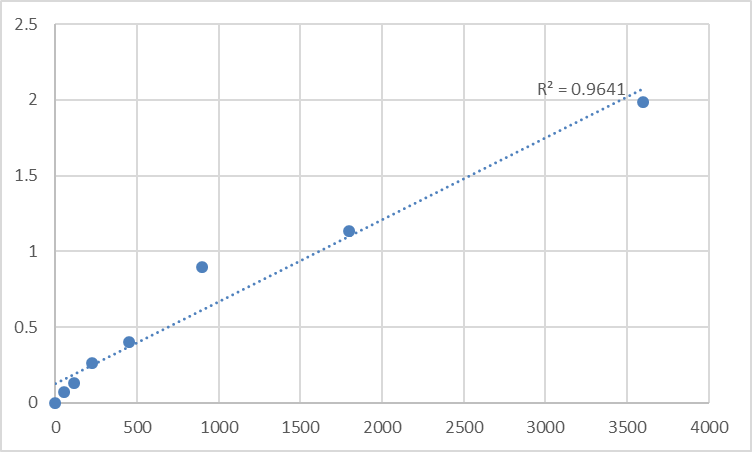
Step 3: Signal Detection and Data Analysis. Add 50 µL of Stop Solution to each well, which changes the color from blue to yellow. Measure the optical density (OD) of each well at 450 nm using a microplate reader within 30 minutes. Subtract the average OD of the blank wells from all other readings. Generate a standard curve by plotting the mean OD for each standard concentration on the y-axis against the concentration on the x-axis, using a four-parameter logistic (4-PL) curve fit. Use this curve to interpolate the SPOCK1 concentration in unknown samples.
Why Choose the Abbkine Human Testican-1 (SPOCK1) ELISA Kit?
• Confidence in Specificity: Rigorously validated antibodies ensure you are measuring SPOCK1 and not cross-reacting homologs, providing the specificity required for conclusive mechanistic insights and biomarker studies.
• Power to Detect Subtle Changes: The high sensitivity allows for the reliable quantification of SPOCK1 even in samples where it is present at low levels, such as in early-stage disease or certain biological fluids, capturing biologically relevant fluctuations.
• Foundation for Reproducible Science: The excellent precision and reproducibility minimize technical noise, allowing you to confidently attribute observed changes in SPOCK1 levels to your experimental variables, a cornerstone of robust, publishable research.
• Translational Research Bridge: The validation for clinical sample types (serum, plasma) makes this kit an ideal tool for bridging discoveries from the bench to potential bedside applications, facilitating biomarker validation studies.
Decipher the role of SPOCK1 in your research with precision. The Abbkine Human Testican-1 (SPOCK1) ELISA Kit (KTE60335) is the definitive solution for sensitive, specific, and reliable quantification of this pivotal matricellular protein, empowering your investigations into cancer biology, neuroscience, and beyond.
Product Reference: KTE60335 – Human Testican-1 (SPOCK1) ELISA Kit
Learn more and order: https://www.abbkine.com/product/human-testican-1-spock1-elisa-kit-kte60335/





