




Tired of Harsh Elutions? Why the Abbkine PurKine™ Biotin-Streptavidin Kit (KTP2030) is a Game-Changer for Native Protein Work
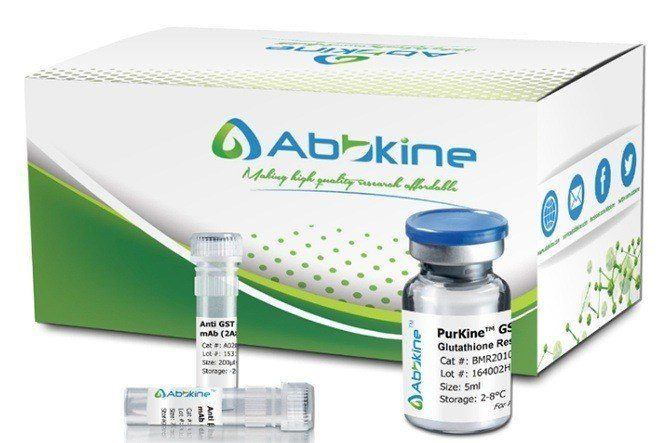
Let's be honest, purifying a protein is often the most frustrating part of an experiment. You spend ages cloning and expressing, only to lose half your yield or activity during purification. For folks working with native complexes or fragile proteins, the classic elution steps—low pH or high imidazole—can be a real knockout punch. That's where affinity systems with gentler options aren't just nice to have; they're essential. The Abbkine PurKine™ Biotin-Tag Protein Purification Kit (Streptavidin), catalog number KTP2030, taps directly into one of nature's strongest non-covalent bonds, offering a purification path that's both incredibly specific and remarkably mild.
So, how does this biotin-streptavidin affinity purification method actually work in practice? The genius lies in its simplicity and reversibility. You start by preparing your lysate from cells expressing your target protein fused to a biotin-tag. The kit’s prepared streptavidin agarose resin has an off-the-charts affinity for that tag, so when you mix the resin with your sample, your protein binds with exceptional specificity. Washing is straightforward, removing almost everything else. Now, for the best part: elution. Instead of denaturing conditions, you can use a gentle, competitive elution with excess free biotin or, for an even cleaner cut, a mild detergent. This gentle elution protocol is the key differentiator, making the PurKine™ Biotin-Tag Protein Purification Kit (Streptavidin) KTP2030 a top choice for pulling down functional protein complexes or enzymes where keeping everything in its native state is the entire point of the exercise.
But the value goes beyond just being gentle. The sheer robustness of the streptavidin-biotin interaction allows for some seriously stringent wash conditions. You can use higher salt or specific detergents in your wash buffers to really blast away non-specific interactors without worrying about losing your target. This is a huge advantage when you're dealing with crowded lysates or going after low-abundance proteins. It’s this combination of high-affinity capture and flexible, gentle elution that makes streptavidin-bead based protein isolation such a powerful strategy. Whether you're doing a simple one-step purification or setting up a pull-down assay to find binding partners, the tight binding gives you clean results.
Thinking about applications? This kit's utility is broad. It's perfect for native protein complex purification for structural studies or in vitro reconstitution assays, where maintaining every subunit's fold is critical. It's also a cornerstone technique for interactome studies using biotinylated bait proteins. And let's not forget its role in preparing samples for surface plasmon resonance (SPR) or other biophysical analyses—you need pure, active, and properly folded protein for that. The bottom line is that integrating a gentle affinity purification workflow with the biotin-streptavidin system provided by the Abbkine KTP2030 kit can significantly increase the success rate of downstream experiments. It moves the goal from just "getting protein" to "getting functional protein," which, in the end, is what actually moves the research forward.





