




The Universal Taste Partner: Quantifying Human TAS1R3 for Taste Physiology and Metabolic Insights
While distinct taste qualities like sweet and umami are perceived differently, they share a common molecular partner: the Taste receptor type 1 member 3 (TAS1R3). This protein is the indispensable dimerization partner for both the sweet taste receptor (forming TAS1R2/TAS1R3) and the umami taste receptor (forming TAS1R1/TAS1R3) on the tongue . Beyond its canonical role in taste, TAS1R3 is expressed in the gut, pancreas, and brain, where it functions as a nutrient sensor influencing metabolic hormone secretion, glucose homeostasis, and food intake regulation . Its widespread expression and functional versatility make it a critical target for research in sensory biology, nutrition, and metabolic diseases such as obesity and diabetes. The Human Taste receptor type 1 member 3 (TAS1R3) ELISA Kit (KTE60484) from Abbkine provides a highly sensitive and specific tool for the precise, quantitative measurement of this pivotal receptor protein in diverse biological matrices, enabling researchers to decode its multifaceted roles.
TAS1R3: The Indispensable Subunit for Sweet and Savory Perception
TAS1R3 is not a standalone receptor but the essential co-receptor that confers functionality to two major taste modalities. On taste bud cells, it heterodimerizes with TAS1R2 to form the sweet taste receptor, responding to natural sugars, artificial sweeteners, and some sweet-tasting proteins . When paired with TAS1R1, it forms the umami (savory) taste receptor, activated by L-amino acids like glutamate and synergistically enhanced by nucleotides . This shared usage of TAS1R3 highlights its fundamental role in chemosensation. Furthermore, genetic variations in the TAS1R3 gene are strongly associated with individual differences in sweet taste perception and preference, which can influence dietary choices and nutritional status . Quantifying TAS1R3 protein levels, therefore, provides a direct molecular readout of this key sensory pathway's capacity.
Extraoral TAS1R3: A Metabolic Regulator Beyond the Tongue
The discovery of TAS1R3 expression in enteroendocrine cells of the gut and in pancreatic islets has revolutionized our understanding of its physiological impact. In these tissues, TAS1R3-containing receptors are believed to sense luminal glucose and amino acids, triggering the release of gut hormones like glucagon-like peptide-1 (GLP-1) and glucose-dependent insulinotropic polypeptide (GIP) . This endocrine response regulates insulin secretion, gastric emptying, and satiety, positioning TAS1R3 as a direct link between nutrient ingestion and metabolic homeostasis. Dysregulation of this gut-based nutrient-sensing pathway is implicated in metabolic disorders, making TAS1R3 a protein of significant interest for translational research.
The Imperative for Precise TAS1R3 Protein Quantification
Understanding the functional contribution of TAS1R3 requires moving beyond genetic analysis to direct protein measurement. While mRNA expression studies provide insights, protein abundance is the ultimate determinant of functional receptor availability and can be modulated by post-translational mechanisms. Immunohistochemistry offers spatial localization but lacks the quantitative rigor needed for comparative studies across conditions or cohorts. A robust, quantitative Enzyme-Linked Immunosorbent Assay (ELISA) specifically for human TAS1R3 bridges this gap, enabling researchers to obtain absolute protein concentrations. This capability is vital for correlating receptor levels with phenotypic outcomes, assessing responses to dietary interventions, and validating the efficacy of genetic or pharmacological manipulations in research models.
Assay Principle: Engineered for Specificity and Sensitivity
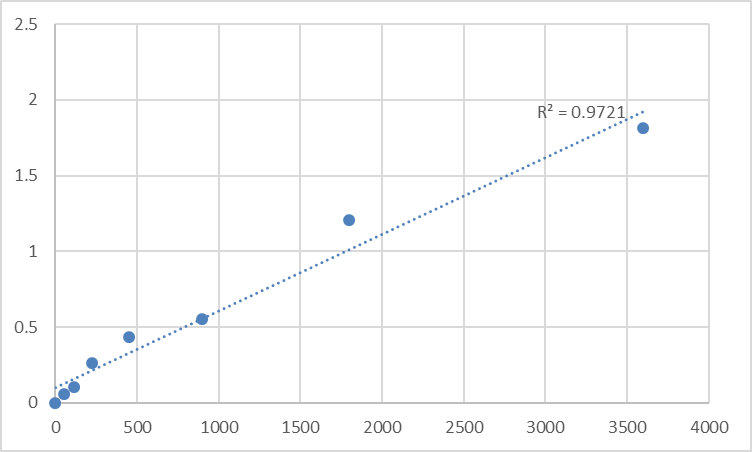
The Abbkine Human TAS1R3 ELISA Kit employs a sensitive two-site sandwich ELISA format, designed to minimize cross-reactivity and ensure accurate detection of the target protein . A microplate is pre-coated with a capture antibody specific for human TAS1R3. During incubation, TAS1R3 present in samples or standards binds to these immobilized antibodies. After washing away unbound materials, a biotin-conjugated detection antibody, targeting a distinct epitope on the TAS1R3 protein, is added to form an antibody-antigen-antibody "sandwich" complex. Following another wash, a Streptavidin-Horseradish Peroxidase (SA-HRP) conjugate is introduced, binding to the biotin. The addition of TMB substrate initiates an HRP-catalyzed colorimetric reaction, producing a blue color proportional to the amount of captured TAS1R3. The reaction is stopped with acid, turning the solution yellow, and absorbance is measured at 450 nm. A standard curve generated from known concentrations of recombinant human TAS1R3 enables precise quantification of unknown samples .
Key Performance Features and Technical Advantages
Engineered for reliability and ease of use, the TAS1R3 ELISA Kit delivers performance essential for demanding research:
• High Sensitivity and Broad Dynamic Range: The assay can detect TAS1R3 across a wide concentration range, enabling accurate measurement in diverse sample types, from tissue lysates to biological fluids, with a low limit of detection .
• Exceptional Specificity: The antibody pair is rigorously validated to ensure minimal cross-reactivity with other taste receptor family members or unrelated proteins, guaranteeing signal specificity to human TAS1R3 .
• Superior Reproducibility: The kit demonstrates high precision with low intra-assay and inter-assay coefficients of variation (CV), ensuring consistent and reliable results across technical replicates and different experimental days .
• Ready-to-Use Convenience: All critical components—pre-coated plate, lyophilized standards, detection antibodies, conjugates, buffers, and substrates—are provided in optimized, ready-to-use formats, minimizing preparation time and potential errors.
• Streamlined, High-Throughput Protocol: The straightforward procedure involves simple incubation and wash steps, typically completed within a few hours, allowing for the efficient processing of many samples in a single run.
• Validated for Multiple Matrices: The kit is suitable for quantifying TAS1R3 in a variety of biologically relevant samples, including serum, plasma, cell culture supernatants, and tissue/cell lysates .
Critical Applications in Diverse Research Fields
- Sensory Biology and Nutrition Science: Investigate TAS1R3 protein expression in taste tissue in relation to genetic polymorphisms, aging, or dietary habits to understand individual variation in sweet and umami taste sensitivity and its link to food preferences .
- Metabolic and Gastrointestinal Research: Quantify TAS1R3 levels in intestinal organoids, enteroendocrine cell lines, or gut biopsies to study its role in nutrient sensing, gut hormone release (e.g., GLP-1, GIP), and its implications for satiety signaling and metabolic disorders like obesity and type 2 diabetes .
- Characterization of Cellular and Animal Models: Accurately assess TAS1R3 protein expression in genetically engineered models (e.g., knockout, knockdown, or tissue-specific overexpression) to validate genetic manipulations and elucidate receptor function in vivo.
- Drug Discovery and Nutraceutical Development: Utilize the kit as a quantitative endpoint in screening campaigns to identify novel sweeteners, umami enhancers, or modulators of TAS1R3 signaling that could influence taste perception or metabolic pathways.
- Biomarker Exploration: Measure circulating or tissue-specific TAS1R3 levels in patient cohorts to explore its potential as a biomarker for metabolic health status, dietary responsiveness, or specific disease conditions.
- Validation of Omics Data: Provide orthogonal protein-level validation for findings from transcriptomic (RNA-seq) or proteomic studies that indicate differential regulation of the TAS1R3 gene.
A Versatile Tool for a Multifunctional Receptor
The Human TAS1R3 ELISA Kit from Abbkine is an indispensable resource for any laboratory investigating the complex interplay between taste, nutrition, and metabolism. By providing a sensitive, specific, and quantitative method to measure this key receptor subunit, the kit empowers researchers to generate robust data that can illuminate TAS1R3's role in sensory perception, its extraoral functions in metabolic regulation, and its potential as a therapeutic target. From basic taste physiology to translational metabolic research, this reliable assay is designed to deliver the precision needed for groundbreaking discoveries.
Product Reference: KTE60484 – Human Taste receptor type 1 member 3 (TAS1R3) ELISA Kit
Learn more and order: https://www.abbkine.com/product/human-taste-receptor-type-1-member-3-tas1r3-elisa-kit-kte60484/





