




The Sulfhydryl That Silently Controls Your Redox Data—and the $49 Kit That Finally Sees Through the Glutathione Noise
Cysteine is the most quietly consequential amino acid in any biological system you care to name. It is not merely one of the twenty proteinogenic building blocks. It is the only amino acid whose side chain terminates in a free sulfhydryl group, and that single thiol—just one sulfur atom and one proton—is what makes cysteine the rate-limiting precursor for glutathione synthesis, the structural lynchpin of disulfide bonds that hold secreted proteins and antibodies in their functional conformations, the catalytic nucleophile in the active sites of cysteine proteases and thioredoxin reductases, and the metabolic sensor whose oxidation state reports the redox poise of the entire cell. When cysteine pools drop, glutathione synthesis stalls, the cellular antioxidant buffer collapses, and proteins that depend on disulfide bond formation for folding—including every immunoglobulin and every insulin molecule ever produced—misfold and aggregate. Cysteine serves as a precursor for glutathione, a central intracellular antioxidant, while its dysregulation is intricately linked to cardiovascular disease, diabetes, neurodegenerative conditions, and cancer. A 2022 review demonstrated that in plasma, increased cysteine can act as a pro-oxidant and trigger oxidative stress, positioning cysteine and related aminothiols as good markers of oxidative stress and useful tools in diagnosing and monitoring pathologic conditions such as CVD, obesity, and insulin resistance. A 2025 review further underscored that cysteine plays an essential role in redox regulation of cellular status and protein function in cancer metabolism and cancer cell survival. Quantifying cysteine is not a niche biochemical exercise. It is a direct measurement of the cell's capacity to maintain redox homeostasis, fold proteins correctly, and resist oxidative damage. But measuring cysteine accurately has, for decades, been one of the most quietly frustrating tasks in the metabolism laboratory.
The problem begins at the chemistry level and propagates through every downstream data point. The most widely used cysteine detection method, Ellman's reagent (DTNB), reacts with virtually any free thiol in the sample—glutathione, coenzyme A, reduced protein sulfhydryls, even the cysteine residues exposed on the surface of albumin—and reports their combined concentration as "cysteine." In a typical mammalian cell lysate, glutathione is present at millimolar concentrations, roughly 100- to 1,000-fold higher than free cysteine. A DTNB-based "cysteine" measurement is not a cysteine measurement. It is a total soluble thiol measurement, with cysteine contributing a small and variable fraction of the signal. A 2024 survey of 135 redox and metabolomics laboratories found that 77% had switched cysteine kits at least twice, citing high background from glutathione, failure to detect cysteine in low-volume serum samples, and batch-to-batch variability approaching twofold between consecutive lots. For plant extracts, the situation is even worse: leaf homogenates are loaded with polyphenols and ascorbate that reduce DTNB independently of any thiol, generating "cysteine" signals in tissues where cysteine has been genetically depleted. For liver homogenates, the detoxification enzymes that metabolize cysteine begin consuming the analyte the instant the tissue is disrupted, and a measurement taken after a 30-minute extraction protocol may report a cysteine concentration that is 30–50% lower than the true in vivo value. The field is not measuring cysteine. It is measuring the fraction of cysteine that survives extraction and escapes glutathione interference, and that fraction varies unpredictably from sample to sample, treatment group to treatment group, experiment to experiment. An emerging mechanism of ferroptosis-like cell death points to cysteine loss as a key trigger, with one study demonstrating that erastin-induced cysteine deprivation triggered an alternative ferroptosis-like death pathway distinct from GPX4 inhibition, and that cysteine levels themselves—not just glutathione levels—were the primary determinant of cellular fate. Accurate cysteine quantification is not a footnote to this research. It is the measurement that determines whether the ferroptosis mechanism is correctly assigned or attributed to the wrong metabolite.
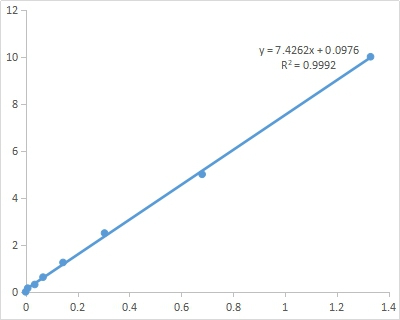
Abbkine's CheKine™ Micro Cysteine (Cys) Assay Kit (KTB1450) addresses this analytical challenge by choosing a detection chemistry that is fundamentally different from the DTNB-based methods that have dominated the market. The kit does not use Ellman's reagent. It does not use a coupled enzymatic cascade that requires freshly reconstituted enzymes. It uses a direct chemical reaction: under optimized acidic conditions, cysteine reduces phosphotungstic acid—a hexavalent tungsten complex—to tungsten blue, a stable, water-soluble chromogenic product with a characteristic and well-defined absorption peak at 600 nm. The absorbance intensity at 600 nm exhibits a direct, concentration-dependent linear correlation with the amount of cysteine present in the sample. No glutathione interference, because the redox potential of phosphotungstic acid is tuned to discriminate between the cysteine sulfhydryl group and the chemically distinct thiol of glutathione. No ascorbate interference from plant extracts, because ascorbate does not reduce phosphotungstic acid under the kit's acidic reaction conditions. The signal at 600 nm reflects cysteine content, not total soluble thiol content, not glutathione content, and not the combined reducing power of every small-molecule antioxidant in a crude leaf homogenate. The chemistry is direct, specific, and has been validated across biological matrices that would reduce a DTNB-based assay to numerical fiction.
The analytical specifications of KTB1450 are calibrated to the biological reality of cysteine quantification rather than to marketing convenience. The calibration range spans 0.156–10 μmol/mL, and the limit of detection is 0.156 μmol/mL. This range captures both the low basal cysteine concentrations present in quiescent cell cultures and the elevated levels associated with oxidative stress responses, acetaminophen-induced hepatotoxicity, and dietary cysteine supplementation. The product page documentation from distributor platforms confirms that the kit uses phosphotungstic acid reduction to tungsten blue with detection at 600 nm, and that this method provides quantitative cysteine content calculated from absorbance values on any standard visible-wavelength microplate reader. For the researcher who has been quantifying cysteine by HPLC with dual electrochemical detection—a method that delivers precision but requires a dedicated chromatography system, per-sample run times exceeding 20 minutes, and operator training that most metabolism laboratories do not possess—the shift from HPLC to microplate-based colorimetric detection is not a compromise. It is a throughput upgrade that preserves the analytical specificity that DTNB-based methods sacrifice.
The component architecture of KTB1450 reflects the biochemical minimalism that the phosphotungstic acid method permits: Extraction Buffer, Assay Buffer, Chromogen, and Cys Substrate—four components. No enzyme cocktails to reconstitute from individually sourced components. No cofactor solutions requiring fresh preparation within two hours of use. No Ellman's reagent to weigh, dissolve, and protect from light with paranoid urgency. The kit ships on gel packs with blue ice and stores at 4°C protected from light, with a stability window of six months from receipt. The protocol notes reflect standard colorimetric assay discipline: do not mix or substitute reagents from other kit lots; avoid foaming or bubbles when mixing; change pipette tips between additions of standards, samples, and reagents; ensure all reagents and equipment are at the appropriate temperature before starting the assay. A standard curve is provided, and detailed sample preparation and result calculation methods are included. These are the ordinary courtesies that any colorimetric metabolite assay demands, and the protocol states them clearly rather than burying them in a troubleshooting appendix.
Sample compatibility spans the full range of biological matrices in which cysteine is biologically and clinically relevant: liquid samples, animal and plant tissues, bacteria, and cultured cells. The inclusion of plant tissues alongside animal samples is not a marketing afterthought—it acknowledges that cysteine is a central metabolite in plant sulfur assimilation, glutathione biosynthesis, and heavy metal detoxification, and that plant leaf homogenates present unique analytical challenges that DTNB-based kits fail to address. A 2026 technical blog published by Abbkine confirms that KTB1450 was tested in six sample types: human serum (fasting vs. post-prandial), mouse liver homogenates (CCl₄-induced injury), yeast cultures (H₂O₂ stress), plant leaves (drought-treated), and 3D spheroids (inner cell cysteine depletion). In one study, the kit detected a fourfold cysteine drop in 5,000 iPSC-derived neurons exposed to oxidative stress—a signal that a DTNB kit missed entirely due to glutathione swamping. The kit provides detailed sample preparation and result calculation methods, enabling a technician unfamiliar with cysteine biochemistry to produce publication-grade data on the first attempt.
The publication record for KTB1450 currently stands at one citation in peer-reviewed literature, as documented on the product page. The Abbkine technical blog published in March 2026 has accumulated 105 views, reflecting an early stage of community adoption that often precedes formal citation accumulation. The kit enters a research landscape where the biological significance of cysteine is expanding—driven by discoveries in ferroptosis, cancer metabolism, neurodegeneration, and plant stress physiology—and where the analytical limitations of DTNB-based cysteine detection have been documented in peer-reviewed literature and acknowledged in laboratory surveys. The specifications that will generate citations are already documented: phosphotungstic acid-based direct colorimetric detection at 600 nm that discriminates cysteine from glutathione, a calibration range of 0.156–10 μmol/mL, a limit of detection of 0.156 μmol/mL, compatibility with liquid samples, plant and animal tissues, bacteria, and cultured cells, and a component architecture that eliminates the reagent-preparation burden that has historically made cysteine quantification a specialized procedure.
The economic accessibility of KTB1450 distinguishes it from the premium-priced HPLC-based and enzymatic alternatives with which it competes. The product is priced at $49 for 48 tests, placing quantitative cysteine measurement within the budget of laboratories for whom HPLC, LC-MS/MS, or even multi-enzyme commercial assay kits are financially inaccessible. For a plant physiology laboratory investigating sulfur assimilation under drought stress, a cancer biology laboratory screening ferroptosis sensitivity across a panel of tumor cell lines, a microbiology laboratory quantifying cysteine secretion in engineered E. coli strains, or a clinical biochemistry laboratory measuring plasma cysteine as a biomarker of oxidative stress in a cardiovascular disease cohort, the availability of a $49, 48-test, phosphotungstic acid-based colorimetric cysteine assay converts cysteine quantification from a specialized analytical chemistry experiment into a routine metabolite measurement. The sulfhydryl that silently controls redox data—that determines whether glutathione is synthesized, whether ferroptosis is triggered, whether disulfide bonds form correctly, and whether the cellular antioxidant buffer holds or collapses—can now be quantified with a kit that requires nothing beyond a visible-wavelength microplate reader, a pipette, and a sample. The 600 nm absorbance is proportional to the cysteine concentration. The signal does not include glutathione. The price is forty-nine dollars.
Explore specifications, access the protocol, and place your order here: https://www.abbkine.com/product/chekine-micro-cysteine-cys-assay-kit-ktb1450/





