




The Granule-Membrane Phosphatase That Predicts Type 1 Diabetes: Why PTPRN2/IA‑2β Quantification Needs a Proper Sandwich ELISA
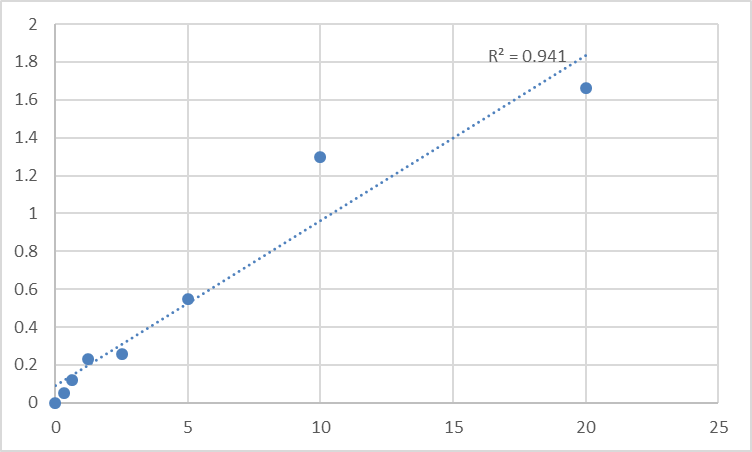
There are proteins every lab knows by their nickname, and then there is PTPRN2 — the gene you probably remember as IA‑2β (islet antigen‑2β) or phogrin (phosphatase enriched in secretory granules) but keep underestimating because it lives where most antibodies can't easily follow: the dense core secretory granule membrane of neuroendocrine cells. Officially the Receptor‑type tyrosine‑protein phosphatase N2 (UniProt: Q92932, PTPRN2, ~1057 aa precursor, mature ~120–130 kDa heavily glycosylated transmembrane form), it is the slightly less famous sibling of IA‑2/PTPRN, but in many ways the more revealing one: a granule‑anchored receptor‑type PTP whose extracellular C2‑like domain and juxtamembrane region form a major autoantigenic hotspot in type 1 diabetes (T1D) and a surface‑addressable marker of neuroendocrine/β‑cell secretory compartments that standard cytosolic readouts simply miss. The Human Receptor‑type tyrosine‑protein phosphatase N2 (PTPRN2 / IA‑2β) ELISA Kit (KTE61046) from Abbkine exists to fix that blind spot: a quantitative sandwich ELISA that turns this glycosylated, granule‑associated phosphatase into a calibrated ng/mL (or pg/mL) readout from tissue lysates, islet/β‑cell lysates, neuroendocrine tumor homogenates, and (with careful prep) even circulating extracellular vesicle/granule‑shed fractions.
PTPRN2 / IA‑2β in a Paragraph: A “Receptor” That Mostly Sits Inside — Until It Doesn’t
Unlike classical plasma‑membrane receptors flaunting an ectodomain to the bloodstream, PTPRN2’s extracellular region (with a C2 domain–like fold) is predominantly sorted into dense core secretory granules (chromaffin granules, islet β‑cell insulin granules, anterior pituitary, adrenal medulla, hypothalamic neurosecretory vesicles). The topology is classic RPTP:
• N‑terminus → lumen/granule exterior
• Single transmembrane span
• Cytoplasmic side → two tandem PTP domains (D1 catalytic, D2 regulatory)
Functionally, it participates in granule biogenesis, cargo sorting, and secretory regulation, and its cytoplasmic PTP activity modulates tyrosine‑phosphorylation signaling near the fusion machinery. But the reason clinicians and immunologists chase it is simpler: IA‑2β is one of the canonical autoantigens in T1D, often clustered with GAD65 (GAD2) and IA‑2 (PTPRN) in predictive autoantibody panels; IA‑2β autoantibodies can precede onset and refine risk stratification in relatives.
Why a Sandwich ELISA for PTPRN2 — And Why a Western Alone Won’t Carry the Claim
PTPRN2 is membrane/granule‑associated, glycosylated, and expressed in relatively restricted lineages — three things that punish “casual” quantification:
Problem What KTE61046’s sandwich ELISA does about it
Epitope masking by carbs/fixation Uses two independent anti‑PTPRN2 epitopes (pre‑coated capture + biotin detection) to avoid calling a smeared 120 kDa band “quantified”
Low tissue specificity / background in whole lysate Requires clarified, detergent‑solubilized homogenates (BBMV/granule‑enriched optional) → keeps signal tied to extractable granule membrane pool
Need for replicates & cohorts 96‑well format lets you run time courses, drug treatments, genotype panels, or small patient cohorts without chaining yourself to a transfer + film
Assay Principle: The KTE61046 Sandwich ELISA (Pre‑Coated / Biotin / HRP–TMB)
- A microplate is pre‑coated with a capture antibody specific for human PTPRN2/IA‑2β.
- Standards and samples (serum, plasma, tissue homogenates, cell lysates, cell culture supernatants, other biological fluids) are added; PTPRN2 present binds.
- Wash → biotinylated anti‑PTPRN2 detection antibody (different epitope) forms sandwich.
- Streptavidin–HRP → TMB → color ∝ bound PTPRN2.
- Stop → read 450 nm → interpolate from the PTPRN2 standard curve.
Typical performance envelope quoted across distributor summaries for this kit family:
Parameter Typical Value
Target Human PTPRN2 / IA‑2β / phogrin (UniProt Q92932)
Format 96‑well sandwich ELISA, pre‑coated capture
Detection Biotin‑Ab → SA‑HRP → TMB, 450 nm
Dynamic Range 0.156 – 10 ng/mL (7‑point standard)
Sensitivity (LOD) ~0.05–0.10 ng/mL
Intra‑Assay CV < 8% (often ≤ ~5–6%)
Inter‑Assay CV < 10–12%
Specificity No significant cross‑reactivity with IA‑2/PTPRN or unrelated RPTPs when validated
Samples Serum, plasma, tissue homogenates, cell lysates, culture supernatants, other biological fluids
Assay time ~3–5 hours
(As always, confirm exact range, dilution scheme, and lot‑specific recovery on the shipped certificate of analysis.)
Where Quantifying PTPRN2 Actually Advances the Paper
- Type 1 diabetes & islet autoimmunity (β‑cell health / stress)
Pancreatic β‑cell stress (ER stress, inflammation, viral mimicry) can alter granule protein exposure/shedding and shift IA‑2β pools. Measuring PTPRN2 protein in lysates (normalized to total protein or β‑actin/GAPDH) or in fractionated granule membranes gives you a more direct “β‑cell compartment” readout than a generic insulin IHC intensity.
(Note: circulating anti‑IA‑2β autoantibodies are measured by antibody immunoassay, not by this antigen ELISA — but the antigen ELISA is perfect for tissue/lysate/vesicle work.)
- Insulinoma & neuroendocrine tumor (NET) marker pipelines
C‑cell thyroid, adrenal medulla, pituitary, and pancreatic neuroendocrine tumors often retain granule‑membrane markers (chromogranins + IA‑2/IA‑2β). PTPRN2 quantification in tissue lysates/homogenates can complement CgA (CHGA) and synaptophysin (SYP) as part of a neuroendocrine profiling panel — especially when you want a protein‑level, plate‑readable variable.
- Secretory granule biology & vesicle shedding (EV/exosome feasibility)
Dense‑core granules can release microvesicles or EV subpopulations that carry PTPRN2 ectodomain fragments. If your lab is exploring granule‑derived circulating markers (e.g., in islet transplantation monitoring or NET liquid‑biopsy pilots), an affinity‑pure sandwich ELISA is the analytical starting point.
- CRISPR / AAV / siRNA validation in β‑cell lines & organoids
Editing PTPRN2 (or upstream granule‑sorting genes) and reporting “loss” via densitometry alone is weak; use KTE61046 to report % IA‑2β protein remaining ± SEM from a calibrated curve, normalized to mg total protein (BCA).
- Adrenal medulla & chromaffin cell models
Chromaffin granule membranes are a classic IA‑2β‑rich system; quantifying PTPRN2 across stimuli (nicotinic agonists, K⁺ depolarization, secretagogues) gives you a granule‑pool readout orthogonal to catecholamine release.
A Minimal Prep Blueprint So Your 450 nm Signal Means Granules, Not Debris
• Lyse in cold buffer with 1% (w/v) SDS or 0.5–1% Triton X‑100/NP‑40 + protease inhibitors; for “granule‑enriched,” many labs do a post‑nuclear spin → 10,000–16,000 ×g pellet → solubilize (PTPRN2 is membrane‑associated, so crude 600 ×g supernatants often under‑represent it).
• Clarify high‑speed (≥ 100,000 ×g if you want true microsomes; 16,000 ×g is common for “granule‑enriched pellet lysate”).
• BCA the same final lysate → express as ng PTPRN2 / mg total protein.
• Warm all kit reagents to RT ≥ 30 min before opening; protect TMB; stop uniformly; read 450 nm promptly.
• Run the full standard curve on every plate — granule‑membrane variation (recovery/loading) is exactly why you don’t reuse Tuesday’s curve.
The Bottom Line
PTPRN2/IA‑2β is the secretory‑granule phosphatase that bridges islet autoimmunity, neuroendocrine cell biology, and granule‑membrane signaling — but because it’s glycosylated and granule‑anchored, it punishes lazy sample prep and single‑epitope detection. The Human Receptor‑type tyrosine‑protein phosphatase N2 (PTPRN2 / IA‑2β) ELISA Kit — KTE61046 from Abbkine gives you the right architecture to measure it anyway: pre‑coated capture → biotin detection → HRP–TMB → 450 nm → ng/mL, in a ~3–5 hour workflow that fits inside a real lab day and produces numbers you can normalize, replicate, and — most importantly — defend.
Product Reference: KTE61046 – Human Receptor‑type tyrosine‑protein phosphatase N2 (PTPRN2) ELISA Kit
Learn more and order: https://www.abbkine.com/product/human-receptor-type-tyrosine-protein-phosphatase-n2-ptprn2-elisa-kit-kte61046/
(For Research Use Only; not for diagnostic procedures in humans.)





