




The Cytosolic Bodyguard of RNA: Why Measuring Human Ribonuclease Inhibitor (RNH1/PRI) Is a Quiet Power Move in Cancer, Liver, and Cell Stress Research
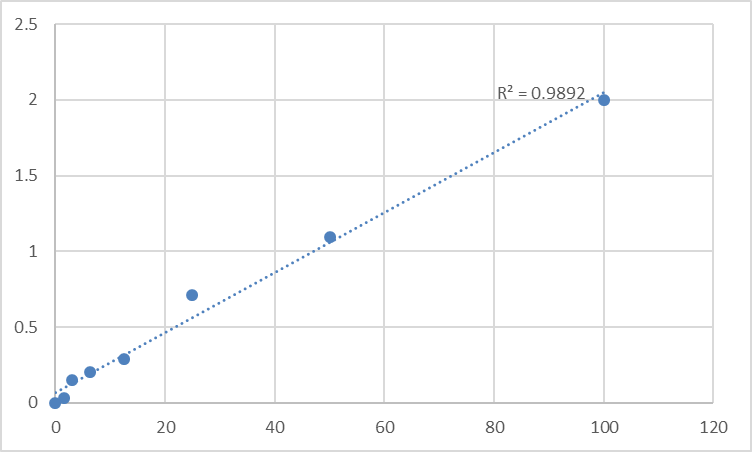
Most labs talk about RNA like it's the hero—mRNA expression, lncRNAs, circRNAs, single-cell atlases—but almost nobody asks the more dangerous question: what's actively chewing that RNA to pieces inside your own cells? That job falls disproportionately to the secreted and extracellular RNases (especially RNase A superfamily members like RNase 1/RNASE1 and, crucially, Angiogenin/ANG/RNASE5), and the intracellular gatekeeper that keeps them away from pristine ribosomal and messenger RNA is the Ribonuclease Inhibitor, better known as RNH1, PRI ("placental RNase inhibitor"), or simply RNH (UniProt: P13489, gene RNH1, ~456 aa, ~51 kDa, leucine-rich repeat protein). Far from a boring "housekeeping protector," RNH1 has become a biomarker and mechanistic node in liver disease, cancer progression, ischemia–reperfusion injury, and the angiogenin–stress axis—which means quantifying how much functional RNH1 protein is actually there matters a lot more than most people realize. The Human Ribonuclease Inhibitor (RNH1/PRI/RNH) ELISA Kit (KTE60787) from Abbkine gives you a way to measure it rigorously: a two-site sandwich ELISA that turns this high-affinity LRR sentinel into a calibrated concentration you can normalize, replicate, and defend.
RNH1 in a Paragraph: High-Affinity Shield, Redox Sensor, and Angiogenin Binder
RNH1 is a mostly cytosolic, N-terminally extended leucine-rich repeat (LRR) protein that clamps certain RNases with picomolar affinity (Kd often cited in the ~10−15–10−13 M range for RNase A/ANG under ideal conditions). Its job is elegantly simple in concept: bind and neutralize RNases before they devour cellular RNA, protecting ribosome integrity, RNA processing, and overall translational fidelity. But RNH1's real modern relevance comes from two twists:
- It's a redox rheostat. Its inhibitory activity depends on free reduced cysteines (especially Cys residues in the RNase-binding site) and is abolished by oxidation, alkylation, or limited proteolysis—which is why oxidative stress, ROS, and ischemia–reperfusion conditions can silently disable RNase control inside cells.
- It's the canonical inhibitor of Angiogenin (ANG). ANG is a secreted RNase with a paradoxical, pro-angiogenic activity (nuclear translocation, rRNA transcription promotion) that also requires RNase activity—and RNH1 sequesters ANG, keeping its nuclear entry and rRNA transcriptional boost in check. In cancer and stressed endothelia, the ANG / RNH1 ratio often tilts toward ANG, fueling new vessel formation and cell survival under hypoxia.
That duality—guardian of RNA integrity vs. regulator of angiogenic RNase signaling—is why RNH1 keeps showing up in places that matter: hepatocellular carcinoma & liver injury, colorectal cancer, pancreatic stress, neurodegeneration (ALS-linked ANG/RNH1 dynamics), and inflammatory/ischemic tissues.
Why "Just Western" Fails You When the Question Is Quantity
RNH1 is cytosolic, relatively abundant in some tissues (liver, kidney, placenta), and quite stable compared to many signaling proteins—but two practical problems persist:
• Oxidation/pH/proteolysis during prep can degrade the active conformation without erasing the mass you see on a blot.
• Loading normalization fights: if your "control" lane looks fine because Actin is fine, but your lysate had a mini-oxidative hit that inactivated RNH1, the functional story is already lost while the band still looks present.
A sandwich ELISA sidesteps the densitometry debate by giving you:
• Two independent epitopes (capture + biotin detection) → higher specificity for RNH1 vs. related LRR proteins or cross-reactive bands.
• A recombinant standard curve on every plate → you read OD450, interpolate ng/mL, normalize to mg total protein (BCA), and report RNH1 as ng/mg with proper CVs.
• Throughput that lets you run a time course × treatment × donor matrix without chaining yourself to transfers and exposures.
Assay Principle: KTE60787 — Two-Site Sandwich ELISA
The kit follows the classic, field-proven architecture:
- A microplate is pre-coated with a capture antibody specific for human RNH1/PRI/RNH.
- Standards and samples (serum, plasma, tissue homogenates, cell lysates, cell culture supernatants, other biological fluids) are added; RNH1 present binds.
- After washing, a biotinylated anti-RNH1 detection antibody (different epitope) forms the sandwich.
- Streptavidin–HRP binds biotin → TMB → color ∝ bound RNH1.
- Stop solution → yellow → read Absorbance at 450 nm → interpolate unknowns from the RNH1 standard curve.
Expected runtime is typically ~3–5 hours door-to-door, making it easy to slot into a morning–afternoon block.
(Where the official datasheet lists a formal detection range/LOD, anchor your Methods section to that lot-specific certificate; most kits in this class operate comfortably in the low ng/mL–mid ng/mL range with picomolar-equivalent sensitivity in optimized lysates.)
Where Quantifying RNH1 Actually Improves the Paper
- Liver disease, steatosis → HCC progression
Liver is naturally rich in RNH1 (historic name: placental RNase inhibitor, but it's liver-relevant too). Oxidative hepatic injury, viral hepatitis, NASH, and HCC often perturb the RNase/RNH1 balance; measuring RNH1 protein levels (and, where possible, the ANG/RNH1 ratio) gives you a translational readout that ties RNA integrity to tissue stress and angiogenic drive.
- Cancer cell stress & the ANG axis
If your model pushes cells into hypoxia, serum withdrawal, or proteotoxic stress, ANG secretion often climbs and RNH1 can be oxidized/inactivated. Quantifying RNH1 in lysates or (carefully interpreted) in circulation helps you argue whether tumor cells are protecting their transcriptome or losing that protection.
- Ischemia–reperfusion & ROS (heart, kidney, brain)
Because RNH1 activity is redox-sensitive, I/R models are a natural home for measuring it: oxidative bursts can "disarm" RNH1 even before overt lysis, and knowing the residual inhibitor pool size can explain why RNA damage markers (e.g., rRNA cleavage signatures) spike at specific reperfusion windows.
- Pancreatic/secretory stress contexts
The pancreas keeps massive RNase reservoirs in check; RNH1 here is classically essential to prevent autodigestion at the RNA level. In experimental models of acinar injury or stress, RNH1 quantification pairs well with amylase/lipase and ROS panels.
- sgRNA/AAV validation
Knockdown or overexpress RNH1? Don't rely on "band lighter vs. darker." Report % RNH1 protein remaining ± SEM from a calibrated curve, normalized to total protein, and—if your story allows—correlate that number to an ANG activity/cleavage assay or rRNA integrity readout.
Quick Prep & Normalization Rules (So Your ng/mL Is Real)
• Lyse cold in a mild buffer + protease inhibitors; keep extracts on ice; centrifuge to clarify (debris scatters light at 450 nm and fakes highs).
• Run BCA on the same final lysate and express RNH1 as ng RNH1 / mg total protein—this is usually the most defensible denominator.
• Watch oxidation: if your hypothesis is redox, consider a small parallel assay under reducing vs. non-reducing handling (add 1–5 mM DTT to a reserved aliquot during lysis for "total RNH1 antigen" vs. "endogenous oxidation state" interpretations).
• Warm reagents to RT ≥ 30 min before opening; protect TMB; stop uniformly; read 450 nm promptly; fit a 4-PL if your software allows.
• Store unopened per manual (2–8 °C typically); aliquot working stocks if you run it very frequently to avoid unnecessary freeze–thaw.
The Bottom Line
RNH1/PRI/RNH isn't just "the thing that stops RNase A from eating your RNA"—it's a redox-sensitive, ANG-regulating, liver-rich sentinel whose protein levels (and functional state) increasingly show up in the margins of cancer, ischemia, and liver disease biology. If your experiment touches those margins, you want more than a guess on a gel. The Human Ribonuclease Inhibitor (RNH1/PRI/RNH) ELISA Kit (KTE60787) from Abbkine is the tool that turns RNH1 into a calibrated variable: pre-coated capture → biotin detection → HRP–TMB → 450 nm → ng/mL, in a workflow that fits a real lab day and produces numbers you can actually take to a reviewer.
Product Reference: KTE60787 – Human Ribonuclease inhibitor (RNH1/PRI/RNH) ELISA Kit
Learn more and order: https://www.abbkine.com/product/human-ribonuclease-inhibitor-rnh1-pri-rnh-elisa-kit-kte60787/
(For Research Use Only; not for diagnostic use in humans.)





