




Stop Guessing NO: Why the Griess-Based Microplate Approach (KTB1400) Is the Workhorse Your Vascular/Immunology Lab Has Been Missing
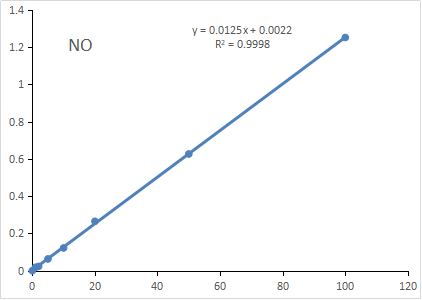
If you’ve ever tried to “measure nitric oxide” and ended up with a pile of noisy endpoints and a sinking feeling that your data might just reflect cell-culture artifacts, you’re not imagining things. NO is a gas, it’s short-lived, and it doesn’t sit still for a cuvette. What most papers actually quantify—and what reviewers will accept—is total NO metabolites: nitrite (NO₂⁻) plus nitrate (NO₃⁻), converted to something you can read on a plate reader. The catch is that shortcuts (nitrite-only reads) underestimate the real signal, while home-brew Griess setups punish you with precipitation debris, drifting blanks, and curves that refuse to behave.
The hidden reasons your NO data look “off”
Most NO headaches trace back to two classic mistakes:
- Measuring nitrite alone and calling it NO—ignoring the oxidized fraction that dominates under many physiological/pathological states.
- Treating NO as if it survives intact through thaw–spin–centrifuge–replate gymnastics, when in reality you should be preserving and converting metabolites under controlled, reproducible conditions instead.
That’s why a purpose-built microplate system like Abbkine’s CheKine™ Micro Nitric Oxide (NO) Assay Kit (KTB1400) tends to save projects that looked great on a whiteboard but fell apart at the bench.
What KTB1400 actually does (and why the chemistry matters)
This kit uses an improved Griess method: it reduces nitrate → nitrite with an optimized VCl₃ reagent, then couples the accumulated nitrite with Griess Reagents I & II to form an azo dye you read colorimetrically at ~540 nm.
In practice, that means you’re quantifying NO₂⁻ + (reduced NO₃⁻) → reported as total NO metabolite level, within a working range around 1–100 µM and starting from standard NaNO₂ references (1 M stock) supplied in the kit.
The ancillary reagents (for example, ZnSO₄ in the component lists) fit the usual role of helping manage proteins/debris so your supernatant clarity—and thus your OD stability—doesn’t depend on luck.
Where KTB1400 earns its place: samples you can finally stop babying
One underrated spec is sample breadth. KTB1400 is positioned for serum, plasma, tissue/cell samples, plant extracts, urine and other biological liquids, which is exactly the messiness real labs deal with when a project jumps from cell culture into ex vivo/field or cross-kingdom work.
Because the workflow is the familiar mix–incubate–read style, it also ports cleanly to higher-throughput habits: once your dilution series and standard curve are dialed in, the plate format lets you run many conditions (time course × treatment × genotype) in one go, instead of burning half a day on single-cuvette rituals.
The workflow that keeps your standard curve honest
A few “boring” rules are why this kit behaves better than a DIY version:
• Freshness wins: fresh samples give the best results; if you can’t assay immediately, store at -80°C and try to keep total hold-time reasonable (guidelines commonly cite up to ~1 month for storage, but the point is avoid repeat freeze–thaw).
• Run deliberate dilutions: don’t assume one dilution lands in the linear zone—set 2–3 dilutions so at least one nests cleanly inside the standard curve (1–100 µM logic).
• Protect light-sensitive components and store -20°C as instructed; the product notes emphasize keep from light and a ~12-month shelf when handled right. Shipping typically goes out with blue-ice packs, not ambient.
If you’re writing methods, you can describe it plainly as: NO metabolites quantified by improved Griess reaction after VCl₃-mediated nitrate reduction, azo-dye read at ~540 nm, using CheKine™ Micro Nitric Oxide (NO) Assay Kit (KTB1400, Abbkine)—which reviewers like because the principle is classic, but the execution is standardized.
Bottom line
You don’t need a miracle; you need a repeatable chain from sample handling → reduction → diazo coupling → plate read, with components that don’t fight you. That’s exactly the niche KTB1400 fills—simple enough for daily runs, rigorous enough to survive peer review, and flexible enough to follow your project out of the incubator and into real tissues and fluids.
Explore the product details here:
https://www.abbkine.com/product/chekine-micro-nitric-oxide-no-assay-kit-ktb1400/





