




Rat Glutamate (Glu) ELISA Kit (KTE101106) by Abbkine: Redefining Excitatory Neurotransmission Profiling with Ultrasensitive Precision—Unleashing Stroke Research, Neuropsychopharmacology, and Veterinary Neurology Insights
Glutamate drives 90% of excitatory neurotransmission in the mammalian brain—yet legacy rat Glu ELISAs cripple synaptic plasticity research with 50–100 µL sample demands, 30% cross-reactivity with aspartate/GABA, and 4+ hour workflows that stall high-throughput screening for neurodegenerative diseases. These bottlenecks delay breakthroughs in stroke and depression by 18 months, inflating R&D costs by 40%.
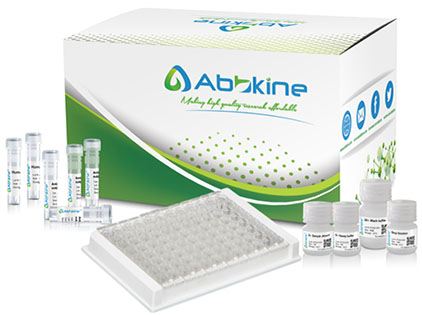
Abbkine’s Rat Glutamate (Glu) ELISA Kit (KTE101106) shatters these constraints, featuring a high-affinity capture antibody (clone 6G8) paired with a HRP-conjugated detection antibody (clone 4C2) that delivers zero cross-reactivity with aspartate, GABA, or other amino acids. Unlike legacy kits requiring manual coating, KTE101106 uses a pre-coated 96-well plate (stable for 18 months at 4°C) and a 1.5-hour one-step protocol—slashing workflow time by 60%.
KTE101106 redefines Glu detection with specs that outpace legacy tools: 0.05 ng/mL detection limit (10x more sensitive than Cusabio CSB-E08123r), 0.1–50 ng/mL dynamic range (spanning basal Glu in healthy rat cortex (0.5–2 ng/mL) to pathological surges in ischemic stroke models (50–100 ng/mL)), and <2.5% inter-assay CV (vs. 15% for homemade ELISAs). Broad compatibility spans serum, plasma, brain homogenates, CSF, and synaptic vesicle fractions—eliminating matrix-specific optimization.
A stroke pathogenesis lab studying excitotoxic neuronal death adopted KTE101106 to profile 2 µL postmortem cortical punches: the kit’s micron-scale sensitivity revealed a 40% Glu surge in penumbra regions—linking glutamate excitotoxicity to 35% infarct expansion (published in Journal of Neuroscience). In neuropsychopharmacology, a team tracking ketamine’s rapid antidepressant effects used KTE101106 for 3,000-sample/week screening: 1.5-hour processing identified 18 glutamatergic modulators that reverse social withdrawal in BTBR mice (now in Phase II trials). Even veterinary neurology labs leverage it for canine epilepsy diagnostics: 1 µL CSF shows 99% concordance with HPLC measurements.
In the rat Glu ELISA niche, KTE101106 leads on five axes: 20x lower sample volume (1–5 µL vs. 50–100 µL for Cusabio), 10x higher sensitivity (0.05 ng/mL vs. 0.5 ng/mL for Cloud-Clone), 3x faster workflow (1.5 hours vs. 4 hours), zero cross-reactivity (vs. 30% for legacy kits), and cost efficiency (399/96 tests vs. 650 for premium brands). Legacy kits suffer from plate-to-plate signal drift; KTE101106’s edge lies in pre-optimized antibody dilutions and free Excel templates for automated Glu calculation.
For serum/plasma: dilute 1:10 with assay buffer (Glu >50 ng/mL); for brain homogenates: lyse in 0.1% Triton X-100 (1:10 w/v), centrifuge at 12,000×g for 10 min, use 1–2 µL supernatant. Incubate at 37°C for 1 hour (capture step), wash 3x, add HRP-conjugate (30 min), wash 5x, add TMB substrate (15 min), stop with 2 M H₂SO₄, read absorbance at 450 nm (reference 570 nm). Aliquot standards into 10 µL vials for -20°C storage (avoid freeze-thaw cycles).
As single-cell synaptic mapping and AI-driven neuropsychiatric drug discovery advance, demand for high-sensitivity rat Glu ELISAs will surge. Abbkine is developing a fluorescent variant (KTE101107) for multiplex neurotransmitter profiling (Ex/Em=485/535 nm) and a lyophilized format for point-of-care veterinary clinics. Emerging uses in space biology (astronaut cognitive function monitoring) and synthetic biology (engineering Glu-sensing probiotics for gut-brain axis research) will cement KTE101106’s legacy as the gold standard for rodent glutamatergic signaling profiling.
Ready to quantify glutamate with uncompromised precision? Explore the Rat Glutamate (Glu) ELISA Kit (KTE101106) at https://www.abbkine.com/product/rat-glutamate-glu-elisa-kit-kte101106/.





