One-step TUNEL Apoptosis Assay Kit (Green Fluorescence) (KTA2010): Signal and Platforms Compared
Apoptotic DNA fragmentation is easy to describe and surprisingly easy to under-detect. The labeling chemistry and the readout instrument both matter.
The One-step TUNEL Apoptosis Assay Kit (Green Fluorescence) (KTA2010) relies on nicks in DNA that can be identified by terminal deoxynucleotidyl transferase (TdT), an enzyme that catalyzes the addition of fluorescein-labeled dUTPs. The page states the kit provides all essential components with an optimized assay protocol suitable for a fluorescence microplate reader, fluorescence microscope, or flow cytometer.
Labeling at DNA Nicks, Not at Intact DNA
The signal is anchored to double-strand breaks generated during apoptosis.
The background section explains that genomic DNA break-up by cellular nucleases is one of the most easily measured features of apoptotic cells. TUNEL — terminal deoxynucleotidyl transferase dUTP nick end labeling — detects fragmentation by labeling the 3′-hydroxyl termini of those breaks. TdT adds the labeled dUTPs at the nick sites, so fluorescence accumulates where DNA has actually been cut.
FITC Channel, Ex/Em 490/520 nm
The green signal sits in a channel most instruments already have.
The page specifies detection "at the popular FITC channel (Ex/Em = 490nm/520 nm)" and repeats this under Features & Benefits. Using a standard filter set means the assay does not demand a dedicated optical configuration, whether the readout is a plate reader, a microscope, or a cytometer.
One Protocol Across Three Instruments
Plate-reader kinetics, imaging, and population statistics can share the same labeling step.
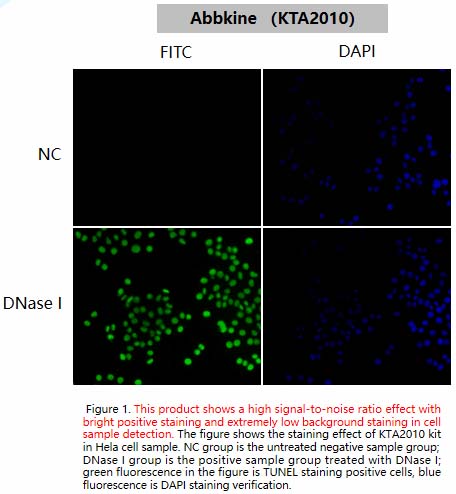
The applications note names three compatible platforms: fluorescence microplate reader, fluorescence microscope, and flow cytometer. That breadth is relevant when a study moves from a screen to imaging confirmation and then to quantified populations. The demonstration image shows fluorescence in HeLa cells treated with 10 U/mL DNase I for 10 minutes — a reference condition for checking that the labeling reaction works.
A Complete Component List, DNase I Included
The kit supplies both the labeling chemistry and the controls needed to challenge it.
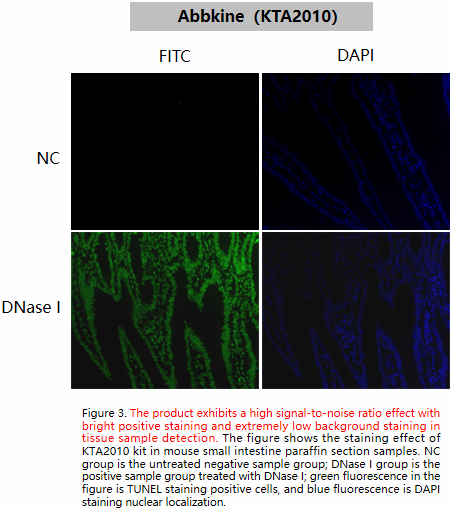
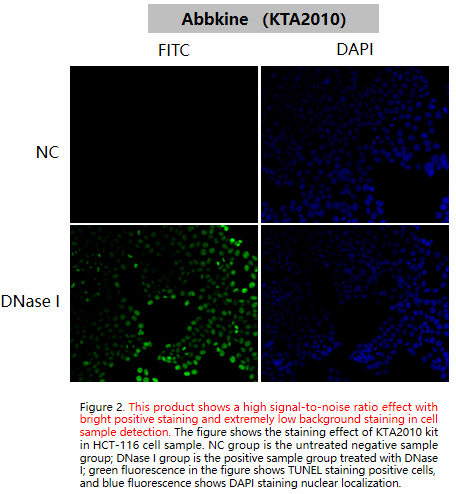
Components listed are TdT Enzyme, Equilibration Buffer (5×), Label Mix Green, Probe Diluent, DAPI (500×), BSA Working Solution, Triton X-100 (100%), DNase I (5 U/µL), 10×DNase I Buffer, Proteinase K (20 mg/mL), and Tissue Autofluorescence Quencher. The included DNase I matches the positive-treatment condition shown in the figure; the quencher addresses tissue autofluorescence. Storage is at least 12 months at -20°C from shipment, with gel pack and blue ice shipping. Formats are 20T, 50T, and 100T.
Buffer Handling Is Not Optional
The usage note flags a real chemical hazard that should shape how the assay is set up.
The page states the reaction buffer contains cacodylate and cobalt chloride, "highly toxic chemicals," and instructs users to wash skin contact immediately with plenty of water, seek medical advice if unwell, and not eat, drink, or smoke while using the reagent. Treat this as a planning input for lab PPE and waste handling, not a footnote.
| Feature | This Product | Conventional / typical approach |
|---|---|---|
| Detection channel | FITC, Ex/Em = 490/520 nm | varies by fluorophore |
| Compatible platforms | Plate reader, fluorescence microscope, flow cytometer | commonly optimized for one readout |
| Labeling chemistry | TdT-mediated addition of fluorescein-labeled dUTPs at DNA nicks | varies by fragmentation detection method |
| Reference treatment | DNase I supplied; 10 U/mL for 10 min shown in HeLa cells | often prepared separately |
| Storage | At least 12 months at -20°C, protected from light | varies by enzyme format |
For apoptosis work where a standard FITC channel must serve several instruments, KTA2010 is a direct fit. Check the product page for current component quantities and handle the reaction buffer with the stated precautions.
Reference: https://www.abbkine.com/product/one-step-tunel-apoptosis-assay-kit-green-fluorescence-kta2010/
For research use only. Not for diagnostic or therapeutic use.