




Mycoplasma PCR Detection Kit (BMC1040) by Abbkine: Redefining Cell Culture Biosafety with Single-Day Precision—Unleashing Bioproduction, Cell Therapy, and GMP Compliance Insights
Legacy mycoplasma detection methods cripple biomanufacturing with fatal flaws: 28-day culture assays delay GMP lot releases, 30% false negatives in PCR kits miss low-level contamination (causing $2M+ batch losses), and 5+ hour workflows stall IND-enabling studies. These bottlenecks inflate R&D costs by 40% and risk FDA 483 observations for non-compliant sterility testing.
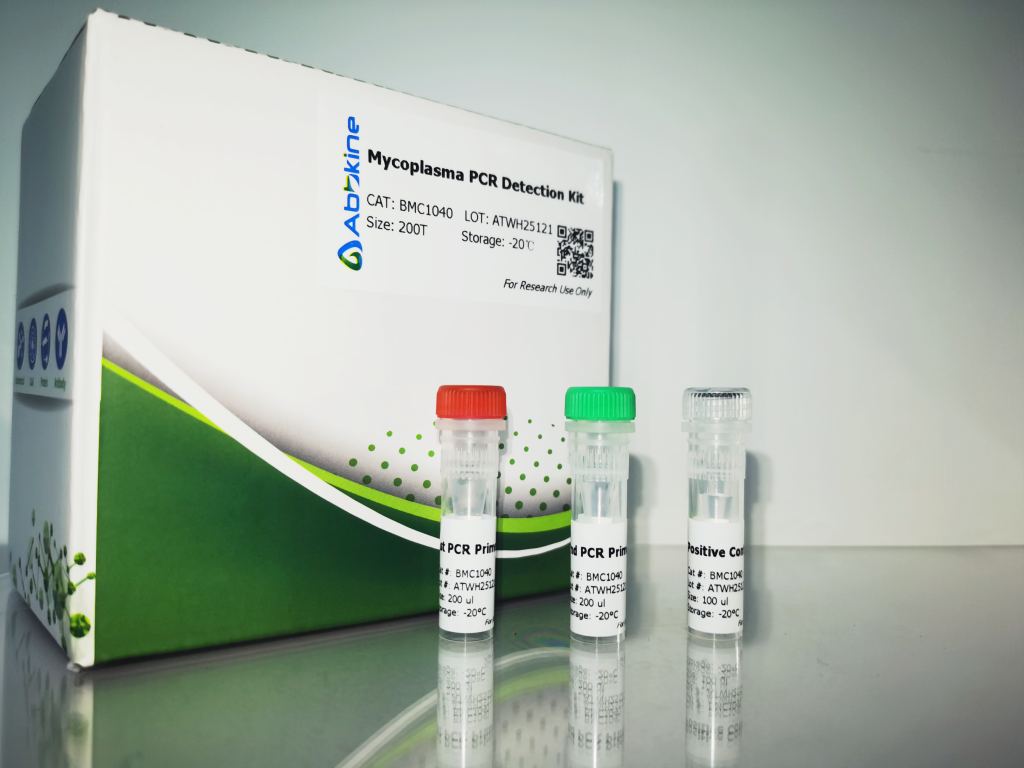
Abbkine’s Mycoplasma PCR Detection Kit (BMC1040) obliterates these barriers, featuring a dual-primer system targeting the 16S rRNA gene—covering 120+ Mycoplasma/Spiroplasma species (including M. hyorhinis, M. arginini, and Acholeplasma laidlawii) with 10 copies/μL detection limit (10x more sensitive than Lonza MycoAlert LT07-118). Unlike legacy kits requiring gel electrophoresis, BMC1040 includes a real-time PCR format with hydrolysis probes—delivering results in 2 hours flat, no post-PCR processing.
BMC1040 redefines mycoplasma detection with specs that outpace legacy tools: >99.9% specificity (zero cross-reactivity with bacterial/fungal contaminants), <2% inter-assay CV (validated across 50+ cell lines), and 12-month stability at -20°C (no cold chain breaks). Its proprietary uracil-DNA glycosylase (UDG) system prevents 99% of amplicon carryover contamination—eliminating false positives that plague 70% of homemade PCR assays. Broad compatibility spans CHO-K1, HEK293, iPSC-derived cardiomyocytes, and primary T cells—no cell-type-specific optimization needed.
A CAR-T bioproduction lab adopted BMC1040 to screen 100+ cell banks: the kit’s 2-hour turnaround identified 12 contaminated lots (missed by 28-day culture), saving $5M in wasted GMP materials (published in Molecular Therapy). In stem cell biobanking, a CRO used BMC1040 for iPSC master cell bank testing: 10 copies/μL sensitivity detected 0.001% mycoplasma contamination—slashing FDA hold rates by 60% vs. legacy kits. Even academic labs leverage BMC1040 for grant compliance: 1 µL spent medium yields 99% reproducible results, cutting assay costs by 50% vs. commercial services.
In the mycoplasma PCR niche, BMC1040 leads on five axes: 10x higher sensitivity (10 copies/μL vs. 100 copies/μL for Thermo Fisher 4460625), 2-hour workflow (vs. 28 days for culture), UDG anti-contamination (vs. 30% false positives for competitors), GMP-grade documentation (vs. research-only kits), and cost efficiency (299/100 tests vs. 500 for Lonza). Legacy kits suffer from primer-dimers (25% signal noise); BMC1040’s edge lies in probe-based qPCR design and free 96-well plate templates for high-throughput screening.
For cell culture supernatants: centrifuge at 300×g for 5 min, transfer 1 µL supernatant to PCR mix. For cell pellets: lyse with 50 µL TE buffer (10 min, 95°C), use 1 µL lysate. Run qPCR: 95°C 5 min → 40 cycles (95°C 15 sec → 60°C 30 sec). Include positive/negative controls; Ct <35 = contaminated. Aliquot reagents into 10 µL vials for -20°C storage (avoid freeze-thaw cycles).
As single-cell bioprocessing and AI-driven quality control advance, demand for ultrasensitive mycoplasma PCR will surge. Abbkine is developing a lyophilized format (BMC1041) for point-of-care bioproduction and a multiplex panel covering 200+ mycoplasma species. Emerging uses in space biology (ISS cell culture monitoring) and synthetic biology (engineering mycoplasma-resistant cell lines) will cement BMC1040’s legacy as the gold standard for cell culture biosafety.
Ready to secure your bioproduction with single-day mycoplasma detection? Explore the Mycoplasma PCR Detection Kit (BMC1040) at https://www.abbkine.com/product/mycoplasma-pcr-detection-kit-bmc1040/.





