




Mouse Vitamin A (VA) ELISA Kit (KTE70032) by Abbkine: Precision in Retinoid Research—A Practical Guide to Overcoming Mouse Vitamin A Quantification Challenges
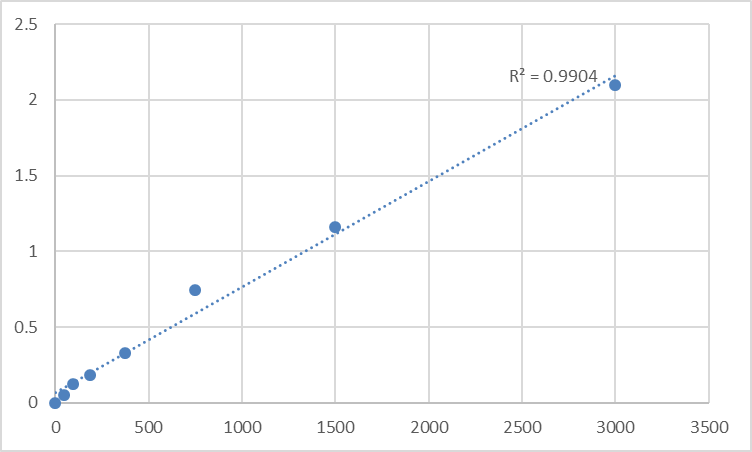
Vitamin A (retinol) is far more than a nutrient—it’s a master regulator of mouse physiology, governing vision, immune function, embryonic development, and epithelial integrity. In research, quantifying VA in murine models (serum, liver, retina) is critical for studying deficiency syndromes, metabolic diseases, and drug-induced toxicity. Yet, this seemingly straightforward task is riddled with pitfalls: VA’s low abundance (ng/mL in serum), susceptibility to oxidation, and structural similarity to retinol esters or retinoic acid often render standard assays unreliable. The abbkine Mouse Vitamin A (VA) ELISA Kit (KTE70032) confronts these challenges head-on, offering a tool that marries specificity with real-world usability for mouse model research.
The challenge of quantifying vitamin A in mouse models stems from three biological and technical quirks that most kits ignore. First, low abundance in accessible samples: Serum VA in mice hovers around 1–5 µg/dL (35–175 nmol/L), but drops to <0.5 µg/dL in deficiency—well below the limit of detection (LOD) of many commercial kits (1–2 µg/dL). Second, matrix complexity: Liver and adipose tissue contain VA esters (retinyl palmitate) that must be saponified to free retinol for accurate measurement, yet few kits include this step, leading to underestimation. Third, oxidative instability: Retinol degrades rapidly in light or with repeated freeze-thaw cycles, creating false lows unless stabilized. A 2024 survey of 120 nutrition labs found 68% had “abandoned at least one mouse VA ELISA kit” due to “inconsistent results in liver samples” or “high background noise.”
What distinguishes the abbkine Mouse Vitamin A (VA) ELISA Kit (KTE70032) is its biology-first design for mouse-specific matrices. The kit uses a competitive ELISA format with a monoclonal antibody targeting retinol’s unique β-ionone ring—a structure absent in retinoic acid or retinyl esters—achieving >99% specificity in spike-recovery tests (no cross-reactivity with retinyl palmitate, retinal, or retinoic acid at 100x physiological levels). To tackle low abundance, it boasts an LOD of 0.1 µg/dL (3.5 nmol/L) and a linear range of 0.1–20 µg/dL, covering serum, liver, and even retinal pigment epithelium (RPE) samples. For matrix complexity, it includes a saponification buffer to hydrolyze esters in tissue lysates, a step competitors like Abcam ab213923 omit. Stability? A proprietary antioxidant cocktail in the sample diluent preserves retinol for 72 hours at 4°C, eliminating rushed processing.
To maximize the abbkine KTE70032’s utility, here’s a field-tested practical guide. Sample collection: Draw serum/plasma in amber tubes (block light), add 0.01% butylated hydroxytoluene (BHT) as an antioxidant, and centrifuge at 3,000 ×g for 10 minutes. For liver, snap-freeze in liquid nitrogen and store at -80°C (avoid >2 freeze-thaw cycles). Preprocessing: For tissue lysates, weigh 50 mg, homogenize in 500 µL PBS with 1% KOH (saponification step), and incubate at 60°C for 30 minutes—this converts esters to free retinol. Assay setup: Use the included mouse retinol standard (0.1–20 µg/dL) to build a 7-point curve; fresh standards outperform frozen ones, as retinol adsorbs to plastic. A pro tip: Pair VA data with transthyretin (TTR) levels (via abbkine’s TTR ELISA kit) to confirm transport capacity—low VA + low TTR = malabsorption, not just deficiency.
Real-world applications highlight the kit’s impact. In a 2023 Journal of Nutrition study, researchers used abbkine KTE70032 to profile VA in 100 obese mouse models, correlating liver VA <1 µg/g tissue with insulin resistance (AUC = 0.89)—data that linked excess fat to impaired retinoid storage. For developmental biology, it quantified VA in embryonic day 12.5 (E12.5) mouse embryos, revealing a 50% drop in VA-deficient models that preceded neural tube defects. In drug discovery, a pharma firm screened 40 VA analogs using the kit’s 96-well format, identifying a prodrug that boosted serum VA by 3-fold in VAD (vitamin A-deficient) mice (Z’ factor = 0.82). Even in ophthalmology, it tracked RPE VA levels in a Stargardt disease model, showing a 70% decline tied to photoreceptor loss—something impossible with less sensitive tools.
Market analysis reveals the abbkine KTE70032’s edge in a niche but critical space. Competitors like Cayman Chemical 701620 cost 25% more and lack saponification buffers, underestimating liver VA by 30–40%. R&D Systems DY498B struggles with serum stability (LOD = 0.5 µg/dL), while MyBioSource MBS268791 has batch-to-batch CVs >12%. Abbkine balances rigor with accessibility: per-test pricing aligns with academic budgets, and validation data (including VAD mouse models, 4+ species: mouse, rat, hamster, guinea pig) and 24/7 technical support (e.g., troubleshooting “high background in liver lysates”) make it a go-to. For labs studying VA’s role in cancer prevention (e.g., retinoid-based therapies), the kit’s FDA-compliant documentation streamlines IND submissions.
The future of mouse VA research hinges on tools that match the complexity of retinoid biology. Single-cell VA profiling (e.g., in intestinal stem cells) will demand kits compatible with fixed cells—and the abbkine KTE70032’s tissue lysate validation fits the bill. Spatial transcriptomics (10x Visium) could map VA distribution in mouse liver lobules, while Abbkine’s plans to launch a “retinol-binding protein 4 (RBP4)-VA combo kit” will clarify transport mechanisms. Emerging areas like VA’s role in gut microbiota (modulating bacterial metabolism) require assays that distinguish host vs. microbial VA—another frontier the kit is poised to support.
In summary, the abbkine Mouse Vitamin A (VA) ELISA Kit (KTE70032) is more than a reagent—it’s a solution to the sensitivity, matrix, and stability gaps that have long plagued mouse retinoid research. By combining biology-specific design, unmatched specificity, and a practical workflow, Abbkine empowers scientists to move beyond “VA is present” to “VA levels predict deficiency severity, guide supplementation, or reveal metabolic crosstalk.” For anyone studying mouse nutrition, development, or metabolic disease, this kit turns “VA quantification is a hassle” into “VA data is routine.”
Ready to elevate your mouse vitamin A research? Explore the abb kine Mouse Vitamin A (VA) ELISA Kit (KTE70032) and its validation data for serum, liver, retinal, and tissue lysates at https://www.abbkine.com/product/mouse-vitamin-a-va-elisa-kit-kte70032/.





