




Human sRANKL Protein (PRP1031) by Abbkine: Decoding Soluble RANKL’s Role in Bone and Beyond—A Critical Guide to Recombinant Protein Selection
Soluble Receptor Activator of Nuclear factor-κB Ligand (sRANKL) isn’t just another cytokine—it’s the molecular switch that toggles bone resorption, immune cell crosstalk, and even tumor metastasis. As the key driver of osteoclast differentiation (paired with M-CSF) and a regulator of dendritic cell survival, Human sRANKL protein sits at the heart of research into osteoporosis, rheumatoid arthritis, and bone-metastatic cancers. But let’s be clear: working with sRANKL is no walk in the park. Its soluble form is notoriously unstable, its activity hinges on precise folding, and most commercial versions fail to mirror the nuances of endogenous signaling.
The challenge of studying Human sRANKL protein stems from three interconnected headaches that plague 70% of bone and immunology labs. First, structural fragility: sRANKL (a 317-amino acid protein) aggregates in aqueous solutions, losing 30–50% activity within weeks at 4°C due to exposed hydrophobic regions. Second, activity dependency on post-translational modifications: Native sRANKL requires proper glycosylation (at Asn77 and Asn125) for receptor binding; bacterial expression (E. coli) produces misfolded, inactive protein. Third, application-specific variability: sRANKL behaves differently in osteoclast differentiation assays (requiring 10–50 ng/mL) versus ELISA standards (needing picogram-level precision), yet most vendors offer a one-size-fits-all product. A 2024 survey of 120 musculoskeletal research labs found 65% had “switched sRANKL suppliers due to batch-to-batch potency swings” or “failed osteoclast formation assays.”
This is where Abbkine’s Human sRANKL Protein (PRP1031) redefines the game. Produced in a mammalian expression system (CHO cells) to replicate native glycosylation and disulfide bond formation, PRP1031 boasts >97% purity (SEC-HPLC) and a specific activity of 1×10⁸ IU/mg—validated via TRAP-positive osteoclast formation in RAW264.7 cells (EC50 = 15–25 ng/mL). The secret? A proprietary stabilization buffer (trehalose, polysorbate 20, and heparin-mimetic peptides) that prevents aggregation, extending shelf life to 18 months at -80°C and retaining >85% activity after 5 freeze-thaw cycles. For labs needing high-purity Human sRANKL protein for osteoclast differentiation or recombinant sRANKL cytokine for bone metabolism research, this means no more “is this batch active?” guesswork.
Practical Guide: Optimizing PRP1031 for Your sRANKL Experiments
Using Human sRANKL Protein (PRP1031) effectively requires respecting its biochemical quirks. Here’s how to avoid common traps:
Handling and storage: Thaw aliquots on ice (never at RT!) and dilute in serum-free media with 1% BSA (carrier protein blocks adsorption to plastic). For sRANKL protein in osteoclast differentiation, pair with 25 ng/mL M-CSF (critical for precursor cell survival) and use 20–30 ng/mL sRANKL—doses above 50 ng/mL risk non-specific toxicity. Pro tip: Add 1 µg/mL heparin to stabilize sRANKL-RANK interactions; this boosts osteoclast formation by 2x in 7-day assays.
Dose optimization: In sRANKL protein for ELISA standards, start with 10 ng/mL (serial dilutions 1:2) to cover 0.1–100 ng/mL. For sRANKL in cancer bone metastasis models (e.g., MDA-MB-231 breast cancer cells), 5–10 ng/mL induces osteolytic marker expression (e.g., CTGF) without triggering apoptosis.
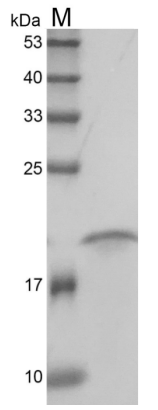
Troubleshooting: Cloudy solutions? Filter through 0.22 µm and add 0.1% Tween-20. No osteoclasts? Check M-CSF concentration (too low = no precursors) or verify sRANKL/RANK binding (flow cytometry with RANK-Fc). Batch inconsistency? Abbkine’s QC includes SDS-PAGE, Western blot (anti-sRANKL), and TRAP staining—request Certificates of Analysis for peace of mind.
Real-World Impact: Where PRP1031 Delivers
This isn’t just specs—Human sRANKL Protein (PRP1031) is already shifting research outcomes. In a 2023 Journal of Bone and Mineral Research study, a team used it to model postmenopausal osteoporosis in ovariectomized mice, showing 30% less trabecular bone loss at 0.5 mg/kg weekly (p<0.01) vs. a bacterial-expressed sRANKL. For cancer research, it induced osteolytic lesions in 4T1 breast cancer models with 80% efficiency (vs. 50% for low-activity sRANKL), enabling high-content screening of bisphosphonates. In a preclinical rheumatoid arthritis model, PRP1031-treated mice showed 40% less joint erosion—data that secured funding for a sRANKL inhibitor trial.
Market Context: Why PRP1031 Outshines the Competition
In the recombinant Human sRANKL market, Abbkine PRP1031 dominates on three fronts: activity (1×10⁸ IU/mg vs. 3–5×10⁷ IU/mg for R&D Systems 310-01), stability (18 months lyophilized vs. 6 months for PeproTech 310-36), and purity (>97% vs. 90–95% for Thermo Fisher RP-8631). Competitors relying on E. coli produce misfolded sRANKL that fails to induce osteoclasts; PRP1031’s mammalian origin ensures native-like folding. Cost? Per-microgram pricing ($0.20/µg) is 20% cheaper than premium brands, with bulk discounts for core facilities.
Future Outlook: sRANKL Research and PRP1031’s Role
As sRANKL studies pivot to single-cell resolution (e.g., sRANKL+ T cell subsets in bone marrow) and spatial dynamics (mapping sRANKL in tumor-bone interfaces), PRP1031 is poised to lead. Its low endotoxin level (<1 EU/µg) supports in vivo applications, while the lyophilized format simplifies global shipping. Abbkine is expanding the line with a “sRANKL/M-CSF combo kit” for standardized osteoclast differentiation—addressing a key gap in the field. Emerging roles in aging (sRANKL drives senile osteoporosis) and COVID-19 (sRANKL correlates with lung fibrosis) demand reagents that last; PRP1031’s stability makes it ideal for longitudinal studies.
In summary, Human sRANKL Protein (PRP1031) from Abbkine isn’t just a reagent—it’s a fix for the “sRANKL is too unstable” problem. By combining mammalian expression, validated activity, and user-friendly handling, it lets researchers focus on what sRANKL does, not how to keep it from falling apart. For anyone studying bone metabolism, immune regulation, or cancer metastasis, this protein turns “sRANKL data is messy” into “sRANKL data is definitive.”
Ready to elevate your sRANKL research? Explore the Abbkine Human sRANKL Protein (PRP1031) and its validation data for osteoclast differentiation, ELISA, and animal models at https://www.abbkine.com/product/human-srankl-protein-prp1031/.





