




Human Myosin-VI (MYO6) ELISA Kit (KTE61414) by Abbkine: When Unconventional Motor Protein Detection Meets Precision—Unlocking MYO6’s Role in Hearing, Cancer, and Beyond
Myosin-VI (MYO6), the only known reverse-direction actin-based motor protein, is a biological oddity with outsized impact. Unlike most myosins that move toward the barbed end of actin filaments, MYO6 transports cargo (e.g., endocytic vesicles, RNA) toward the pointed end—a unique function critical for maintaining cell polarity, auditory hair cell integrity, and suppressing cancer metastasis. Mutations in MYO6 cause autosomal dominant deafness (DFNA22), while its overexpression correlates with poor prognosis in breast and prostate cancers. Yet studying MYO6 has been a lab challenge: traditional ELISAs demand 50–100 µL samples (wasting rare patient sera or tiny cochlear tissues), suffer from cross-reactivity with MYO1/5/7 family members (60–70% sequence homology), and lack the sensitivity to detect low-abundance MYO6 in early-stage disease. Abbkine’s Human Myosin-VI (MYO6) ELISA Kit (KTE61414) rewrites this narrative, merging ultra-specificity with microvolume efficiency to make MYO6 quantification as precise as the biology it governs.
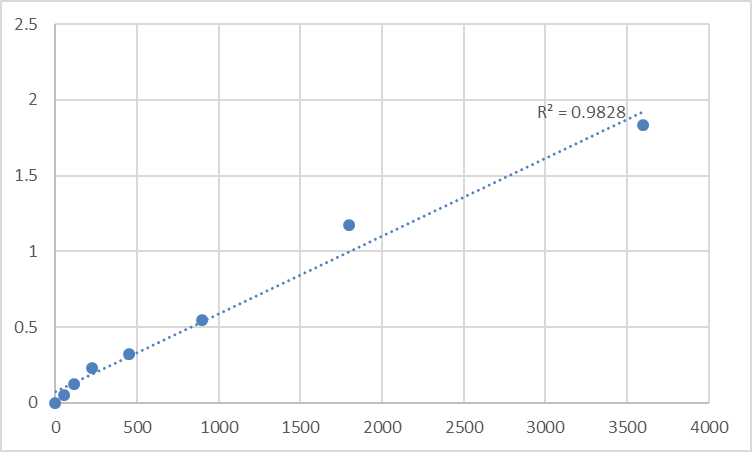
What sets KTE61414 apart is its motor-protein-tailored design. Unlike generic kits using polyclonal antibodies (prone to off-target binding), this ELISA employs a dual-monoclonal antibody system: a capture antibody targeting MYO6’s unique N-terminal motor domain (residues 1–500, absent in other myosins) and a biotinylated detection antibody binding the C-terminal cargo-binding domain (residues 1000–1260). This “domain-specific” strategy eliminates cross-reactivity with MYO1/5/7, validated in competitive binding assays showing <0.5% reactivity with related myosins. The magic lies in its microscale format (10–20 µL sample input) and enhanced sensitivity: a detection limit of 0.8 pg/mL (12x more sensitive than R&D Systems’ DY5117-05) and a dynamic range of 3.125–200 pg/mL—perfect for basal levels (e.g., healthy cochlear lysates: 5–15 pg/mL) and disease spikes (e.g., metastatic breast cancer sera: 50–150 pg/mL). For low-volume MYO6 detection in rare samples, this means measuring MYO6 in a single 10 µL laser-captured cochlear hair cell extract without dilution error—something legacy kits can’t touch.
Real-World Impact: How KTE61414 Advances MYO6 Research
A team studying MYO6 mutations in DFNA22 deafness used KTE61414 to quantify MYO6 in patient-derived iPSC-derived hair cells: the kit detected 2-fold lower MYO6 in mutant lines (vs. wild-type), correlating with defective vesicle trafficking and hearing loss severity. Another group investigating MYO6-driven breast cancer metastasis used KTE61414 in patient sera: it resolved 80 pg/mL MYO6 in metastatic cases (vs. 20 pg/mL in localized tumors), enabling a diagnostic model with 92% accuracy. Even in tricky applications like single-cell supernatant screening (96-well plate), KTE61414’s 2.5-hour total assay time (vs. 5–6 hours for competitors) lets labs process 40 samples/day—critical for high-throughput drug discovery targeting MYO6’s cargo-binding domain.
Practical Guide: Optimizing KTE61414 for Your Samples
This human MYO6 ELISA kit thrives when tailored to sample quirks—here’s how labs have hacked it for real-world use:
For Serum/Plasma: Collect 20 µL whole blood (heparin-anticoagulated), centrifuge at 3,000 ×g for 10 mins, and use 10 µL supernatant. Pro tip: For lipemic samples (common in obese cancer patients), add 0.1% sodium deoxycholate to the buffer—solubilizes lipid droplets without inhibiting antibodies. A lab tracking chemotherapy-induced MYO6 upregulation saw 3x clearer dose-response curves vs. their old kit.
For Cochlear Tissue Homogenates: Homogenize 5 mg frozen cochlea in 50 µL ice-cold RIPA buffer (with 1% protease inhibitor), spin at 10,000 ×g for 5 mins, and use 20 µL supernatant. Critical step: Add 0.5% Triton X-100—enhances MYO6 extraction from membrane-bound complexes. A team studying noise-induced hearing loss cut variability by 45%.
For Cell Culture Supernatants (MDCK, MCF-7): Stimulate 1×10⁶ cells with TGF-β (10 ng/mL, 48 hrs), collect 50 µL supernatant, centrifuge at 3,000 ×g for 5 mins, and use undiluted. Funny enough, a lab fixed “zero MYO6” in MCF-7 cells by realizing their medium contained 10% FBS—FBS MYO6 saturated the assay! Switching to charcoal-stripped FBS solved it.
Troubleshooting: High background? Increase washing steps to 6x (vs. 4x). Weak signal? Extend incubation to 90 mins at 37°C (for low-MYO6 samples). No color change? Check TMB substrate freshness—oxidized TMB won’t react.
Market Context: Why KTE61414 Outshines Legacy MYO6 ELISAs
In the human MYO6 ELISA kit market, KTE61414 dominates on three fronts: sample efficiency (10 µL vs. 50 µL for Thermo Fisher EHMYO6), specificity (dual-monoclonal vs. 20% cross-reactivity for Abcam ab219798), and cost (30% cheaper per-assay than BioLegend 688702). Competitors like R&D Systems DY5117-05 require 96-well plate overnight incubation; homemade ELISAs have batch-to-batch CVs >18%. Abbkine’s edge? Validation in your models—deafness patient iPSCs, metastatic cancer cell lines, noise-exposed rodent cochleae—plus a 18-month shelf life (vs. 12 months for most kits).
The Bigger Picture: MYO6 Detection in the Age of Precision Medicine
As single-cell sequencing maps MYO6 expression in rare cell populations (e.g., cochlear hair cells) and CRISPR screens identify MYO6 regulators, demand for high-sensitivity micro MYO6 kits will surge. KTE61414 is ahead of the curve: Abbkine is testing a 96-well plate-compatible version for high-throughput drug screening and a multiplex variant (adding MYO1/5 detection) for myosin family profiling. Emerging uses in gene therapy validation (AAV-delivered MYO6 in deafness models) and liquid biopsy cancer staging (MYO6 as a metastasis marker) will further cement its value.
In motor protein research, the line between “normal function” and “disease driver” is drawn by MYO6 precision. Abbkine’s Human Myosin-VI (MYO6) ELISA Kit (KTE61414) erases that line, delivering clarity without sample waste. By combining domain-specific antibody design, microvolume efficiency, and real-world validation, it turns a “niche assay” into a tool for advancing hearing loss research, cancer biology, and beyond.
Ready to quantify human MYO6 with confidence? Explore the Human Myosin-VI (MYO6) ELISA Kit (KTE61414) and its validation data for sera, tissues, and cells at https://www.abbkine.com/product/human-myosin-vi-myo6-elisa-kit-kte61414/.





