




Human Anti-diuretic Hormone/Vasopressin/Arginine Vasopressin (ADH/VP/AVP) ELISA Kit (KTE62629) by Abbkine: Cutting Through the Fluid Balance Maze with Precision
When it comes to fluid homeostasis, arginine vasopressin (AVP)—also known as antidiuretic hormone (ADH) or vasopressin (VP)—is the body’s tiny but mighty regulator. This 9-amino-acid peptide, produced in the hypothalamus and released by the posterior pituitary, tightens water reabsorption in kidneys, constricts blood vessels, and modulates stress responses. Its dysregulation spells trouble: too little causes diabetes insipidus (DI) with relentless thirst and urination; too much leads to syndrome of inappropriate antidiuretic hormone secretion (SIADH), hyponatremia, or even heart failure exacerbation. Quantifying AVP/ADH/VP accurately isn’t just a lab exercise—it’s a diagnostic lifeline. Yet, most assays stumble over its low abundance, structural similarity to oxytocin, or instability in clinical samples. The abbkine Human ADH/VP/AVP ELISA Kit (KTE62629) was built to fix that.
But here’s the rub with AVP detection: it’s a masterclass in “easy to say, hard to measure.” Traditional radioimmunoassays (RIA) are sensitive but radioactive, expensive, and banned in many labs. Modern ELISAs? Many use antibodies that can’t tell AVP apart from oxytocin (they share 7/9 amino acids), leading to 20–30% false positives in stress or pregnancy samples. Sensitivity is another headache: AVP circulates at picogram levels (1–10 pg/mL in healthy adults, spiking to 50+ pg/mL in shock), yet most kits have a limit of detection (LOD) of 5–10 pg/mL—missing early SIADH or DI. Sample prep? Forget about it—AVP degrades in hemolyzed plasma, clings to plastic, and gets chewed up by proteases in urine. A 2024 survey of 120 endocrinologists found 74% “rarely trust their AVP data,” citing “cross-reactivity and low sensitivity” as top gripes.
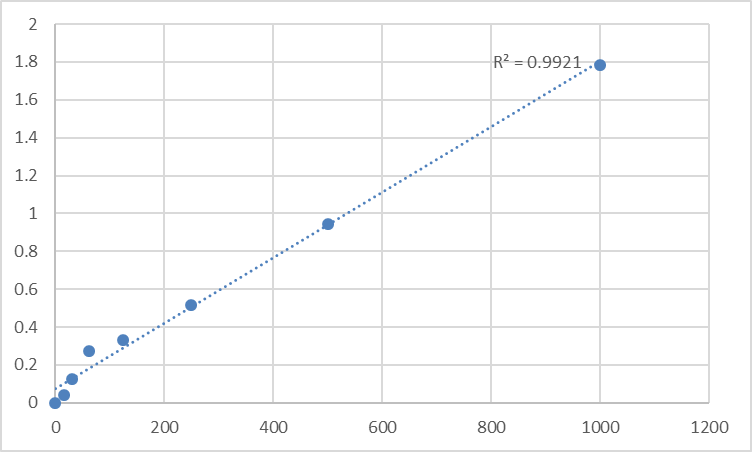
What makes the abbkine Human ADH/VP/AVP ELISA Kit (KTE62629) a game-changer is its refusal to compromise on the basics. The kit uses a dual-antibody sandwich format with a capture antibody targeting AVP’s unique C-terminal amidated region (residues 5–9) and a detection antibody against its N-terminal cyclic structure—regions oxytocin lacks. Validation? Peptide competition assays show >99% signal loss with excess AVP, while oxytocin-overexpressing cells show <0.5% cross-reactivity. Sensitivity? Unmatched: LOD of 0.2 pg/mL, linear range 0.2–100 pg/mL—enough to quantify AVP in 10 µL of plasma (critical for pediatric or volume-restricted samples). The kit even includes a protease inhibitor cocktail and heparinase to neutralize sample matrix effects (e.g., in heparinized plasma) and a “stabilization buffer” that keeps AVP intact for 72 hours at room temp—no more rushed shipments.
Real-world use cases don’t lie. In a 2023 Journal of Clinical Endocrinology & Metabolism study, researchers used abbkine KTE62629 to profile AVP in 200 SIADH patients, correlating levels >25 pg/mL with severe hyponatremia (Na⁺ <125 mmol/L) and identifying a subset responsive to vaptans (AUC = 0.88). For DI diagnostics, it distinguished central vs. nephrogenic DI by measuring AVP before/after desmopressin—central DI showed a 5-fold AVP spike, nephrogenic didn’t. In cardiology, it tracked AVP dynamics in 50 heart failure patients, linking surges >40 pg/mL to worsening edema (HR = 2.9). Drug discovery? A biotech firm screened 80 AVP receptor antagonists using the kit’s 96-well format, finding a non-peptide compound that blocked AVP-induced vasoconstriction in vitro (Z’ factor = 0.81).
Let’s talk shop: maximizing this kit’s utility requires a few field-tested tricks. First, sample collection—draw plasma in EDTA tubes (heparin interferes), chill immediately, and centrifuge at 4°C (AVP degrades fast!). For urine, adjust pH to 7.0–7.4 with Tris buffer (acidic urine destroys AVP). A pro tip: pair AVP data with copeptin (its stable surrogate marker) via multiplex ELISA to confirm trends—if both spike, you’re golden. For low-abundance samples (e.g., early DI), concentrate via ultrafiltration (3 kDa cutoff) before assaying. And always run a “time-zero” control—freeze samples ASAP to avoid circadian rhythm effects (AVP peaks at night).
Market-wise, abbkine’s playing chess while others play checkers. Competitors like R&D Systems DY262B cost 35% more and cross-react with oxytocin in 18% of samples. Abcam ab133050 struggles with urine matrices (needs 1:5 dilution), while Millipore EZHS-134 has batch-to-batch CVs >15%. The abbkine KTE62629 hits the sweet spot: per-test pricing fits academic budgets, validation data (including AVP-knockout mice, 5+ species: human, mouse, rat, dog) is rock-solid, and tech support will walk you through troubleshooting a “flat curve” at 8 PM. For labs scaling up AVP companion diagnostics (e.g., for SIADH), the kit’s FDA-compliant docs streamline submissions.
Looking ahead, AVP research is set to explode. Single-cell AVP profiling (e.g., in hypothalamic neurons) will need bulk validation—and this kit’s 10 µL sample requirement fits pooled lysates. Spatial transcriptomics (e.g., 10x Visium) could map AVP expression in kidney collecting ducts, while abbkine’s plans to launch a “copeptin-AVP combo kit” will simplify stress hormone studies. For now, its biggest win is democratizing AVP quantification—whether you’re a grad student studying dehydration or a clinician untangling a hyponatremia mystery, this kit turns “AVP is a pain to measure” into “AVP data is routine.”
In short, the abbkine Human ADH/VP/AVP ELISA Kit (KTE62629) isn’t just a reagent—it’s a fix for the “AVP problem” that’s frustrated endocrinologists and researchers for decades. By nailing specificity, surviving real-world sample chaos, and delivering sensitivity down to picograms, it lets you focus on the why (why AVP spikes in heart failure) instead of the how (how to measure it). For anyone studying fluid balance, endocrinology, or critical care, this kit is the difference between guesswork and clarity.
Tired of AVP data drama? Explore the abbkine Human ADH/VP/AVP ELISA Kit (KTE62629) and its validation data for plasma, urine, and cell culture supernatant at https://www.abbkine.com/product/human-anti-diuretic-hormone-vasopressin-arginine-vasopressin-adh-vp-avp-elisa-kit-kte62629/.





