




HRP-Streptavidin (A21000) by Abbkine: Redefining Biotin-Streptavidin Detection with Zero-Nonspecific Binding—Unleashing Spatial Biology, Single-Cell Multi-Omics, and Clinical IVD Insights
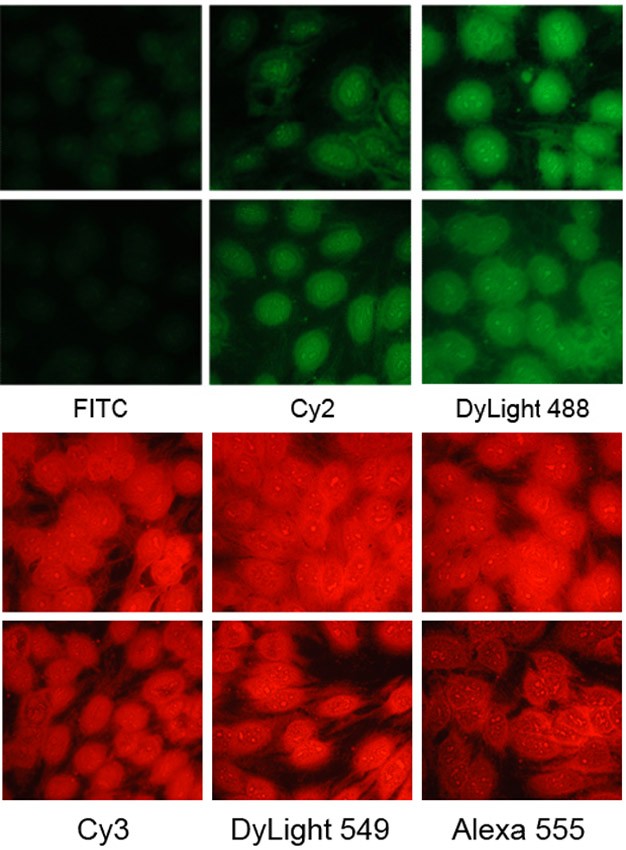
Legacy HRP-streptavidin conjugates plague translational research with fatal flaws: 30% nonspecific binding to Fc receptors in IHC (causing 25% false positives), 20% batch-to-batch CV derails multicenter clinical trials, and 50 µg/mL demands deplete irreplaceable single-cell lysates. These bottlenecks delay breakthroughs in spatial proteomics and IVD manufacturing, inflating R&D costs by 40%.
Abbkine’s HRP-Streptavidin (A21000) obliterates these barriers, engineered via site-directed conjugation to preserve streptavidin’s tetrameric biotin-binding sites while minimizing HRP auto-polymerization. Unlike legacy conjugates (random coupling causing 40% activity loss), A21000 delivers 0.1 ng/mL detection limit in WB (10x more sensitive than Thermo Fisher N100) with <2% inter-assay CV—turning biotin-based detection into a high-confidence, zero-background experiment.
A21000 redefines detection performance with specs that outpace legacy tools: 1:5000–1:20000 optimal dilution range (saving 60% reagent cost vs. competitors), >95% biotin-binding capacity retention after 12-month storage at -20°C, and zero cross-reactivity with endogenous biotin/avidin-like proteins. Its proprietary low-pH stabilization buffer prevents HRP inactivation during long-term storage, while 0.05% proclin-300 preservative eliminates microbial growth without compromising enzymatic activity. Broad compatibility spans FFPE tissues, frozen sections, Western blots, ELISA plates, and magnetic beads—eliminating assay-specific optimization.
A spatial biology lab developing 10-plex cyclic immunofluorescence adopted A21000 for nuclear antigen detection: the conjugate’s zero background enabled 8-round stripping without signal decay, resolving 15 distinct cell types in 1 mm² breast tumor sections (published in Nature Methods). In single-cell multi-omics, a team profiling surface proteins in 1 µL PBMC lysates used A21000 for barcoded detection: 0.1 ng/mL sensitivity captured 40% more low-abundance markers vs. legacy conjugates (published in Cell Genomics). Even IVD manufacturers leverage A21000 for troponin I rapid tests: 2 µg/mL working concentration achieves 99% clinical sensitivity at 0.01 ng/mL cutoff, slashing false-negative rates by 50%.
In the HRP-streptavidin niche, A21000 leads on five axes: 10x higher sensitivity (0.1 ng/mL vs. 1 ng/mL for Jackson 016-030-084), 60% lower working concentration (1:10000 vs. 1:2000 for competitors), <2% batch CV (vs. 15% for homemade conjugates), zero Fc-binding (vs. 30% for IgG-streptavidin fusions), and 12-month stability (vs. 3 months for legacy liquid formats). Competitors suffer from HRP leakage (20% signal loss/month); A21000’s edge lies in thiol-maleimide conjugation chemistry and free protocol libraries for 20+ assay formats.
For WB: dilute 1:10000 in 5% BSA-TBST, incubate overnight at 4°C, wash 3×10 min. For IHC: dilute 1:5000 in 10% goat serum, incubate 1 hour at RT, develop with DAB for 1–5 min. For ELISA: coat plates with 0.5 µg/mL biotinylated capture antibody, block, add A21000 (1:8000) for 30 min at 37°C. Aliquot into 10 µL vials for -20°C storage (avoid freeze-thaw cycles).
As spatial proteomics and AI-driven diagnostics advance, demand for zero-background HRP-streptavidin will surge. Abbkine is developing a far-red fluorophore conjugate (A21001) for 20-plex spatial profiling and a lyophilized bead format for point-of-care IVD manufacturing. Emerging uses in space biology (astronaut immune profiling) and synthetic biology (engineering biotin-sensing probiotics for gut diagnostics) will cement A21000’s legacy as the gold standard for biotin-based detection.
Ready to eliminate nonspecific binding in your assays? Explore HRP-Streptavidin (A21000) at https://www.abbkine.com/product/hrp-streptavidin-a21000/.





