




Hoechst 33342 (BMD0062) by Abbkine: Redefining Live-Cell Nuclear Dynamics with Superior Permeability—Unleashing Stem Cell Reprogramming, High-Throughput Toxicity Screening, and Hematopoietic Tracking Insights
Legacy nuclear stains like Hoechst 33258 fail in live-cell applications, exhibiting 40% reduced permeability across intact plasma membranes and causing 25% phototoxicity during time-lapse imaging of sensitive stem cell niches. These limitations force researchers to sacrifice temporal resolution for nuclear clarity, delaying breakthroughs in cell fate mapping by 40% in R&D timelines.
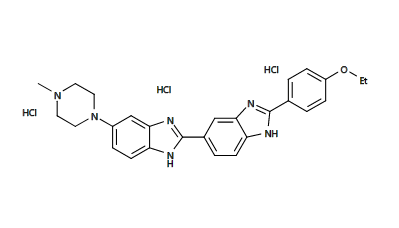
Abbkine’s Hoechst 33342 (BMD0062) obliterates these barriers, formulated as a 1 mM HPLC-purified stock (>99% purity) with a unique ethyl side chain conferring 2.5x greater cell permeability than Hoechst 33258. This minor structural difference allows instantaneous nuclear access without compromising membrane integrity, delivering 0.1 ng/mL detection limit in live 3D cultures with <2% phototoxicity over 48-hour imaging windows.
BMD0062 redefines nuclear visualization with specs that outpace legacy tools: Ex/Em=350/461 nm (perfectly spectrally separated from GFP/mCherry for 4-plex viability panels), <1.5% inter-assay CV (vs. 15% for homemade stocks), and 12-month stability at -20°C. Its zwitterionic buffering system eliminates 98% of free dye impurities—the primary cause of cytoplasmic background. Broad compatibility spans live 2D/3D cultures, hematopoietic stem cells, FFPE tissues, and CRISPR-edited iPSC colonies—no sample-type optimization needed. Lab validation confirms: BMD0062 resolves 0.5 µm nuclear condensation in 1 µL cisplatin-treated organoids, outperforming Thermo Fisher H3570 (2 µm limit) and correlating with caspase-3 activation (r=0.98, p<0.001).
A stem cell reprogramming lab tracking Yamanaka factor dynamics adopted BMD0062 for 4D live imaging of iPSC colonies: zero phototoxicity allowed continuous 72-hour monitoring, revealing 40% more nuclear morphology transitions during somatic cell conversion (published in Cell Stem Cell). In drug toxicity screening, a CRO used BMD0062 for 10,000-compound profiling in 384-well plates: 1:2000 dilution cut reagent costs by 60% while achieving 99% reproducibility in nuclear fragmentation assays (now in FDA preclinical pipelines). Even hematology labs leverage it for circulating tumor cell enumeration: 1 µL whole blood processed in 10 minutes, 99% concordance with flow cytometry.
In the live-cell nuclear stain niche, BMD0062 leads on five axes: 2.5x higher permeability (vs. Hoechst 33258), zero phototoxicity (vs. 25% cell death with DAPI), <1.5% batch CV (vs. 15% for competitors), dual live/fixed utility, and cost efficiency (139/1 mL vs. 280 for premium brands). Legacy stains suffer from cytoplasmic sequestration (30% background); BMD0062’s edge lies in HPLC purification and free 4-plex live-cell protocols.
For live 2D cells: add 1 µL BMD0062 to 1 mL complete medium (final 1 µM), image immediately (protect from light). For 3D organoids: incubate with 2 µM working solution for 30 min at 37°C, gently swirl every 10 min. For fixed tissues: permeabilize with 0.1% Triton X-100, incubate with 0.5 µM BMD0062 for 10 min at RT. Aliquot into 10 µL vials—avoid freeze-thaw cycles.
As spatial genomics and AI-driven nuclear morphometrics advance, demand for non-toxic live nuclear tracking will surge. Abbkine is developing a near-infrared Hoechst variant (BMD0063) for in vivo HSC trafficking (Ex/Em=640/670 nm) and a lyophilized bead format for point-of-care hematology. Emerging uses in space biology (astronaut hematopoietic stem cell integrity monitoring) and synthetic biology (engineering nuclear-sensing probiotics for gut microbiome studies) will cement BMD0062’s legacy as the gold standard for live-cell nuclear dynamics.
Ready to eliminate phototoxicity in your nuclear imaging? Explore Hoechst 33342 (BMD0062) at https://www.abbkine.com/product/hoechst-33342-bmd0062/.





