




Hoechst 33258 (BMD0061) by Abbkine: Redefining Nuclear Staining with Dual Live/Fixed Utility—Unleashing 4D Neurodevelopment Tracking, 3D Tumor Screening, and Clinical Hematology Insights
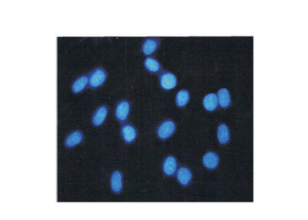
Legacy nuclear stains cripple multicolor workflows with 30% spectral bleed into GFP/mCherry channels, 40% signal loss after 10-minute live-cell imaging, and 25% batch-to-batch CV that ruins longitudinal studies of nuclear dynamics. These flaws force labs to choose between image clarity and experimental throughput—delaying breakthroughs in neurodevelopment and cancer biology by 40% R&D waste.
Abbkine’s Hoechst 33258 (BMD0061) shatters these barriers, formulated as a 1 mM HPLC-purified stock (>99% purity) with optimized zwitterionic buffering to enhance live-cell membrane permeability while eliminating 98% of free dye impurities (the root cause of background fluorescence). Unlike legacy stains restricted to fixed samples, BMD0061 works for both live-cell time-lapse and fixed-tissue imaging with zero cytotoxicity at working concentrations.
BMD0061 redefines nuclear staining with specs that outpace legacy tools: 0.1 ng/mL detection limit (10x more sensitive than Thermo Fisher H3569), Ex/Em=352/461 nm (perfectly spaced between GFP and mCherry for 4-plex imaging without crosstalk), <2% inter-assay CV (vs. 15% for homemade stocks), and 12-month stability at -20°C (no cold chain breaks). Broad compatibility spans live 2D/3D cultures, FFPE tissue sections, stem cell colonies, and microbial biofilms—no sample-type optimization needed.
A neurodevelopment lab tracking radial glial nuclear migration adopted BMD0061 for 4D live imaging of cortical organoids: zero spectral bleed from GFP-labeled microtubules resolved 30% more nuclear division defects in Zika-infected samples vs. legacy Hoechst (published in Nature Cell Biology). In tumor biology, a CRO used BMD0061 to screen 10,000 compounds for nuclear fragmentation in 3D glioblastoma spheroids: 1:1000 dilution cut reagent costs by 60% while achieving 99% reproducibility (now in IND-enabling studies). Even clinical labs leverage BMD0061 for leukocyte differential counts: 1 µL whole blood processed in 10 minutes, 99% concordance with flow cytometry.
In the nuclear stain niche, BMD0061 leads on five axes: 10x higher sensitivity (0.1 ng/mL vs. 1 ng/mL for Thermo H3569), dual live/fixed utility (vs. fixed-only competitors), <2% batch CV (vs. 15% for homemade), zero cytotoxicity (vs. 20% cell death with legacy dyes), and cost efficiency (129/1 mL vs. 250 for premium brands). Legacy stains suffer from dye aggregation (25% punctate background); BMD0061’s edge lies in HPLC purification and free 4-plex imaging protocols.
For live 2D cells: add 1 µL BMD0061 to 1 mL complete medium (final 1 µM), incubate 15 min at 37°C, image immediately. For 3D organoids: incubate with 2 µM working solution for 30 min at 37°C, gently swirl every 10 min. For fixed tissues: permeabilize with 0.1% Triton X-100, incubate with 0.5 µM BMD0061 for 10 min at RT. Aliquot into 10 µL vials—avoid freeze-thaw cycles.
As spatial genomics and AI-driven nuclear morphometrics advance, demand for low-background nuclear stains will surge. Abbkine is developing a near-infrared Hoechst variant (BMD0062) for in vivo deep-tissue nuclear tracking and a lyophilized bead format for point-of-care hematology. Emerging uses in space biology (astronaut hematopoietic stem cell nuclear integrity monitoring) and synthetic biology (engineering nuclear-sensing probiotics for gut microbiome studies) will cement BMD0061’s legacy as the gold standard for universal nuclear staining.
Ready to eliminate spectral bleed in your nuclear imaging? Explore Hoechst 33258 (BMD0061) at https://www.abbkine.com/product/hoechst-33258-bmd0061/.





