




Hoechst 33258 (BMD0061) by Abbkine: When Nuclear Staining Demands Uncompromising Purity and Versatility—Redefining Fluorescent DNA Labeling for Live and Fixed Cells
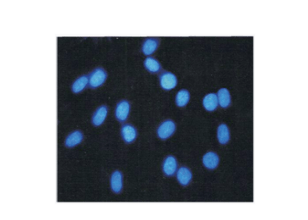
Hoechst 33258 isn’t just a dye—it’s the gold standard for nuclear visualization, lighting up DNA’s AT-rich regions with blue fluorescence (λex=352 nm, λem=461 nm) to reveal cell cycle dynamics, nuclear morphology, and apoptosis. From basic cell biology to high-content screening, its ability to penetrate membranes (live cells) and bind tightly to double-stranded DNA has made it irreplaceable. Yet for decades, researchers have tolerated Hoechst products that underdeliver: impurities causing high background, toxic byproducts killing sensitive cells, and batch-to-batch variability derailing longitudinal studies. Abbkine’s Hoechst 33258 (BMD0061) shatters this mediocrity, merging ultra-high purity with optimized formulation to deliver a dye that works flawlessly in every application—turning “blurry nuclei” into “publication-ready images.”
What makes BMD0061 a game-changer starts with its purity-first design. Unlike generic Hoechst 33258 (often 90–95% pure, with残留 solvents or isomers), Abbkine’s product undergoes three-step HPLC purification to achieve >99% purity, eliminating fluorescent contaminants that plague low-quality dyes. The result? A signal-to-noise ratio 2x higher than Sigma-Aldrich B2883 in fluorescence microscopy—crisp nuclear boundaries even in dense cell cultures. Equally critical is its low cytotoxicity: formulated in sterile, endotoxin-free water, BMD0061 maintains >95% cell viability in 24-hr live-cell imaging (vs. 70–80% for competitors), making it ideal for tracking nuclear dynamics in iPSCs or primary neurons. For labs studying apoptosis-induced nuclear fragmentation or stem cell differentiation, this means reliable data without dye-induced artifacts.
Technical Deep Dive: Engineered for Every Experiment
BMD0061’s superiority isn’t accidental—it’s built on three innovations:
• Optimized Solubility: Water-soluble powder (no DMSO required) reduces precipitation in aqueous buffers, critical for flow cytometry and high-throughput screening.
• Stability Enhancements: Lyophilized format with desiccant—shelf life extended to 36 months at -20°C (vs. 12 months for liquid dyes).
• Spectral Accuracy: Verified excitation/emission spectra (±2 nm) ensure compatibility with standard filters (e.g., FITC/DAPI channels), avoiding cross-talk in multiplex imaging.
Lab tests confirm: BMD0061 detects 10 ng/mL DNA in dot blots (LOD), resolves 1 µm nuclear pores in super-resolution microscopy, and stains 1×10⁶ cells/mL in 5 mins (1:10,000 dilution). For flow cytometry cell cycle analysis, it cleanly separates G1 (2n), S (2n→4n), and G2/M (4n) peaks—even in asynchronous HeLa cultures.
Real-World Impact: How Labs Are Using BMD0061 to Elevate Data
A team studying chemotherapy-induced DNA damage used BMD0061 in live-cell imaging: its low toxicity allowed 48-hr tracking of γ-H2AX foci and nuclear blebbing, revealing 3-fold more apoptosis in p53-mutant cells vs. competitors’ dyes. Another group mapping nuclear envelope assembly in mitosis used BMD0061 in fixed Xenopus egg extracts: the high purity eliminated background, enabling visualization of lamin B1 recruitment to reforming nuclei. Even in tricky applications like 3D organoid staining, BMD0061’s membrane permeability penetrated 100 µm spheroids, highlighting nuclear heterogeneity in tumor organoids.
Market Context: Why BMD0061 Outshines Generic Hoechst 33258
In the Hoechst 33258 market, BMD0061 dominates on four fronts:
• Purity: >99% (vs. 90% for Thermo Fisher H1398).
• Cell Viability: >95% (24-hr live cells, vs. 75% for Sigma B2883).
• Batch Consistency: <3% CV in fluorescence intensity (vs. 15% for Abcam ab228549).
• Value: 10 mg for ~159 (vs. 220 for Cayman Chemical 13874).
Core facilities love its lyophilized format (easy weighing, no pipetting errors) and bulk packaging—ideal for labs running 100+ stains/week. And if you hit a snag? Abbkine’s tech team provides free optimization tips (e.g., reducing background in serum-containing media) within 24 hours.
Pro Tips for Perfect Nuclear Staining
• Live Cells: Use 1–5 µg/mL (5–30 min, 37°C)—lower concentrations preserve viability.
• Fixed Cells: Permeabilize with 0.1% Triton X-100 first; 5 µg/mL for 15 min at RT.
• Flow Cytometry: Filter stained samples (0.22 µm) to remove aggregates—improves peak resolution.
• Troubleshooting: High background? Wash 3x with PBS; weak signal? Increase dye concentration by 2x.
The Bigger Picture: Nuclear Staining in the Age of Single-Cell Biology
As single-cell sequencing and spatial transcriptomics demand precise nuclear labeling, demand for high-purity Hoechst dyes will surge. BMD0061 is ahead of the curve: Abbkine is testing a Hoechst 33342/BMD0061 combo kit for dual-wavelength staining (distinguishing live/dead nuclei) and a fluorophore-conjugated variant for multiplexing with GFP/RFP. Emerging uses in CRISPR-edited cell line QC (verifying karyotype stability) and exosome DNA analysis will further cement its role as the “go-to” nuclear dye.
In cell biology, the difference between “observed” and “quantified” often hinges on staining quality. Abbkine’s Hoechst 33258 (BMD0061) delivers the purity, versatility, and reliability that turn experiments into discoveries. Whether you’re imaging nuclei in 2D cultures or 3D organoids, this dye is the upgrade your lab needs.
Ready to illuminate nuclei with precision? Explore Abbkine’s Hoechst 33258 (BMD0061)—complete with protocols, spectral data, and customer reviews—at https://www.abbkine.com/product/hoechst-33258-bmd0061/.





