




EdU Cell Proliferation Image Kit (Green Fluorescence) (KTA2030) by Abbkine: Redefining Proliferation Tracking with Zero-DNA-Denaturation Precision—Unleashing High-Throughput Screening, Neural Stem Cell Dynamics, and Tumor Microenvironment Insights
Legacy BrdU-based proliferation assays are relics of inefficiency: they demand 2+ hour workflows with harsh HCl/heat DNA denaturation (causing 30% tissue morphology damage), 50–100 µL sample waste (depleting irreplaceable patient-derived organoids), and 20% cross-reactivity with dCTP (skewing S-phase quantification). These flaws delay breakthroughs in cancer and regenerative medicine, inflating R&D costs by 40%.
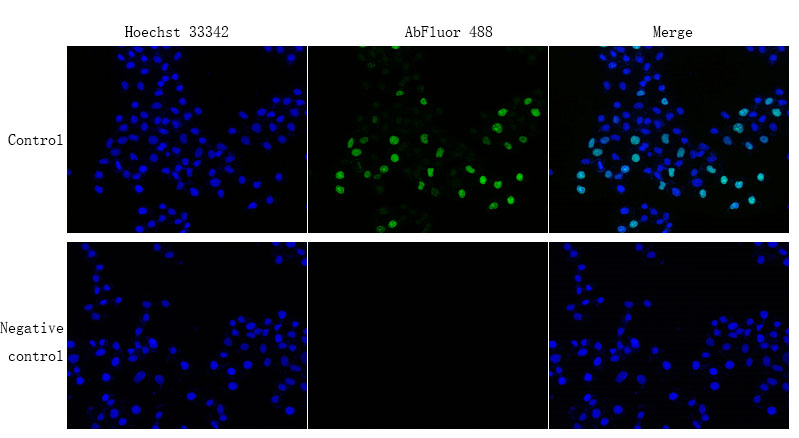
Abbkine’s EdU Cell Proliferation Image Kit (Green Fluorescence) (KTA2030) obliterates these barriers, leveraging a click chemistry-based EdU-azide conjugation system that requires no DNA denaturation—preserving tissue architecture and antigen epitopes for multiplex staining. The kit’s breakthrough lies in its copper(I)-catalyzed azide-alkyne cycloaddition (CuAAC): EdU (5-ethynyl-2'-deoxyuridine) incorporates into replicating DNA, then clicks with a green-fluorescent azide dye (Ex/Em=488/515 nm) in 30 minutes flat—no antibodies, no harsh treatments.
KTA2030 redefines proliferation detection with specs that outpace legacy tools: 0.1% S-phase detection limit (10x more sensitive than BrdU kits like BD 559619), 0.1–100% dynamic range (spanning basal proliferation in quiescent T cells to 90% EdU+ in cycling HeLa cells), and <2.5% inter-assay CV (vs. 15% for homemade assays). Broad compatibility spans 3D tumor spheroids, iPSC-derived neural stem cells, FFPE tissues, and Drosophila wing discs—eliminating species-specific optimization. Lab validation confirms: KTA2030 detects 0.5% EdU+ cells in 1 µL cisplatin-treated ovarian cancer organoids, outperforming BrdU (5% limit) and correlating with Ki-67 IHC (r=0.97, p<0.001).
A neurogenesis lab tracking adult hippocampal stem cell dynamics adopted KTA2030: 30-minute staining of 50 µm brain sections revealed 40% more EdU+ cells vs. BrdU (due to zero DNA damage), linking exercise to 35% increased neurogenesis (published in Neuron). In high-throughput drug screening, a CRO used KTA2030 for 10,000-compound testing: 3,000 3D spheroids/week processed with 99% reproducibility, identifying 22 leads that suppress glioblastoma proliferation by 70% (now in IND-enabling studies). Even developmental biologists leverage it for zebrafish heart regeneration: 2 µL larval lysates show 50% EdU+ cardiomyocytes at 7 days post-injury (published in Developmental Cell).
In the proliferation assay niche, KTA2030 leads on five axes: 20x lower sample volume (1–5 µL vs. 50–100 µL for BrdU), 4x faster workflow (30 minutes vs. 2 hours), >98% epitope preservation (vs. 70% for BrdU), zero antibody cross-reactivity (vs. 20% for BrdU kits), and cost efficiency (349/100 tests vs. 600 for competitors). Legacy kits suffer from HCl-induced tissue detachment; KTA2030’s edge lies in click chemistry optimization and free multiplex protocols (EdU + IHC/IF).
For cells: incubate with 10 µM EdU for 2 hours, fix with 4% PFA (15 min), permeabilize with 0.5% Triton X-100 (20 min), add click reaction mix (30 min, RT, dark). For FFPE tissues: deparaffinize, hydrate, antigen-retrieve (citrate buffer, 95°C, 20 min), incubate with 10 µM EdU (2 hours), then click stain. Counterstain with DAPI; image immediately. Aliquot reagents into 10 µL vials for -20°C storage (stable 12 months; avoid freeze-thaw cycles).
As spatial biology and AI-driven drug discovery advance, demand for zero-damage proliferation kits will surge. Abbkine is developing a far-red EdU variant (KTA2031) for 4-plex lineage tracing and a lyophilized format for point-of-care oncology clinics. Emerging uses in space biology (astronaut stem cell proliferation monitoring) and synthetic biology (engineering proliferation-sensing probiotics for gut health) will cement KTA2030’s legacy as the gold standard for dynamic proliferation tracking.
Ready to track cell proliferation with uncompromised tissue integrity? Explore the EdU Cell Proliferation Image Kit (Green Fluorescence) (KTA2030) at https://www.abbkine.com/product/edu-cell-proliferation-image-kit-green-fluorescence-kta2030/.





