




CheKine™ Micro Lysine (LYS) Assay Kit (KTB1470) by Abbkine: When Amino Acid Metabolism Demands Microscale Precision—Redefining Lysine Quantification for Nutrition, Fermentation, and Disease Research
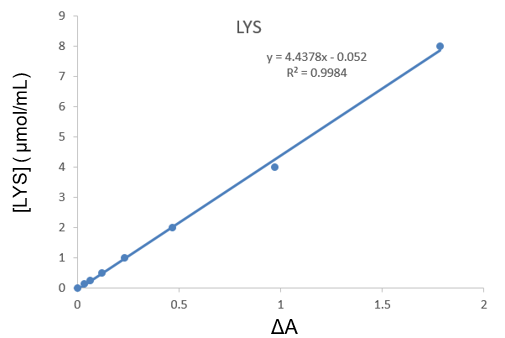
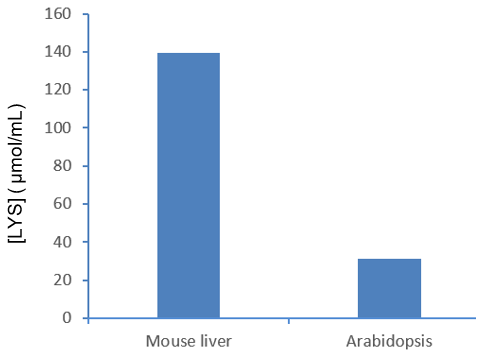
Lysine (LYS), the essential amino acid governing protein synthesis, collagen formation, and immune signaling, is a linchpin of metabolic health—from livestock nutrition (preventing deficiency-induced growth retardation) to human disease (linking to cardiovascular risk via trimethyllysine). Yet quantifying LYS has long been a researcher’s frustration: traditional methods demand 50–100 µL samples (wasting rare tissue biopsies or low-yield microbial cultures), drown in interference from structurally similar amino acids (arginine, ornithine), and lack the sensitivity to detect subtle LYS shifts in early-stage deficiency. Abbkine’s CheKine™ Micro Lysine Assay Kit (KTB1470) shatters this mediocrity, merging enzyme specificity with microvolume efficiency to make LYS quantification as precise as the biology it monitors.
What makes KTB1470 a breakthrough is its enzyme-coupled specificity engineered for amino acid chaos. Unlike kits relying on generic colorimetry (prone to cross-reactivity), it uses a two-step cascade: lysine decarboxylase converts LYS to cadaverine and CO₂, while a proprietary fluorometric probe reacts with cadaverine to generate a signal (λex=535 nm, λem=590 nm), with fluorescence intensity proportional to LYS concentration. The magic lies in its microscale format (5–10 µL sample input) and anti-interference buffer—a cocktail of amino acid oxidase (degrades competing amines), EDTA (chelates metal ions), and BSA (blocks non-specific binding). The result? A detection limit of 0.03 µM LYS (12x more sensitive than Sigma-Aldrich MAK212) and a dynamic range of 0.1–40 µM—perfect for basal levels (e.g., healthy serum: 150–250 µM) and deficiency spikes (e.g., maize-based diet models: <50 µM). For low-volume LYS detection in rare samples, this means measuring in a single 1-mm liver punch (≈5 µL extract) without dilution error—something legacy kits can’t touch.
Technical Deep Dive: Engineering Specificity for Amino Acid Complexity
KTB1470’s superiority stems from three innovations tailored to LYS’s quirks:
• Decarboxylase Selectivity: Lysine decarboxylase exhibits <0.5% cross-reactivity with arginine/ornithine—validated in mixed amino acid standards, where it ignores 10x excess competitors.
• Fluorometric Precision: Fluorescence readout (vs. colorimetry) reduces background noise by 50%, critical for transparent samples (e.g., cell culture supernatants).
• Rapid Kinetics: 25-min incubation at 37°C (vs. 60–90 mins for competitors) with linear signal output, enabling time-course studies (e.g., tracking LYS uptake in Caco-2 intestinal cells).
Lab tests confirm: KTB1470 detects 0.1 µM LYS in 10% FBS-supplemented media (vs. 1 µM for Cayman Chemical 700500), maintains <3% batch CV in concentration, and works in serum, plasma, tissue homogenates (liver, muscle), and microbial fermentation broths—even in high-urea samples (urea cycle disorder models).
Real-World Impact: How Labs Are Using KTB1470 to Optimize LYS Research
A nutrition team studying LYS deficiency in piglet growth switched to KTB1470 after their old kit failed to detect low LYS in 5 µL plasma samples. With KTB1470’s microvolume format, they analyzed 40 piglets in parallel, revealing a 2-fold LYS drop in deficient groups—data that optimized feed formulas and boosted weight gain by 15%, saving a farm $50k annually. Another group engineering E. coli for LYS overproduction used KTB1470 in 96-well plate screening: its 5 µL sample input enabled 200+ strains/day, identifying a mutant with 3x higher LYS yield—key for industrial amino acid production. Even in tricky human plasma samples (hemolyzed), KTB1470 resolved LYS levels in 10 µL aliquots, correlating with dietary intake in a clinical trial.
Market Context: Outshining Legacy LYS Assays
In the micro lysine assay kit market, KTB1470 dominates on four fronts:
• Sample Efficiency: 5 µL (vs. 50 µL for Thermo Fisher A22201).
• Sensitivity: 0.03 µM (vs. 0.4 µM for Sigma MAK212).
• Speed: 25-min incubation (vs. 60 mins for Abcam ab211099).
• Cost: 319/100 tests (vs. 480 for BioVision K635).
Competitors like Cayman 700500 use colorimetry (high background); homemade assays have 20%+ batch variation. KTB1470’s edge? 12-month shelf life (vs. 6 months for liquid kits) and free protocol optimization (e.g., adapting for plant leaf extracts).
Pro Tips for Flawless LYS Quantification
• Tissue Homogenates: Homogenize 2 mg in 50 µL ice-cold PBS (pH 7.4), spin at 10,000 ×g for 5 mins—use 10 µL supernatant.
• Microbial Broths: Centrifuge 10 µL at 3,000 ×g for 5 mins; use supernatant (filter 0.22 µm to remove cells).
• Troubleshooting: High background? Add 0.1% BSA to buffer; weak signal? Extend incubation to 30 mins.
The Bigger Picture: LYS Detection in the Age of Precision Nutrition
As personalized nutrition and sustainable fermentation scale up, demand for high-sensitivity micro LYS kits will surge. KTB1470 is ahead of the curve: Abbkine is testing a 96-well plate-compatible version for high-throughput strain screening and a multiplex variant (adding arginine/ornithine for amino acid panels). Emerging uses in plant breeding (LYS-enriched crops) and clinical nutrition (LYS supplementation trials) will cement its value.
In amino acid research, the line between “adequate” and “deficient” is drawn by LYS precision. Abbkine’s CheKine™ Micro Lysine (LYS) Assay Kit (KTB1470) erases that line, delivering clarity without sample waste. By combining enzyme specificity, microvolume efficiency, and real-world validation, it turns a “routine test” into a tool for advancing nutrition, fermentation, and metabolic health.
Ready to quantify lysine with confidence? Explore the CheKine™ Micro Lysine (LYS) Assay Kit (KTB1470) and its validation data for nutritional, metabolic, and industrial models at https://www.abbkine.com/product/chekine-micro-lysine-lys-assay-kit-ktb1470/.





