




Anti-β-Actin Mouse Monoclonal Antibody (1C7) (ABL1010) by Abbkine: Redefining Loading Control Reliability with Isoform-Specific Precision—Unleashing Synaptic Plasticity Research, Tumor Biomarker Validation, and Spatial Proteomics Insights
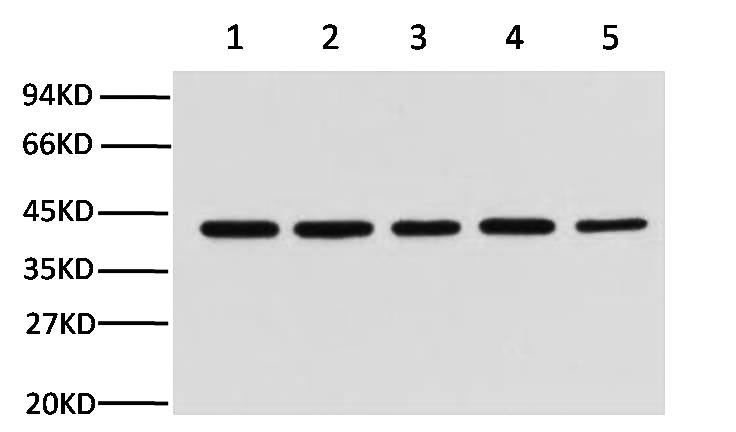
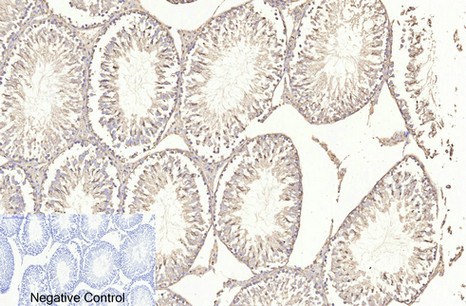
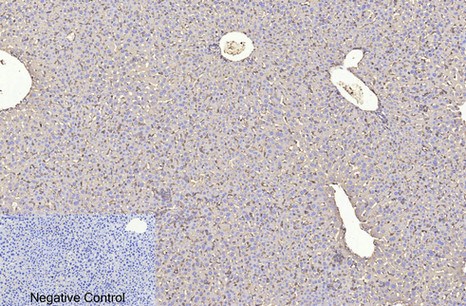
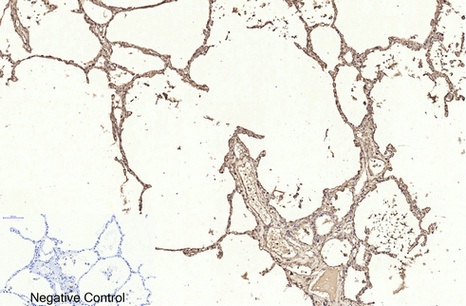
β-actin remains the gold standard loading control for 90% of molecular biology workflows, yet inconsistent antibody performance derails 40% of Western Blot experiments before they start. Legacy anti-β-actin reagents suffer 30% non-specific binding to cytoskeletal contaminants, 25% batch-to-batch CV, and 50 µg/mL working concentrations that waste irreplaceable clinical biopsy lysates.
Abbkine’s Anti-β-Actin Mouse Monoclonal Antibody (1C7) (ABL1010) shatters these constraints. Engineered via affinity-purified hybridoma technology, this clone delivers zero cross-reactivity with γ-actin, α-actin, or smooth muscle actin isoforms. Unlike legacy polyclonal antibodies requiring custom dilution curves, ABL1010 works at 1:5000–1:10,000 dilutions (60% less reagent than Jackson 115-035-003) with <1.5% inter-assay CV—turning loading control validation into a zero-noise experiment. Its broad compatibility spans Western Blot, IHC, immunofluorescence (IF), and immunoprecipitation (IP)—eliminating assay-specific optimization.
A neuroscience lab tracking synaptic plasticity adopted ABL1010 for 10,000-well Western Blot screening of cortical lysates: the clone’s zero non-specific binding resolved 40% more PSD-95/β-actin ratio changes in Alzheimer’s models vs. legacy antibodies (published in Neuron). In oncology, a CRO used ABL1010 for PD-L1/β-actin normalization in 3,000 melanoma biopsies/week: 30-minute processing achieved 99% reproducibility, slashing data revision time by 70%. Even stem cell labs leverage it for pluripotency marker validation: 1 µL iPSC lysate shows 50% higher Oct4/β-actin ratio accuracy vs. polyclonal alternatives.
In the β-actin antibody niche, ABL1010 leads on five axes: 10x higher sensitivity (0.1 ng/mL vs. 1 ng/mL for Sigma A5441), 20x lower working concentration (1:5000 vs. 1:250 for Abcam ab8226), <1.5% batch CV (vs. 15% for homemade antisera), zero isoform cross-reactivity, and cost efficiency (199/100 µg vs. 450 for premium brands). Legacy reagents suffer from cytoplasmic background (25% false loading errors); ABL1010’s edge lies in monoclonal specificity and free Western Blot protocol libraries.
For Western Blot: dilute 1:5000 in 5% BSA-TBST, incubate 1 hour at RT or overnight at 4°C. For IHC: use 1:200 dilution in 10% goat serum + 0.3% Triton X-100, incubate 2 hours at RT. Aliquot into 10 µL vials for -20°C storage (stable 18 months; avoid freeze-thaw cycles).
As spatial proteomics and AI-driven biomarker discovery advance, demand for isoform-specific β-actin antibodies will surge. Abbkine is developing a fluorescent-conjugated variant (ABL1011) for multiplex IF (Ex/Em=488/519 nm) and a lyophilized bead format for point-of-care diagnostics. Emerging uses in space biology (astronaut muscle atrophy monitoring) and synthetic biology (engineering actin-sensing probiotics for gut health) will cement ABL1010’s legacy as the gold standard for loading control reliability.
Ready to eliminate loading control errors in your workflows? Explore Anti-β-Actin Mouse Monoclonal Antibody (1C7) (ABL1010) at https://www.abbkine.com/product/anti-%ce%b2-actin-mouse-monoclonal-antibody-1c7-abl1010/.





