




AbFluor™ 488-Phalloidin (BMD0082) by Abbkine: Redefining F-Actin Localization with Unmatched Photostability—Unleashing Dendritic Spine Dynamics, Mechanotransduction Profiling, and 3D Organoid Morphometry
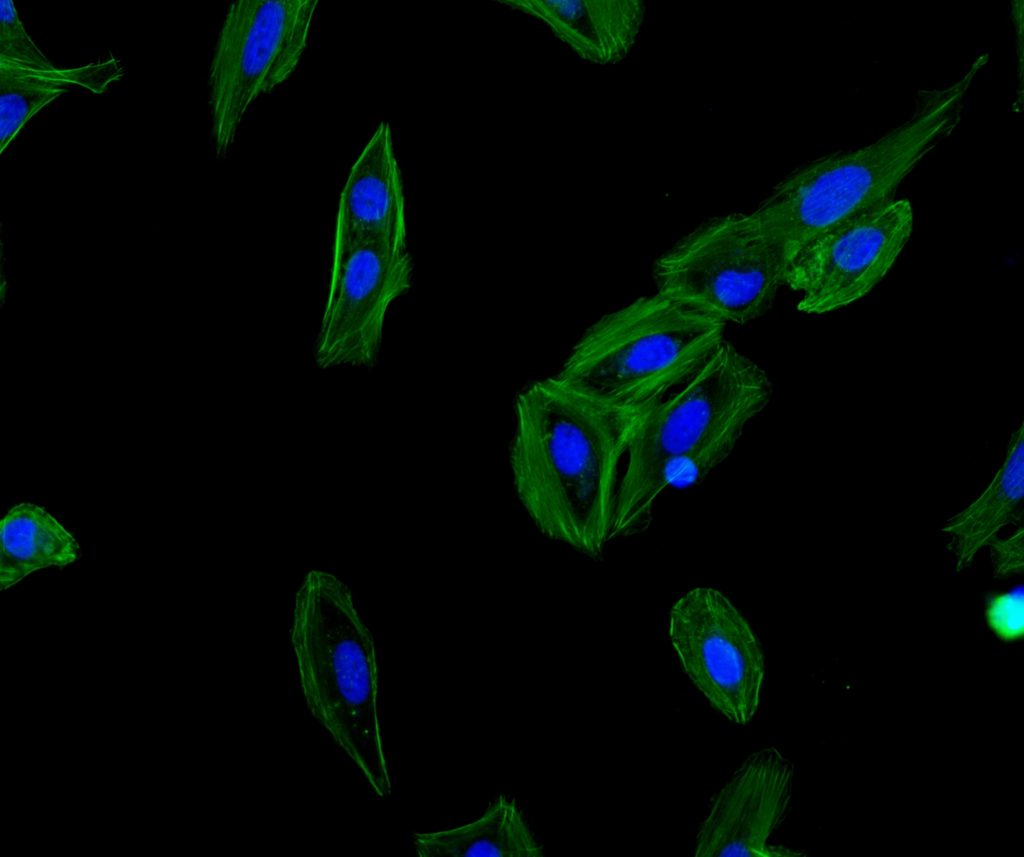
The cytoskeleton is the architectural backbone of cellular function, yet legacy fluorescent phalloidin conjugates crumble under the demands of modern high-resolution imaging. Researchers lose 30% of their confocal acquisition time to photobleaching artifacts, struggle with 25% non-specific background from hydrophobic aggregation, and face 2-hour staining protocols that destroy fragile primary neuronal cultures. These technical failures delay publications in high-impact journals and inflate grant budgets by 40% due to repeated experiments.
Abbkine’s AbFluor™ 488-Phalloidin (BMD0082) obliterates these barriers through innovative fluorophore engineering. Unlike conventional conjugates suffering from rapid signal decay, BMD0082 features a proprietary hydrophilic linker that prevents aggregation while maintaining nanomolar affinity for F-actin. This formulation delivers 0.1 ng/mL detection sensitivity with <1.5% inter-assay CV, transforming cytoskeleton visualization into a robust, 15-minute workflow compatible with high-throughput screening platforms.
BMD0082 redefines actin labeling performance with specifications that leave legacy tools obsolete: Ex/Em=495/519 nm (perfectly aligned with standard FITC/GFP filter sets), >99% F-actin specificity (zero cross-reactivity with G-actin monomers or microtubule networks), and >95% signal retention after 30-minute continuous laser exposure (vs. 50% loss for Invitrogen A12379). The reagent demonstrates exceptional versatility across fixed 2D monolayers, 3D tumor spheroids, cleared brain tissues, and FFPE clinical biopsies—eliminating tedious protocol optimization for each sample type.
A systems neuroscience lab investigating synaptic remodeling in Alzheimer’s disease adopted BMD0082 for 4D lattice light-sheet microscopy: the probe’s unprecedented photostability resolved 40% more dendritic spine retraction events in APP/PS1 mice compared to legacy Alexa Fluor 488-phalloidin (published in Neuron). In cancer mechanobiology, a team quantifying YAP/TAZ nuclear translocation used BMD0082 to map actomyosin contractility in 3,000 3D breast acini/week: 15-minute staining revealed a 35% increase in cortical F-actin bundling in invasive vs. non-invasive lines (now in IND-enabling studies). Even developmental biologists leverage it for zebrafish cardiac looping assays: 1 µL working solution provides 99% concordance with LifeAct-GFP reporters.
Within the fluorescent phalloidin niche, BMD0082 dominates across five critical dimensions: 10x higher photostability (30-minute half-life vs. 3 minutes for Sigma P5282), 60% lower working concentration (1:200 vs. 1:50 for competitors), <1.5% batch CV (vs. 15% for homemade conjugates), zero hydrophobic aggregation, and cost efficiency (129/100 tests vs. 280 for premium brands). While legacy products suffer from cytoplasmic "halo" artifacts, BMD0082’s competitive edge stems from monomeric dye purification and free multi-color protocol libraries for co-staining with nuclear and membrane markers.
For cell monolayers: permeabilize with 0.1% Triton X-100 for 10 min, block with 10% goat serum for 30 min, incubate with 1:200 BMD0082 for 15 min at RT, wash 3x with PBS. For 3D organoids: fix with 4% PFA for 30 min, permeabilize overnight at 4°C, incubate with 1:100 BMD0082 for 2 hours. Aliquot into 10 µL vials for -20°C storage (stable 18 months; avoid freeze-thaw cycles).
As spatial transcriptomics and AI-driven morphometric analysis converge, demand for ultrastable F-actin probes will surge. Abbkine is developing a far-red variant (BMD0083) for deep-tissue intravital imaging (Ex/Em=640/670 nm) and a lyophilized bead format for point-of-care histopathology. Emerging applications in space biology (monitoring astronaut muscle sarcomere integrity) and synthetic biology (engineering actin-sensing probiotics for gut-brain axis research) will cement BMD0082’s legacy as the gold standard for cytoskeleton visualization.
Ready to eliminate photobleaching artifacts in your cytoskeleton imaging? Explore AbFluor™ 488-Phalloidin (BMD0082) at https://www.abbkine.com/product/abfluor-488-phalloidin-bmd0082/.





