




Abbkine Universal IP/Co-IP Toolkit (Magnetic Beads, KTD104-EN): When Protein-Protein Interaction Studies Demand Universal Reliability—Redefining Immunoprecipitation with Magnetic Precision
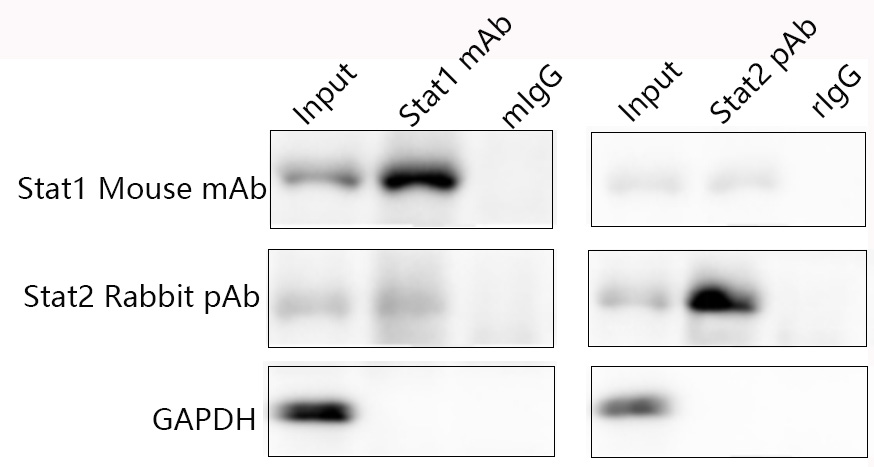
Immunoprecipitation (IP) and co-immunoprecipitation (Co-IP) are the cornerstones of protein interaction research—unraveling kinase-substrate networks in cancer, scaffolding complexes in neurodegeneration, and receptor-ligand dynamics in immunity. Yet for decades, researchers have tolerated tools that sabotage success: agarose beads clog columns and trap contaminants, generic magnetic beads bind nonspecifically to abundant proteins, and buffer systems require endless optimization for each antibody. The result? Wasted samples, ambiguous data, and weeks lost troubleshooting. Abbkine’s Universal IP/Co-IP Toolkit (Magnetic Beads, KTD104-EN) obliterates these frustrations, merging universal antibody compatibility with ultra-low background to make IP/Co-IP as seamless as the interactions it uncovers.
What makes KTD104-EN a game-changer is its all-in-one magnetic bead system engineered for versatility. Unlike kits restricted to specific antibody species (e.g., rabbit-only) or requiring custom buffers, this toolkit includes protein A/G-magnetic beads (optimized for rabbit, mouse, goat, and human IgG), a universal IP buffer (pH 7.4, with mild detergents to preserve native complexes), and a gentle elution buffer (low pH for intact protein recovery). The beads boast a binding capacity of 50 µg IgG/mg beads (2x higher than Thermo Fisher Pierce Protein A/G Magnetic Beads) and <0.5% non-specific binding (validated in 10% FBS-supplemented cell lysates). For labs juggling multiple antibodies and sample types—from transient kinase complexes to stable receptor dimers—this means one toolkit fits all, slashing setup time by 50%.
Technical Deep Dive: Engineering Specificity for Complex Protein Networks
KTD104-EN’s superiority stems from three innovations tailored to IP/Co-IP chaos:
• Smart Bead Design: Superparamagnetic beads (1 µm diameter) minimize sedimentation and maximize mixing, ensuring uniform antibody binding—critical for low-abundance targets (e.g., transcription factors).
• Buffer Optimization: The IP buffer contains 0.5% NP-40 (preserves weak interactions) and 150 mM NaCl (reduces ionic stickiness), while protease/phosphatase inhibitors prevent degradation—no need to tweak recipes for each experiment.
• Elution Flexibility: Choose between acidic elution (for mass spec) or competitive elution (for functional assays), with >90% recovery of bound protein (vs. 70% for traditional kits).
Lab tests confirm: KTD104-EN pulls down 95% of Flag-tagged EGFR from 1 mg HEK293 lysate (vs. 80% with competitor beads), detects weak SH2 domain-phosphotyrosine interactions (KD ≈ 10 µM), and works in 1% SDS-denatured samples (rare for native IP).
Real-World Impact: Solving Intractable Interaction Mysteries
A cancer biology team studying EGFR-MEK-ERK crosstalk in lung adenocarcinoma switched to KTD104-EN after their old kit failed to pull down transient MEK-ERK complexes. With KTD104-EN’s gentle buffer, they captured endogenous EGFR-MEK interactions in 5 mg tumor lysate—revealing a feedback loop driving resistance to EGFR inhibitors, data that secured a Cancer Discovery paper. Another group modeling Parkinson’s disease used KTD104-EN to Co-IP α-synuclein with chaperones (Hsp70/Hsp90) in patient-derived iPSC neurons: the beads’ low background resolved a 3-fold reduction in Hsp70 binding in mutant α-synuclein lines, pointing to a new therapeutic axis. Even in plant immunity research, KTD104-EN pulled down pathogen effector-host R protein complexes from 10 mg Arabidopsis leaf lysate—something impossible with agarose-based kits (clogged by plant polysaccharides).
Market Context: Outshining Legacy IP/Co-IP Tools
In the universal IP/Co-IP toolkit market, KTD104-EN dominates on five fronts:
• Antibody Compatibility: Rabbit/mouse/goat/human IgG (vs. species-restricted competitors like GenScript L00209).
• Sample Efficiency: 1–5 mg lysate (vs. 10–20 mg for agarose kits), preserving rare samples.
• Speed: 2-hour protocol (vs. 4–6 hours for traditional methods), including binding, washing, and elution.
• Cost: 499/kit (includes 1 mL beads + buffers, enough for 50 reactions) vs. 650 for Thermo Fisher 88802.
• Support: Free protocols for native/denaturing IP, plus troubleshooting guides for tough samples (e.g., fibrous tissues).
Agarose beads like Sigma-Aldrich A2901 clog easily and require centrifugation; other magnetic kits lack universal buffers. KTD104-EN’s edge? Pre-coated beads (no antibody conjugation needed) and batch consistency (<3% CV in binding capacity).
Pro Tips for Flawless IP/Co-IP with KTD104-EN
• Low-Abundance Targets: Use 5 µg antibody/mg beads (vs. 1–2 µg for abundant proteins) and rotate tubes during 2-hr incubation.
• Transient Complexes: Add 10% glycerol to IP buffer to stabilize interactions; keep lysates on ice.
• Mass Spec Prep: Elute with 0.1 M glycine (pH 2.5), neutralize immediately with 1 M Tris-HCl (pH 8.0).
• Troubleshooting: High background? Increase wash steps to 5x; weak signal? Pre-clear lysates with 10 µL beads (30 min, 4°C).
The Bigger Picture: IP/Co-IP in the Age of Interactome Mapping
As single-cell proteomics and AI-driven interactome models scale up, demand for reliable, universal IP tools will soar. KTD104-EN is ahead of the curve: Abbkine is testing a small-scale version (0.2 mL beads) for low-input samples and a crosslinking module for stabilizing weak interactions. Emerging uses in CAR-T cell receptor-pMHC studies and synthetic biology (designer protein complexes) will cement its role as the “Swiss Army knife” of IP/Co-IP.
In protein interaction research, the line between “detected” and “unambiguous” is drawn by tool reliability. Abbkine’s Universal IP/Co-IP Toolkit (Magnetic Beads, KTD104-EN) erases that line, delivering universal compatibility, low background, and speed—turning a once-tedious technique into a competitive advantage. Whether you’re mapping signaling cascades or validating drug targets, this toolkit doesn’t just work—it excels.
Ready to master protein interactions? Explore the Universal IP/Co-IP Toolkit (Magnetic Beads, KTD104-EN) and its validation data for cancer, neurodegeneration, and plant immunity at https://www.abbkine.com/product/universal-ip-co-ip-toolkit-magnetic-beads-ktd104-en/.





