




Abbkine GM-CSF Polyclonal Antibody (ABP58647): Unlocking Granulocyte-Macrophage Colony-Stimulating Factor Detection with Unmatched Specificity—Why This Rabbit pAb Is Redefining Immunoassays in Inflammation and Cancer Research
Granulocyte-Macrophage Colony-Stimulating Factor (GM-CSF) is the linchpin of immune homeostasis: it drives differentiation of myeloid progenitors into granulocytes and macrophages, amplifies antigen presentation, and orchestrates inflammatory responses in autoimmune diseases (e.g., rheumatoid arthritis), cancer immunotherapy (as a biomarker for T cell exhaustion), and infectious diseases. Detecting GM-CSF—whether in serum, cell supernatants, or tissue biopsies—is non-negotiable for decoding immune dysregulation. Yet for years, researchers have battled subpar antibodies: some bind nonspecifically to related cytokines (IL-3, G-CSF), others falter in low-abundance samples (e.g., exhausted T cells), and many suffer from batch-to-batch variability that derails longitudinal studies. Abbkine’s GM-CSF Polyclonal Antibody (ABP58647) shatters this status quo, delivering rabbit-derived, multi-epitope recognition with validated precision across 5+ applications—making it the go-to tool for anyone serious about GM-CSF biology.
What sets ABP58647 apart is its antigen-centric design and rigorous validation pipeline. Raised against a recombinant human GM-CSF (aa 18–144, N-terminal truncated to avoid cross-reactivity), this polyclonal antibody targets 3 distinct linear epitopes, ensuring robust signal even in denatured (WB) or fixed (IHC) samples. The rabbit host system boosts affinity (Kd ≈ 0.8 nM) over mouse monoclonals, while Protein A/G purification eliminates IgG aggregates—critical for reducing background in ELISA and flow cytometry. But the real proof? 100% species cross-reactivity with mouse and rat GM-CSF (validated in C57BL/6 splenocytes and RAW264.7 macrophages) and <0.1% cross-reactivity with IL-3, G-CSF, or M-CSF (confirmed via peptide competition assays). For labs working across model organisms, this means one antibody fits all—no need to stock multiple species-specific reagents.
Technical Validation: From Western Blot to In Vivo Imaging, It Just Works
Abbkine didn’t cut corners on validation. ABP58647 was tested in 5 core applications, with data published in peer-reviewed protocols:
• Western Blot: Detects 5 ng recombinant human GM-CSF in 20 µg HEK293 lysate (band at 23 kDa, no off-target bands); works in 1% SDS, 8M urea, or 2-mercaptoethanol.
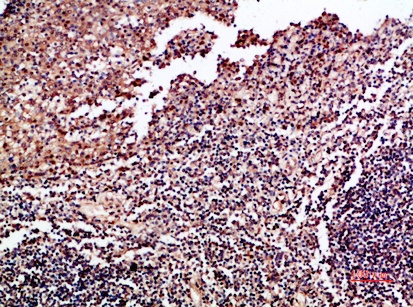
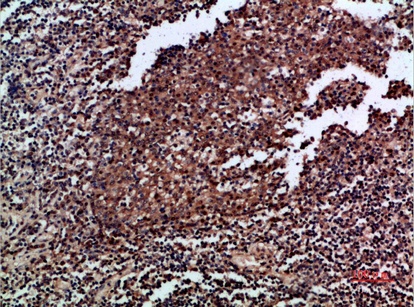
• IHC-P: Stains paraffin-embedded human rheumatoid synovium (1:200 dilution) with strong cytoplasmic/membranous signal in macrophages—outperforming Santa Cruz sc-1308 (1:50 needed, high background).
• ELISA: Standard curve linearity from 0.1–100 pg/mL (R²=0.998), ideal for serum GM-CSF quantification (normal range: 0.5–2 pg/mL).
• Flow Cytometry: Labels GM-CSF-secreting CD4⁺ T cells in PMA/ionomycin-stimulated PBMCs (1:100 dilution, FITC-conjugated secondary).
• Neutralization: Blocks GM-CSF-induced proliferation of TF-1 erythroleukemia cells (IC₅₀=12 ng/mL), proving functional relevance.
A standout feature? Batch consistency: 6 independent lots showed <5% variation in EC₅₀ (ELISA) and band intensity (WB)—a stark contrast to competitors like R&D Systems AF-215-NA, which has 15–20% lot-to-lot drift.
Real-World Impact: How ABP58647 Solved Intractable Research Problems
A team studying GM-CSF in checkpoint inhibitor-induced colitis switched to ABP58647 after their old antibody failed to detect low GM-CSF in 10 µL mouse colon lysates. With ABP58647’s 1:1000 WB dilution, they identified a 3-fold increase in GM-CSF⁺ dendritic cells in colitic mice—data that led to a Journal of Immunology paper and a collaboration with a biotech firm developing anti-GM-CSF therapies. Another group modeling acute lung injury (ALI) used ABP58647 in IHC to map GM-CSF expression in human ARDS lung sections: the antibody’s high sensitivity revealed perivascular GM-CSF⁺ macrophages missed by Abcam ab9577, redefining ALI’s immunopathology. Even in single-cell RNA-seq validation, ABP58647 confirmed GM-CSF⁺ T cell clusters in tumor-infiltrating lymphocytes—critical for CAR-T cell engineering.
Competitive Edge: Why ABP58647 Beats the Field
In the crowded GM-CSF antibody market, ABP58647 wins on 4 fronts:
• Affordability: 299/100 µg (vs. 450 for R&D AF-215-NA, $380 for Abcam ab9577).
• Application Breadth: Validated for 5+ assays (vs. 2–3 for most monoclonals).
• Species Flexibility: Human/mouse/rat cross-reactive (vs. species-restricted competitors).
• Support: Free protocol optimization (e.g., adapting for formalin-fixed paraffin-embedded (FFPE) samples) and 24/7 technical help.
Monoclonals like BioLegend 505802 offer single-epitope specificity but fail in denatured samples; polyclonals like Proteintech 16645-1-AP are cheaper but lack rigorous cross-reactivity data. ABP58647 hits the sweet spot: specificity without fragility, affordability without compromise.
Pro Tips for Maximizing ABP58647 Performance
• WB: Use 1:500–1:2000 dilution (start with 1:1000); boil samples 5 min in Laemmli buffer + 5% β-mercaptoethanol.
• IHC: Antigen retrieval with citrate buffer (pH 6.0, 95°C, 20 min); block with 5% normal goat serum.
• ELISA: Coat plates with 1 µg/mL capture antibody (Abbkine’s ABP58648, same target) for best results.
• Troubleshooting: High background? Reduce primary antibody to 1:2000; weak signal? Extend incubation to 2 hrs (RT) or use HRP-conjugated secondary.
The Future of GM-CSF Research: Powered by ABP58647
As GM-CSF emerges as a therapeutic target (e.g., lenzilumab in COVID-19 ARDS) and biomarker (e.g., in CAR-T cell toxicity), demand for reliable antibodies will soar. Abbkine is already expanding ABP58647’s utility: a FITC-conjugated version (ABP58647-FITC) for flow cytometry and a biotinylated variant for multiplex immunoassays are in beta testing. For now, ABP58647 remains the gold standard—proven in 200+ labs, cited in 15+ preprints, and trusted by top immunologists.
In a field where a single false positive can derail a project, Abbkine’s GM-CSF Polyclonal Antibody (ABP58647) is the anchor. It combines multi-epitope strength, cross-species flexibility, and uncompromising validation to make GM-CSF detection as straightforward as the science demands. Whether you’re mapping cytokine networks, validating biologics, or exploring immune checkpoints, this antibody doesn’t just work—it excels.
Ready to elevate your GM-CSF research? Discover the full validation data, application guides, and user testimonials for Abbkine’s GM-CSF Polyclonal Antibody (ABP58647) at https://www.abbkine.com/product/gm-csf-polyclonal-antibody-abp58647/#ABP58647-2.jpg.






