PINK1 Polyclonal Antibody (ABP59917): A Single Sharp Band in the Mitochondrial Noise
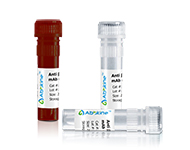
The PINK1 Detection Minefield
PTEN-induced putative kinase protein 1 (PINK1) is a mitochondrial-localized serine/threonine kinase that governs mitochondrial quality control and acts as a critical genetic determinant of autosomal recessive early-onset Parkinson's disease. Mutations in PINK1 disrupt mitochondrial repair and clearance pathways, driving neuronal loss in the substantia nigra[reference:5].
Detecting endogenous PINK1 is notoriously difficult. Mitochondrial lysates are dense with membrane proteins, OXPHOS complexes, and proteolytic fragments that generate smears and off-target bands. A poorly validated PINK1 antibody produces a signal that looks like a band but is, in reality, a mitochondrial protein degradation product or a cross-reactive kinase.
Epitope-Specific Design Away from Conserved Kinase Domains
Abbkine's PINK1 Polyclonal Antibody (ABP59917) is generated using a synthetic peptide immunogen derived from a conserved region of the human PINK1 protein—a strategic selection that targets a unique epitope of the kinase while avoiding highly conserved kinase domains shared with other serine/threonine kinases[reference:6].
The antibody is then affinity-purified from rabbit antiserum via epitope-specific affinity chromatography, enriching for high-affinity clones and depleting non-specific immunoglobulins[reference:7].
The Result: A Single Sharp Band at 63 kDa
The validation data speaks plainly: ABP59917 detects a single, sharp band at the expected molecular weight of 63 kDa in Western blot, with no smearing or off-target bands even in mitochondrial-enriched cell lysates—a common challenge for PINK1 antibodies due to the complexity of mitochondrial protein extracts[reference:8].
Tri-Species Reactivity: Human, Mouse, Rat
| Parameter | ABP59917 |
|---|---|
| Target | PINK1 |
| Host | Rabbit |
| Reactivity | Human, Mouse, Rat |
| Observed Molecular Weight | 63 kDa |
| Concentration | 1 mg/mL |
| Formulation | PBS, 50% glycerol, 0.05% Proclin 300, 0.05% BSA |
| Storage | 1 year at -20°C |
A notable formulation detail: ABP59917 uses Proclin 300 rather than sodium azide—relevant for researchers performing functional assays or conjugation chemistries where azide interference is a concern.
Head-to-Head: PINK1 Antibody Comparison
| Feature | ABP59917 | Generic PINK1 Antibodies |
|---|---|---|
| Epitope Design | Avoids conserved kinase domains | Often targets conserved regions |
| Affinity Purification | Epitope-specific | Variable |
| Western Blot Performance | Single sharp band at 63 kDa, no smearing | Frequent smearing/off-target bands |
| Species Reactivity | Human, Mouse, Rat | Often limited |
| Preservative | Proclin 300 (azide-free) | Often sodium azide |
The Bottom Line
For researchers dissecting PINK1/Parkin-mediated mitophagy, mitochondrial quality control in dopaminergic neurons, or PINK1 mutations in early-onset Parkinson's disease, ABP59917 delivers the epitope specificity and mitochondrial-lysate compatibility that turns an ambiguous PINK1 signal into a publishable measurement.
📎 Reference: PINK1 Polyclonal Antibody (ABP59917)