MARCO Polyclonal Antibody (ABP59218): The Scavenger Receptor Antibody That Finally Stops Cross-Reacting with SR-A1
The MARCO Detection Problem: A Family of Look-Alikes
Macrophage Receptor With Collagenous Structure (MARCO) is a class A scavenger receptor that functions as the innate immune system's frontline "molecular Velcro"—a trimeric, collagen-like, SRCR-domain protein that lets resident macrophages in lung, spleen, and liver snatch bacteria, modified LDL, silica microparticles, and apoptotic debris straight out of circulation without waiting for opsonins[reference:0].
But MARCO does not exist in isolation. It belongs to a family of class A scavenger receptors that share highly conserved collagenous and transmembrane domains. An antibody raised against full-length MARCO or against conserved family regions will inevitably generate a subpopulation of immunoglobulins that bind SR-A1 (SCARA1) , SCARA3, and other family members—producing a "MARCO+" signal that is actually a pooled scavenger receptor summation.
This is not a theoretical concern. In macrophage-rich tissues such as lung and spleen, SR-A1 is abundantly co-expressed with MARCO. Cross-reactive antibodies turn a clean Western blot into a smear and an IHC section into ambiguous staining.
Targeted Epitope Design: The Non-Conserved 380–460 Region
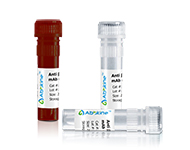
Abbkine's MARCO Polyclonal Antibody (ABP59218) sidesteps this problem at the level of immunogen design. The antibody is raised against a synthetic peptide derived from the 380–460 amino acid region of human MARCO—a strategic selection that targets a unique, non-conserved domain of the receptor, rather than the highly conserved collagenous or transmembrane regions shared with other class A scavenger receptors[reference:1].
This immunogen design ensures that the antibody selectively recognizes MARCO and not other scavenger receptor family members—a common source of experimental error in assays using non-validated MARCO antibodies that target conserved regions[reference:2].
Affinity Purification: Enrichment for the Right Clones
ABP59218 is affinity-purified from rabbit antiserum via epitope-specific affinity chromatography—a purification method that enriches for high-affinity antibody clones and removes non-specific immunoglobulins. The result is a highly pure antibody preparation that detects only endogenous MARCO protein with no off-target bands[reference:3].
The observed molecular weight on SDS-PAGE is ~60–80 kDa under reducing conditions (theoretical ~53 kDa, shifted by N-glycosylation at the stalk and by the trimer's resistance to full denaturation)—which is precisely why a peptide-based, affinity-purified polyclonal is the safest bet for clean detection of this notoriously difficult trimeric receptor[reference:4].
Validated Across Three Applications
| Application | Suggested Dilution | Validation Notes |
|---|---|---|
| Western Blot | 1:500–1:2000 | Sharp band at expected molecular weight (~57–80 kDa depending on glycosylation) |
| IHC-P (FFPE) | 1:100–1:300 | Validated on formalin-fixed, paraffin-embedded sections |
| ELISA | 1:10,000 | High-titer performance |
Head-to-Head: MARCO Antibody Comparison
| Feature | ABP59218 | Generic MARCO Antibodies |
|---|---|---|
| Epitope | Non-conserved 380–460 region | Often conserved collagenous/transmembrane domains |
| SR-A1 Cross-reactivity | Minimized by design | Frequently present |
| Affinity Purification | Epitope-specific | Variable |
| Species Reactivity | Human, Mouse | Often limited to one species |
| Applications | WB, IHC-P, ELISA | Often WB only |
| Price (30 μL, 1 mg/mL) | $109 | Variable |
The Bottom Line
For researchers mapping MARCO's role in tumor-associated macrophage biology, silicosis-driven pulmonary toxicity, or splenic marginal zone architecture, ABP59218 delivers the epitope specificity needed to ensure that the signal you label "MARCO+" is actually MARCO—not its scavenger receptor relatives.
📎 Reference: MARCO Polyclonal Antibody (ABP59218)