Mouse Xanthine Dehydrogenase/Oxidase (XDH) ELISA Kit — Technical Comparison & Buying Guide for Oxidative Stress and Purine Metabolism Researchers
XDH/XO: The Enzyme That Decides Whether You Make Uric Acid or ROS
Xanthine dehydrogenase/oxidase (XDH/XO/XOR) is a molybdenum-containing hydroxylase that sits at the final step of purine degradation, catalyzing the oxidation of hypoxanthine → xanthine → uric acid[reference:20]. But here's the twist that makes XDH a research obsession: XDH can be converted to xanthine oxidase (XO) by reversible sulfhydryl oxidation or irreversible proteolytic modification — and the oxidase form doesn't just make uric acid; it generates reactive oxygen species (ROS) as a byproduct[reference:21].
This dual identity places XDH/XO at the crossroads of gout, hyperuricemia, ischemia-reperfusion injury, hypertension, and metabolic syndrome[reference:22][reference:23]. Exaggerated XO activity and the resultant increase in oxidative stress contribute to hypertension and endothelial dysfunction, and XO inhibition protects against diet-induced vascular oxidative stress and fibrosis in preclinical models[reference:24].
Yet most XDH ELISA kits report a sensitivity around 0.1–0.5 ng/mL — fine for late-stage injury models, but blind to the physiological XDH levels (0.1–5 ng/mL in mouse liver, 0.08–2 ng/mL in serum) that define the baseline state[reference:25].
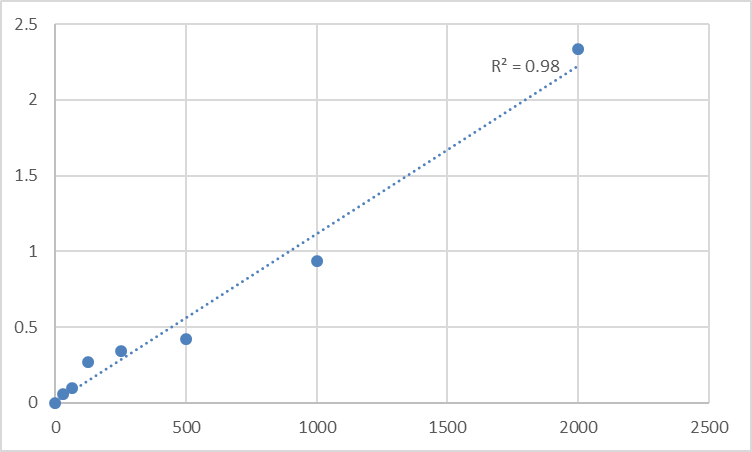
The Mouse Xanthine dehydrogenase/oxidase (XDH) ELISA Kit (KTE70003) from Abbkine is built to resolve that sensitivity gap.
Why Traditional XDH Detection Methods Fall Short
| Method | Limitation |
|---|---|
| Enzymatic activity assay | Measures XO activity only — misses XDH (dehydrogenase form); no protein-level readout |
| Western Blot | Semi-quantitative; XDH ( |
| Generic ELISA | Sensitivity ~0.1–0.5 ng/mL — misses physiological XDH in baseline mouse models |
Abbkine KTE70003: Engineered for Physiological-Range Precision
The kit uses a two-site sandwich ELISA with a XDH-specific capture antibody pre-coated onto the microplate and a biotin-conjugated detection antibody, followed by Streptavidin-HRP amplification[reference:26].
Key Specifications
| Parameter | KTE70003 |
|---|---|
| LOD | 0.05 ng/mL — sufficient for physiological XDH levels (0.1–5 ng/mL in mouse liver; 0.08–2 ng/mL in serum)[reference:27] |
| Sample types | Serum, plasma, cell culture supernatants, other biological fluids[reference:28] |
| Assay duration | 3–5 hours[reference:29] |
| Specificity | No significant cross-reactivity with XDH analogues[reference:30] |
| Format | Two-site sandwich ELISA (quantitative, colorimetric) |
Head-to-Head Comparison: KTE70003 vs. Legacy Methods
| Feature | Abbkine KTE70003 | Enzymatic Activity Assay | Generic ELISA |
|---|---|---|---|
| XDH Protein Quantification | Yes | No (XO activity only) | Yes |
| Sensitivity | 0.05 ng/mL | Functional | ~0.1–0.5 ng/mL |
| Distinguishes XDH from XO | Yes (total XDH/XO protein) | No | Variable |
| Physiological Range | Yes (0.05–5 ng/mL) | N/A | Often misses |
| Throughput | 96-well plate | Cuvette-based | 96-well plate |
Why Choose Abbkine KTE70003?
- Physiological Sensitivity: 0.05 ng/mL LOD — quantifies baseline XDH in healthy mouse liver and serum, not just injury-induced spikes
- Total XDH/XO Protein Readout: Captures both the dehydrogenase and oxidase forms — essential for understanding the XDH→XO conversion
- Biotin-Streptavidin Amplification: Enhanced signal for low-abundance antigen detection[reference:31]
- Broad Sample Compatibility: Serum, plasma, cell culture supernatants, and other biological fluids
- Complete Kit: Microplate, standards, detection antibody, Streptavidin-HRP, all buffers included[reference:32]
Who Should Buy This Kit?
✅ Buy KTE70003 if you:
- Study gout, hyperuricemia, or purine metabolism
- Research ischemia-reperfusion injury and oxidative stress
- Investigate hypertension and endothelial dysfunction (XO-derived ROS)
- Work on metabolic syndrome, NAFLD, or diet-induced obesity models
- Study the XDH→XO conversion and its regulation
- Need to quantify physiological XDH levels (0.05–5 ng/mL) in mouse models
- Require total XDH/XO protein — not just enzymatic activity
- Want a complete, ready-to-use kit for high-throughput screening
❌ Consider alternatives if you:
- Only need XO enzymatic activity (use an activity assay)
- Work with human samples — check Abbkine's human XDH offerings
- Require a faster assay (<3 hours)
📌 Reference Link: Mouse Xanthine dehydrogenase/oxidase (XDH) ELISA Kit — KTE70003