Mouse TSLP ELISA Kit (KTE70050) — Application Scenarios for Atopic Dermatitis and Epithelial Immunology Research
TSLP: The Epithelial Alarm That Wakes Up the Entire Type 2 Cascade
Thymic stromal lymphopoietin (TSLP) is not a classical cytokine that waits for an immune cell to find it. It is an epithelial-derived alarmin — a danger signal released within minutes when the skin barrier cracks, the airway epithelium encounters allergens, or the gut lining is stressed[reference:0]. Once released, TSLP binds its heterodimeric receptor (TSLPR/IL-7Rα) on dendritic cells, mast cells, and innate lymphoid cells, triggering the Th2-biased immune activation that defines atopic dermatitis, bronchial asthma, allergic rhinitis, and eosinophilic esophagitis[reference:1].
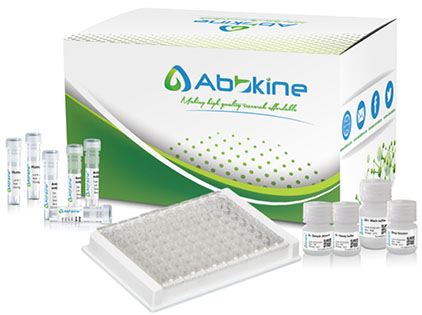
In mouse models, TSLP is the molecular switch that researchers use to ask: did this intervention actually calm the epithelium, or did it just suppress the downstream inflammation? The Mouse Thymic Stromal Lymphopoietin (TSLP) ELISA Kit (KTE70050) from Abbkine provides a quantitative sandwich ELISA readout (pg/mL) for answering that question with a standard curve — not a qPCR melt peak.
Atopic Dermatitis Research: Measuring the Epithelial Alarm
Atopic dermatitis is a self-reinforcing epithelial-immune disorder in which barrier failure releases alarmins including TSLP[reference:2]. Dermatology researchers use this kit to:
- Quantify TSLP in skin lesion lysates and serum from AD mouse models (MC903, ovalbumin, DNCB)
- Monitor epithelial-derived alarmin levels after barrier-disrupting interventions
- Assess whether topical or systemic therapies suppress TSLP release at the source
- Correlate TSLP levels with disease severity scores (SCORAD-equivalent in mice) and serum IgE
Airway Inflammation and Asthma Research
TSLP is a master regulator of Th2 airway inflammation. Respiratory researchers use this kit to:
- Quantify TSLP in bronchoalveolar lavage fluid (BALF) and lung tissue lysates
- Study allergen-induced TSLP release in house dust mite (HDM) or cockroach allergen models
- Investigate the epithelial–dendritic cell axis in asthma sensitization
- Monitor TSLP levels in response to corticosteroids and biologic therapies
Gut Mucosal Immunology and Barrier Function
TSLP is constitutively expressed in the intestinal epithelium and plays a tolerogenic role under homeostatic conditions. Gut immunologists use this kit to:
- Quantify TSLP in colon tissue lysates and lamina propria conditioned media
- Study barrier disruption–induced TSLP release in DSS colitis and TNBS models
- Investigate the TSLP–mast cell axis in visceral hypersensitivity
- Monitor TSLP recovery during mucosal healing
Why Choose This Kit for Your TSLP Research?
| Feature | Benefit |
|---|---|
| Two-site sandwich ELISA | Quantitative, specific detection of mouse TSLP[reference:3] |
| Mouse reactivity | Directly applicable to mouse models |
| Multiple sample types | Cell culture supernatants, serum, whole blood, plasma, other biological fluids[reference:4] |
| High sensitivity and specificity | Validated for mouse TSLP with no significant cross-reactivity[reference:5] |
| Colorimetric readout | Standard microplate reader at 450 nm[reference:6] |
| Complete kit | Pre-coated plate, standards, detection antibody, all buffers included |
Kit Components at a Glance
- Mouse TSLP microplate (pre-coated with capture antibody)
- Mouse TSLP standard
- Mouse TSLP detection antibody
- Streptavidin-HRP (or equivalent detection reagent)
- Standard diluent, assay buffer, HRP substrate, stop solution, wash buffer, plate covers
🔬 Which research field does your work belong to?
Atopic Dermatitis | Airway Inflammation & Asthma | Gut Mucosal Immunology | Epithelial Barrier Biology | Other
Share your application with us — we'd love to hear how you're using this kit in your studies!
📌 Reference Link: Mouse Thymic stromal lymphopoietin (TSLP) ELISA Kit — KTE70050