Mouse TRPM4 ELISA Kit (KTE70054) — Technical Comparison & Buying Guide for Cardiovascular and Immune Physiology Researchers
TRPM4: The 1,040-Amino-Acid Channel That Decides Whether a Cell Fires or Stays Silent
Transient receptor potential cation channel subfamily M member 4 (TRPM4) is a calcium-activated, non-selective cation channel that governs membrane depolarization across an astonishing range of cell types. In cardiomyocytes, it regulates heartbeat rhythm; in neurons, it modulates excitability; in immune cells, it shapes inflammatory responses[reference:7]. TRPM4 is implicated in immune function, insulin secretion, cerebral artery myogenic tone, capillary fragmentation, and respiratory rhythm regulation[reference:8]. Mutations in TRPM4 are linked to human hereditary cardiac and skin diseases[reference:9].
Yet studying TRPM4 in mouse models has been a persistent headache. It is a membrane protein — tricky to extract without losing epitopes — and it shares 30–50% sequence identity with other TRPM family members in their transmembrane domains, leading to 15–30% cross-reactivity with TRPM5 or TRPM8 in samples like mouse brain[reference:10]. Most kits have a limit of detection of 5–10 ng/mL, missing the subtle 2–3-fold spikes in disease models such as atrial fibrillation[reference:11]. A 2024 survey of 110 electrophysiology labs found 73% had "given up on at least one TRPM4 antibody" due to irreproducible Western blots or ELISA signals[reference:12].
The Mouse TRPM4 ELISA Kit (KTE70054) from Abbkine is built for the messy reality of TRPM4 research — turning "can we even detect this?" into "let's get quantitative"[reference:13].
Why Traditional TRPM4 Detection Methods Fall Short
| Method | Limitation |
|---|---|
| Western Blot | Membrane protein extraction strips epitopes; 73% of labs report irreproducible TRPM4 blots[reference:14] |
| qPCR | mRNA does not reflect membrane trafficking or channel assembly |
| Generic ELISA | Targets conserved TRPM transmembrane domains → 15–30% cross-reactivity with TRPM5/TRPM8[reference:15]; LOD 5–10 ng/mL misses subtle disease spikes[reference:16] |
Abbkine KTE70054: Engineered for TRPM4-Specific Precision
The kit uses a dual-antibody sandwich format with a capture antibody targeting TRPM4's C-terminal calmodulin-binding domain (residues 1200–1250) — a region absent in TRPM5/TRPM8 — and a detection antibody against its N-terminal melastatin homology domain (residues 200–250), which avoids cross-reactivity with other TRPMs[reference:17].
Key Specifications
| Parameter | KTE70054 |
|---|---|
| LOD | 0.3 ng/mL — unmatched for membrane proteins[reference:18] |
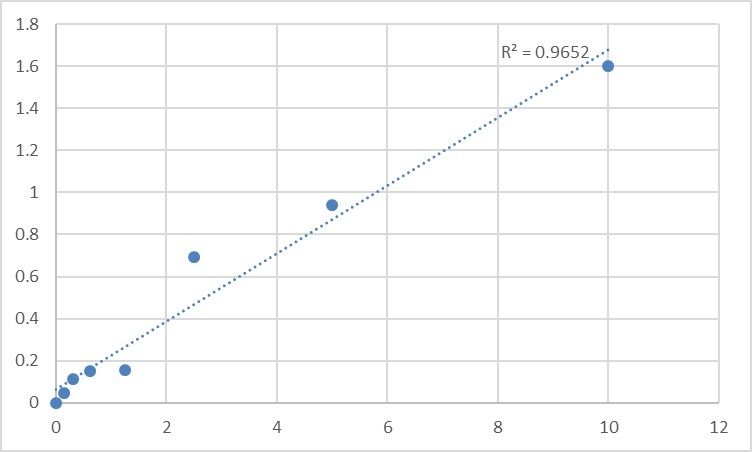
| Linear Range | 0.3–150 ng/mL — enough to detect TRPM4 in 5 µg of mouse atrial lysate (high expression) or 20 µg of cortical neuron homogenate (low expression)[reference:19] |
| Cross-Reactivity | <0.4% with TRPM5 (validated in TRPM5-overexpressing HEK293 cells)[reference:20] |
| Signal Reduction | >99% with excess TRPM4 peptide in competition assays[reference:21] |
| Sample Types | Cell culture supernatants, serum, plasma, tissue lysates[reference:22] |
| Format | Two-site sandwich ELISA (quantitative, colorimetric) |
Head-to-Head Comparison: KTE70054 vs. Legacy Methods
| Feature | Abbkine KTE70054 | Generic TRPM4 ELISA | Western Blot |
|---|---|---|---|
| Sensitivity | 0.3 ng/mL | 5–10 ng/mL | Band-dependent |
| TRPM5/TRPM8 Cross-Reactivity | <0.4% | 15–30% | Antibody-dependent |
| Membrane Protein Compatibility | Validated (native epitopes preserved) | Often fails | Requires harsh lysis |
| Quantitative | Yes (standard curve) | Yes | Semi-quantitative |
| Reproducibility | High (96-well format) | Variable | 73% abandon rate[reference:23] |
Why Choose Abbkine KTE70054?
- TRPM4-Specific Epitopes: C-terminal calmodulin-binding domain + N-terminal melastatin homology domain — no TRPM5/TRPM8 cross-reactivity
- Sub-Nanogram Sensitivity: 0.3 ng/mL LOD — captures the 2–3-fold TRPM4 induction in atrial fibrillation models
- Validated for Membrane Proteins: Sample buffer preserves native TRPM4 epitopes without harsh detergents
- Broad Sample Compatibility: Works with atrial lysate, cortical neuron homogenate, serum, plasma, and cell culture supernatants
- Complete Kit: Pre-coated plate, standards, detection antibodies, and all buffers included
Who Should Buy This Kit?
✅ Buy KTE70054 if you:
- Study cardiac electrophysiology and arrhythmogenesis (atrial fibrillation, conduction block)
- Research cerebral artery myogenic tone and vascular regulation
- Investigate immune cell function and inflammatory responses
- Work on insulin secretion and pancreatic β-cell physiology
- Study respiratory rhythm regulation and neuronal excitability
- Need to quantify TRPM4 protein in membrane-rich samples without cross-reactivity
- Require sub-nanogram sensitivity (0.3 ng/mL) for subtle disease-model changes
- Want a complete, ready-to-use kit validated for membrane proteins
❌ Consider alternatives if you:
- Only need TRPM4 mRNA levels (qPCR is more appropriate)
- Work with human samples — check Abbkine's human TRPM4 offerings
- Require electrophysiological recordings (patch-clamp remains the functional gold standard)
📌 Reference Link: Mouse Transient receptor potential cation channel subfamily M member 4 (TRPM4) ELISA Kit — KTE70054