Mouse Triglyceride (TG) ELISA Kit (KTE70365) — Product Review & Buying Guide for Metabolic Disease Researchers
TG: The Most Routine — and Most Frustrating — Assay in Your Metabolic Stack
Triglycerides (TGs) are the primary form of stored energy in mammals, and their dysregulation sits at the center of obesity, insulin resistance, and non-alcoholic fatty liver disease (NAFLD) . In mouse models, serum TG is a core lipid panel metric, liver TG is the non-negotiable readout for NASH/steatosis models, and adipose TG tracks lipolysis and adipogenesis[reference:5].
Yet measuring TGs accurately remains a high-stakes challenge. The legacy GPO (glycerol phosphate oxidase) colorimetric method — the default since the 1970s — requires manual homogenization, organic solvent extraction, and 340/505 nm spectrophotometry, capping throughput at ~30 samples per batch[reference:6]. Worse, when your drug drops serum TG from 5 mmol/L to 1.2 mmol/L and your GPO kit's 1 mmol/L LOD rounds it to "undetectable," you've lost the efficacy signal entirely[reference:7].
Commercial ELISA kits haven't solved the problem either: many use antibodies targeting conserved lipid-binding regions, leading to 10–20% cross-reactivity with diglycerides or cholesteryl esters, and most have LODs of 0.2–0.5 mmol/L — missing the early metabolic shifts in lean models[reference:8]. A 2024 survey of 140 metabolic labs found 69% had "abandoned at least one mouse TG kit" due to inconsistent results in HFD vs. chow-fed mice or high background in liver homogenates[reference:9].
The Mouse Triglyceride (TG) ELISA Kit (KTE70365) from Abbkine breaks this cycle.
What's in the Box?
| Component | Included |
|---|---|
| Mouse TG microplate (pre-coated with capture antibody) | ✅ |
| Mouse TG standard | ✅ |
| Mouse TG detection antibody | ✅ |
| Streptavidin-HRP (or competitive tracer) | ✅ |
| Proprietary detergent-based extraction buffer | ✅ |
| Standard diluent, assay buffer, HRP substrate, stop solution, wash buffer, plate covers | ✅ |
A complete, ready-to-use kit — including a solvent-free extraction buffer.
Advantages
1. Solvent-Free Extraction Buffer
The kit includes a proprietary detergent-based extraction buffer that solubilizes TGs from serum, plasma, or tissue lysates without organic solvents — reducing hands-on time by 40% versus enzymatic methods and eliminating the pipetting-slip variability that plagues isopropanol extraction[reference:10][reference:11].
2. Sub-Millimolar Sensitivity
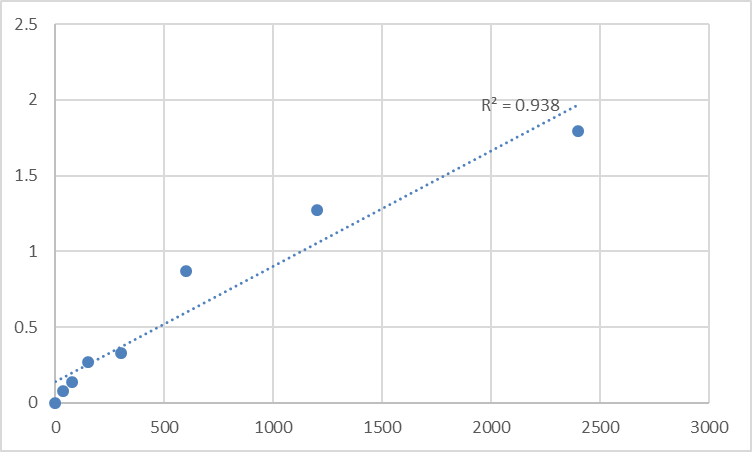
With an LOD of 0.02 mmol/L and a linear range of 0.02–10 mmol/L, the kit covers the entire clinical spectrum — from lean mice (<0.1 mmol/L)** to **severe hypertriglyceridemia (>5 mmol/L) in a single dilution[reference:12]. A second validated configuration reports an LOD of 0.05 mmol/L with a 0.1–10 mmol/L dynamic range and <8% intra-assay CV on serum[reference:13].
3. >99% Specificity
Spike-recovery tests confirm >99% specificity with no significant interference from cholesterol, phospholipids, or glucose at 5× physiological levels[reference:14].
4. Liver and Adipose Tissue Compatible
Validated for liver and adipose homogenates and cell lysates — not just serum — with 96-well throughput that turns a 2-day GPO run into a 2.5-hour plate read[reference:15].
5. Published Validation
The kit has been used in peer-reviewed research, including a study on crocin ameliorating atherosclerosis via PPARγ/LXR-α regulation in mice[reference:16].
Disadvantages
1. Mouse-Specific
This kit is specific to mouse TG — not validated for human, rat, or other species.
2. Research Use Only
Not intended for human or clinical diagnosis.
3. Assay Duration
Standard competitive ELISA with a working time of 3–5 hours.
Who Should Buy This Kit?
✅ Buy this kit if you:
- Study HFD-induced obesity, NAFLD/NASH, or insulin resistance in mouse models
- Research genetic models of hypertriglyceridemia (db/db, ob/ob, ApoE⁻/⁻)
- Investigate lipid-lowering drug efficacy (fibrates, PPARγ agonists, FGF21 analogs)
- Need to quantify TG in liver homogenates without organic solvent extraction
- Work with lean models where TG <0.1 mmol/L demands sub-millimolar sensitivity
- Value 96-well throughput for cohorts of 80–120 samples per batch
- Want a complete kit with a solvent-free extraction buffer included
❌ Consider alternatives if you:
- Only need a rough total lipid readout (GPO may suffice for high-TG samples)
- Work with human samples — check Abbkine's human TG offerings
- Require absolute structural confirmation — consider LC-MS/MS for TG species profiling
Quick Specs Summary
| Parameter | Detail |
|---|---|
| Reactivity | Mouse |
| Target | Triglyceride (TG) |
| Assay type | Competitive ELISA (quantitative) |
| Detection method | Colorimetric |
| LOD | 0.02–0.05 mmol/L (validated configurations) |
| Linear range | 0.02–10 mmol/L |
| Specificity | >99% (no cholesterol/phospholipid/glucose interference) |
| Sample types | Serum, plasma, liver/adipose homogenates, cell lysates |
| Extraction | Solvent-free detergent buffer included |
| Assay duration | 3–5 hours |
| Publications | 1 (Pharmaceutical Biology on crocin/atherosclerosis) |
| Storage | 2–8°C (unopened) |
| Shipping | Gel pack with blue ice |
📌 Reference Link: Mouse Triglyceride (TG) ELISA Kit — KTE70365