Mouse Sarcalumenin (SRL) ELISA Kit (KTE70256) — Technical Comparison & Buying Guide for Calcium-Handling and Muscle Physiology Researchers
SRL: The 160-kDa SR Glycoprotein Your Calcium-Handling Paper Forgot
If you've ever recited the "big three" of sarcoplasmic reticulum (SR) biochemistry — RYR1 (calcium release), SERCA2a (calcium re-uptake), and calsequestrin (luminal buffer) — you've already made the omission that most skeletal and cardiac muscle papers make. Tucked into the longitudinal SR lumen and the non-junctional stretches of the terminal cisternae is a 160-kDa acidic N-glycosylated calcium-binding glycoprotein called Sarcalumenin (SRL) that buffers roughly 30–40% of the total exchangeable Ca²⁺ inside the SR lumen alongside calsequestrin[reference:0].
And SRL is not just a passive calcium sponge. It belongs to the TRAFAK-class dynamin-like GTPase superfamily, with annotated roles in endocytosis, store-operated calcium entry, and response to muscle activity — meaning it likely talks to SERCA2a and modulates how fast the SR lumen reloads after a twitch[reference:1].
The problem? "We saw a ~160 kDa smear above the CSQ band and called it SRL" is not a quantitative claim you can defend. SRL's N-glycosylation micro-heterogeneity and SR-membrane-peripheral tethering mean your standard RIPA + BCA + Western pipeline systematically under-reads the lumen fraction unless you deliberately enrich for SR microsomes[reference:2].
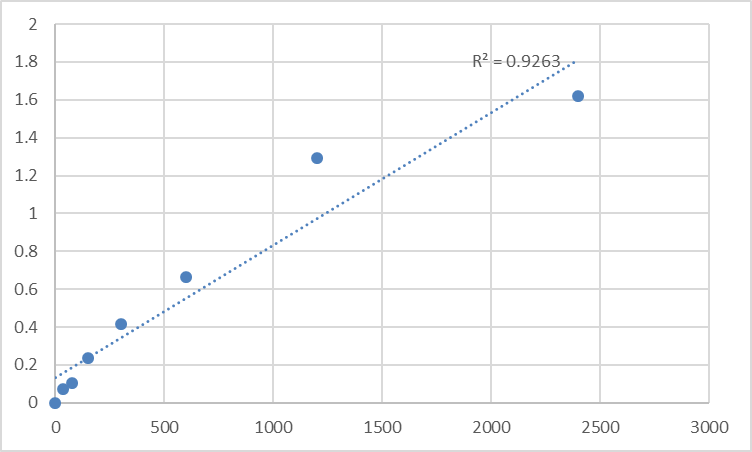
The Mouse Sarcalumenin (SRL) ELISA Kit (KTE70256) from Abbkine exists to turn "SR glycoprotein" into interpolated ng/mL you can normalize to SERCA2a or RYR1 and call a genuine SR-loading metric.
Why Traditional SRL Detection Methods Fall Short
| Method | Limitation |
|---|---|
| Western Blot | 160-kDa N-glycosylated protein with micro-heterogeneity; poor transfer efficiency; under-reads lumen fraction without SR microsome enrichment |
| qPCR | mRNA does not reflect the glycosylated, lumen-tethered protein that actually buffers Ca²⁺ |
| Generic SR Protein Assays | Cross-reactivity with calsequestrin, triadin, and junctin — the other major SR lumen proteins |
Abbkine KTE70256: Engineered for SR Lumen Precision
The kit uses a two-site sandwich ELISA with a mouse-raised monoclonal antibody pair — avoiding the off-target cross-reactivity from triadin, junctin, or calsequestrin that plagues rabbit polyclonal approaches[reference:3].
Key Specifications
| Parameter | KTE70256 |
|---|---|
| LOD | 0.078 ng/mL |
| Format | Two-site sandwich ELISA (quantitative, colorimetric) |
| Reactivity | Mouse |
| Target | Sarcalumenin (SRL, UniProt Q7TQ48) |
| Sample Types | SR microsome preparations, muscle tissue lysates, cell culture supernatants |
| Price | $339 for 48 tests[reference:4] |
Head-to-Head Comparison: KTE70256 vs. Legacy Methods
| Feature | Abbkine KTE70256 | Western Blot | Generic SR Protein Assays |
|---|---|---|---|
| Sensitivity | 0.078 ng/mL | Band-dependent | Often misses low-abundance SRL |
| SR Lumen Fraction | Captured with optimized extraction | Systematically under-read | Variable |
| Cross-Reactivity | Mouse-specific mAb pair | Antibody-dependent | Cross-reacts with CSQ/triadin/junctin |
| Quantitative | Yes (standard curve) | Semi-quantitative | Variable |
| Throughput | 96-well plate | Low (gel-based) | 96-well plate |
Why Choose Abbkine KTE70256?
- SR Lumen-Optimized: Designed to capture the lumen-tethered, glycosylated SRL fraction that Western blots systematically miss
- Mouse-Specific Monoclonal Pair: No cross-reactivity from triadin, junctin, or calsequestrin
- Sub-Nanogram Sensitivity: 0.078 ng/mL LOD — detects SRL in SR microsome preparations and muscle homogenates
- Quantitative SR-Loading Metric: Normalize SRL to SERCA2a or RYR1 for a defensible SR calcium-buffering readout
- Complete Kit: Pre-coated plate, standards, detection antibodies, and all buffers included
Who Should Buy This Kit?
✅ Buy KTE70256 if you:
- Study SR calcium handling in skeletal or cardiac muscle
- Research excitation-contraction coupling and SR loading dynamics
- Investigate SERCA2a regulation and calcium re-uptake kinetics
- Work on muscle fatigue, aging sarcopenia, or heart failure models
- Need to quantify SRL protein in SR microsomes or muscle lysates
- Require sub-nanogram sensitivity (0.078 ng/mL) for low-abundance SR proteins
- Want a complete, ready-to-use kit with a mouse-specific monoclonal pair
❌ Consider alternatives if you:
- Only need Srl mRNA levels (qPCR is more appropriate)
- Work with human samples — check Abbkine's human SRL offerings
- Require absolute structural confirmation — consider mass spectrometry for SRL glycoform analysis
📌 Reference Link: Mouse Sarcalumenin (SRL) ELISA Kit — KTE70256