Mouse Lipopolysaccharides (LPS) ELISA Kit (KTE71161) — Product Review & Buying Guide for Sepsis and Gut Barrier Researchers
LPS: The 10–20 kDa Endotoxin That Turns a Mouse Into a Cytokine Factory
Lipopolysaccharides (LPS, endotoxin) are the major structural component of the outer membrane of Gram-negative bacteria — and the single most potent activator of innate immunity known to biology. A picogram of LPS injected into a mouse triggers a full-blown cytokine storm; a milligram kills the animal within hours. LPS is the ligand for TLR4, the receptor that launched the field of innate immune sensing, and it is the standard tool for modeling sepsis, septic shock, acute lung injury, and systemic inflammation in rodents.
But LPS is not just an experimental tool. It is a biologically relevant analyte in its own right: circulating LPS is the molecular signature of gut barrier failure ("leaky gut"), and it is elevated in metabolic endotoxemia, NAFLD, chronic kidney disease, and sepsis. In mouse models, quantifying LPS in plasma is how researchers demonstrate that a gut-barrier intervention actually reduced bacterial translocation.
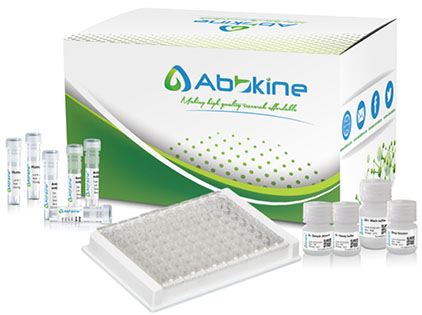
The Mouse Lipopolysaccharides (LPS) ELISA Kit (KTE71161) from Abbkine delivers a calibration range of 20–320 ng/L and a limit of detection of 1.0 ng/L — sub-nanogram sensitivity that captures the low-level endotoxemia of chronic disease, not just the massive spikes of acute sepsis[reference:7].
What's in the Box?
| Component | Included |
|---|---|
| Mouse LPS microplate (pre-coated with capture antibody) | ✅ |
| Mouse LPS standard | ✅ |
| HRP-conjugated Mouse LPS detection antibody | ✅ |
| Chromogen solution | ✅ |
| Stop solution | ✅ |
| Wash buffer | ✅ |
| Plate covers | ✅ |
A complete, ready-to-use kit with an HRP-conjugate detection format (no separate streptavidin step required)[reference:8].
Advantages
1. Sub-Nanogram Sensitivity for Chronic Endotoxemia
With an LOD of 1.0 ng/L and a dynamic range of 20–320 ng/L, this kit captures the low-grade endotoxemia (typically 10–50 ng/L) that defines metabolic endotoxemia and gut barrier dysfunction — not just the massive spikes of acute LPS injection (which can exceed 1,000 ng/L)[reference:9].
2. Published Validation in a High-Impact Journal
This kit has been cited in 1 peer-reviewed publication: a 2019 study on label-free bacterial toxin detection in water supplies using porous silicon nanochannel sensors, published in ACS Sensors (IF: 6)[reference:10]. This demonstrates the kit's utility beyond traditional immunology — it works in environmental and sensor-development contexts as well.
3. HRP-Conjugate Format for Streamlined Workflow
The kit uses an HRP-conjugated detection antibody, eliminating the biotin-streptavidin amplification step required by many competitor kits. This shortens the assay workflow and reduces the number of reagent addition steps[reference:11].
4. Broad Sample Compatibility
Validated for cell culture supernatants, plasma, serum, and other biological fluids — covering the full range of LPS research applications, from in vitro TLR4 stimulation to in vivo sepsis models[reference:12].
5. Murine-Specific
Designed specifically for mouse samples — not a human kit adapted for murine use.
Disadvantages
1. Mouse-Specific
This kit is specific to mouse LPS — not validated for human, rat, or other species.
2. Research Use Only
Not intended for human or clinical diagnosis.
3. Assay Duration
Standard sandwich ELISA with a working time of 3–5 hours.
Who Should Buy This Kit?
✅ Buy this kit if you:
- Study sepsis, septic shock, or LPS-induced systemic inflammation in mouse models
- Research gut barrier function and bacterial translocation ("leaky gut")
- Investigate metabolic endotoxemia in obesity, NAFLD, or chronic kidney disease
- Work on TLR4 signaling and innate immune activation
- Need to quantify LPS in plasma or serum at low ng/L concentrations
- Value a kit with published validation in a high-impact journal (ACS Sensors, IF 6)
- Want a streamlined HRP-conjugate workflow (no streptavidin step)
❌ Consider alternatives if you:
- Need to detect human or rat LPS — check Abbkine's other offerings
- Require absolute structural confirmation — consider LC-MS/MS for lipid A profiling
- Are working with clinical diagnostic samples
Quick Specs Summary
| Parameter | Detail |
|---|---|
| Reactivity | Mouse |
| Target | Lipopolysaccharides (LPS) |
| Assay type | Two-site sandwich ELISA |
| Detection method | Colorimetric (HRP-conjugate) |
| Calibration range | 20–320 ng/L |
| Limit of detection | 1.0 ng/L |
| Sample types | Cell culture supernatants, plasma, serum, other biological fluids |
| Publications | 1 (ACS Sensors, IF 6) |
| Assay duration | 3–5 hours |
| Storage | 2–8°C (unopened) |
| Shipping | Gel pack with blue ice |
📌 Reference Link: Mouse Lipopolysaccharides (LPS) ELISA Kit — KTE71161