Mouse Leptin (LEP) ELISA Kit (KTE71186) — Application Scenarios for Obesity, Energy Balance, and Neuroendocrine Research
Leptin: The 16-kDa Hormone That Tells Your Brain to Stop Eating
Leptin (LEP) is a 167-amino-acid, ~16-kDa adipokine secreted primarily by white adipose tissue in proportion to fat mass. It is the body's satiety signal — it travels through the bloodstream to the hypothalamus, where it suppresses appetite and increases energy expenditure by inhibiting NPY/AgRP neurons and activating POMC/CART neurons. When leptin signaling fails — as in ob/ob mice (leptin-deficient) or db/db mice (leptin receptor-deficient) — the result is hyperphagia, severe obesity, insulin resistance, and diabetes.
But leptin is not just a metabolic hormone. It is a pleiotropic cytokine with roles in reproductive function (leptin is required for puberty and fertility), immune function (leptin modulates T cell responses), bone metabolism, and neuroendocrine regulation. In mouse models, leptin is the most widely measured adipokine — it is the first-line readout for any study involving adipose tissue, energy balance, or hypothalamic function.
The Mouse Leptin (LEP) ELISA Kit (KTE71186) from Abbkine delivers a calibration range of 50–800 pg/mL and a limit of detection of 5.0 pg/mL — sensitivity sufficient to quantify leptin across the full physiological and pathological spectrum, from lean mice to obese models[reference:13].
Obesity and Energy Balance Research
Leptin is the primary afferent signal in the feedback loop that regulates body weight. Obesity researchers use this kit to:
- Quantify leptin in serum and plasma from diet-induced obesity (DIO) and genetic models (ob/ob, db/db)
- Monitor leptin dynamics in response to caloric restriction, exercise, or pharmacological interventions
- Investigate leptin resistance — the paradox of high leptin in obesity without satiety
- Correlate leptin levels with body fat percentage and food intake
Neuroendocrine and Hypothalamic Research
Leptin acts directly on the hypothalamus to regulate energy homeostasis and neuroendocrine function. Neuroendocrinologists use this kit to:
- Quantify leptin in serum and CSF from mouse models of hypothalamic dysfunction
- Study leptin transport across the blood-brain barrier
- Investigate leptin's role in the HPA axis and stress response
- Monitor leptin during puberty onset and reproductive maturation
Adipose Tissue Biology and Inflammation
Leptin is secreted by adipocytes and is regulated by inflammatory signals — it is elevated in acute inflammation and suppressed by fasting. Adipose biologists use this kit to:
- Quantify leptin in adipocyte-conditioned media from in vitro differentiation studies
- Study the leptin–TNF-α and leptin–IL-6 axes in obesity-associated inflammation
- Investigate brown/beige adipocyte contributions to circulating leptin
- Monitor leptin in bariatric surgery and weight loss models
Why Choose This Kit for Your Leptin Research?
| Feature | Benefit |
|---|---|
| Two-site sandwich ELISA | Quantitative, specific detection |
| Mouse reactivity | Directly applicable to mouse models |
| Sensitive and broad range | LOD 5.0 pg/mL; calibration range 50–800 pg/mL — spans lean to obese models |
| Multiple sample types | Cell culture supernatants, plasma, serum, other biological fluids |
| HRP-conjugate format | Streamlined workflow with no streptavidin step |
| Complete kit | Pre-coated plate, standards, HRP-conjugated detection antibody, all buffers included |
Kit Components at a Glance
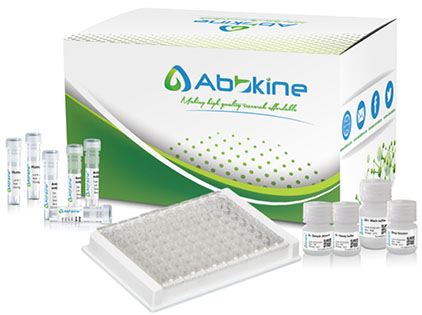
- Mouse Leptin microplate (pre-coated with capture antibody)
- Mouse Leptin standard
- HRP-conjugated Mouse Leptin detection antibody
- Chromogen solution
- Standard diluent, assay buffer, HRP substrate, stop solution, wash buffer, plate covers[reference:14]
🔬 Which research field does your work belong to?
Obesity & Energy Balance | Neuroendocrine Research | Adipose Tissue Biology | Inflammation & Immunity | Other
Share your application with us — we'd love to hear how you're using this kit in your studies!
📌 Reference Link: Mouse Leptin (LEP) ELISA Kit — KTE71186
Prev:This is the latest article