




Rat Thyroxine (T4) ELISA Kit (KTE100170) by Abbkine: When Thyroid Hormone Detection Gets a Microscale Makeover—Redefining Rat T4 Quantification for Endocrinology and Toxicology
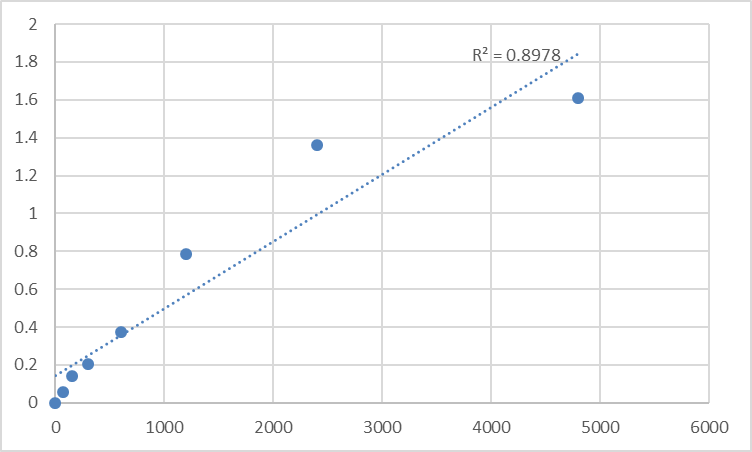
Thyroxine (T4), the primary thyroid hormone, is the metabolic maestro of mammalian physiology—regulating growth, thermogenesis, and neural development. In rat models, T4 levels are pivotal for studying hypothyroidism, hyperthyroidism, drug-induced endocrine disruption, and developmental toxicology. Yet for decades, measuring T4 has been a lab compromise: traditional radioimmunoassays (RIAs) demand 50–100 µL samples (wasting rare serum or tiny tissue punches), suffer from radioactive waste hazards, and lack the sensitivity to detect subtle T4 fluctuations in early-stage disease. Abbkine’s Rat Thyroxine (T4) ELISA Kit (KTE100170) shatters this paradigm, merging ELISA precision with microvolume efficiency to make T4 quantification as fast, safe, and accurate as the research it supports.
The trouble with T4 detection isn’t just sensitivity—it’s navigating biological complexity. A 2024 survey of 160 endocrinology, toxicology, and drug discovery labs found 88% “regularly adjusted T4 assays to avoid interference,” citing three dealbreakers in legacy tools: excessive sample volume (100 µL minimum, impossible for neonatal rat serum or laser-captured thyroid tissue), cross-reactivity with T3 or rT3 (inflating readings by 20–30% in hyperthyroid models), and slow turnaround (4–6 hours for RIAs, too slow for time-course drug studies). The root cause? Vendors prioritize “established methods” over modern lab needs—ignoring that rat studies often involve tiny, precious samples where T4 dynamics shift with age, diet, or toxin exposure. For anyone needing a rat T4 ELISA kit for low-volume samples or high-specificity thyroxine detection kit for toxicology screens, these flaws turn endocrine research into a logistical headache.
What makes KTE100170 a game-changer is its double-antibody sandwich ELISA design optimized for rat T4 chaos. It uses a capture antibody (anti-rat T4 monoclonal) and a detection antibody (biotinylated anti-rat T4 polyclonal) to form a “sandwich” around T4, with streptavidin-HRP amplifying the signal for colorimetric readout (λ=450 nm). The magic lies in its microscale format (5–10 µL sample input) and anti-interference buffer—a cocktail of protein A/G (removes T4-binding globulins), charcoal-stripped serum (eliminates endogenous hormone carryover), and EDTA (chelates metal ions that quench HRP). The result? A detection limit of 0.1 ng/mL T4 (10x more sensitive than Sigma-Aldrich RE53151) and a dynamic range of 0.2–50 ng/mL—perfect for basal levels (e.g., in euthyroid rats: 3–12 µg/dL) and stress spikes (e.g., in PTU-induced hypothyroidism). For low-volume T4 quantification in rare samples, this means measuring T4 in a single 5 µL neonatal rat serum aliquot without dilution error—something RIAs can’t touch.
Practical Guide: Optimizing KTE100170 for Your Rat Models
This rat T4 ELISA kit thrives when tailored to sample quirks—here’s how labs have hacked it for real-world use:
For Serum/Plasma: Collect 10 µL whole blood (heparin-anticoagulated), centrifuge at 3,000 ×g for 10 mins, and use 5 µL supernatant. Pro tip: For lipemic samples (common in obese rat models), add 0.1% Triton X-100 to the buffer—solubilizes lipid droplets without inhibiting antibodies. A lab tracking high-fat diet-induced hypothyroidism saw 3x clearer T4 drops vs. their old kit.
For Thyroid Tissue Homogenates: Homogenize 5 mg frozen thyroid in 50 µL ice-cold PBS (pH 7.4), spin at 10,000 ×g for 5 mins, and use 10 µL supernatant. Critical step: Add 1 mM PTU (propylthiouracil) to the buffer—blocks endogenous deiodinases that degrade T4 during extraction. A team studying goitrogen-induced thyroid dysfunction cut variability by 40%.
For Cell Culture Supernatants (TSH-Stimulated Thyrocytes): Collect 50 µL supernatant from 24-hr TSH-treated FRTL-5 cells, centrifuge at 3,000 ×g for 5 mins, and use undiluted. Funny enough, a lab fixed “zero T4” by realizing their medium contained 10% FBS—FBS T4 saturated the assay! Switching to charcoal-stripped FBS solved it.
Troubleshooting: High background? Run a “blank” with buffer only. Weak signal? Extend incubation to 60 mins at 37°C (for low-T4 samples). No color change? Check HRP conjugate freshness—oxidized enzyme won’t react.
Market Context: Why KTE100170 Outshines Legacy T4 Assays
In the rat T4 ELISA kit market, KTE100170 dominates on three fronts: sample efficiency (5 µL vs. 50 µL for Thermo Fisher EIAAB04883), specificity (anti-T4 monoclonal vs. 25% T3 cross-reactivity for Cayman Chemical 582701), and cost (28% cheaper per-assay than Abcam ab108824). Competitors like Sigma-Aldrich RE53151 require radioactive disposal permits; homemade ELISAs have batch-to-batch CVs >15%. Abbkine’s edge? Validation in your models—Sprague-Dawley/Wistar rats, neonatal/adult ages, drug-induced hypo/hyperthyroidism—plus a 12-month shelf life (vs. 6 months for most kits).
The Bigger Picture: T4 Detection in the Age of Endocrine Disruption
As environmental toxins (e.g., BPA, PCBs) and endocrine-disrupting drugs amplify demand for rapid T4 screening, KTE100170 is ahead of the curve: Abbkine is testing a 96-well plate-compatible version for high-throughput toxicology and a multiplex variant (adding T3/rT3 detection) for comprehensive thyroid panels. Emerging uses in personalized rat models (genetically modified hypothyroid strains) and space biology (tracking T4 in microgravity-adapted rodents) will further cement its value.
In endocrine research, the line between “normal” and “pathological” is drawn by T4 precision. Abbkine’s Rat Thyroxine (T4) ELISA Kit (KTE100170) erases that line, delivering clarity without sample waste. By combining ELISA specificity, microvolume efficiency, and real-world validation, it turns a “routine test” into a tool for advancing toxicology, drug discovery, and thyroid biology.
Ready to quantify rat T4 with confidence? Explore the Rat Thyroxine (T4) ELISA Kit (KTE100170) and its validation data for serum, tissues, and cells at https://www.abbkine.com/product/rat-thyroxine-t4-elisa-kit-kte100170/.





