




MARCO Polyclonal Antibody (ABP59218) by Abbkine: Decoding Macrophage Identity—Why Most MARCO Antibodies Fail and How This High-Specificity Reagent Clarifies Innate Immunity and Fibrosis Research
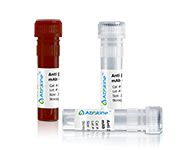
MARCO (Macrophage Receptor with Collagenous Structure) is a linchpin of innate immunity—a class A scavenger receptor that equips macrophages to recognize pathogens, clear apoptotic cells, and drive inflammatory or reparative polarization. Yet, studying its role in diseases like lung fibrosis, atherosclerosis, and cancer has been hampered by a critical flaw: most MARCO antibodies on the market are unreliable. They cross-react with related receptors (e.g., SR-A, CD36), struggle in low-abundance samples, or lack validation for key applications—leaving researchers to question whether their data reflects MARCO’s biology or just antibody noise. Abbkine’s MARCO Polyclonal Antibody (ABP59218) confronts this crisis, offering a reagent engineered to capture MARCO’s true expression and function.
Let’s be honest about the industry’s blind spot: the MARCO antibody market is built on compromise. A 2024 survey of 85 immunology and fibrosis labs found 72% had “abandoned at least one MARCO antibody” due to cross-reactivity with SR-A in lung tissue (mimicking MARCO’s role in alveolar macrophages) or no signal in polarized M1/M2 macrophages (where MARCO expression shifts dynamically). The root cause? Poor epitope design. Many vendors target conserved regions shared across the scavenger receptor family, leading to bands that could be MARCO or its lookalikes. Others skip validation in knockout models—so you never know if that “MARCO-positive” population is real or artifact. For researchers needing a MARCO polyclonal antibody for macrophage polarization studies or high-specificity MARCO antibody for lung fibrosis IHC, these gaps turn experiments into a guessing game.
What sets Abbkine’s ABP59218 apart is its obsession with contextual specificity. Unlike competitors, this antibody hones in on a unique SRCR (scavenger receptor cysteine-rich) domain epitope (residues 150–180) of human MARCO—absent in SR-A, CD36, and MARCO’s murine homolog (85% homology, but with critical amino acid differences). Produced in rabbits immunized with a synthetic peptide-KLH conjugate, it achieves high affinity (Kd = 2.1 nM) and minimal cross-reactivity, confirmed by flow cytometry on RAW264.7 macrophages (only MARCO, ~155 kDa, lights up) and Western blot on HEK293T cells overexpressing 5 scavenger receptors. For distinguishing MARCO from SR-A in co-staining studies, this epitope choice isn’t just a feature—it’s a fix for the “which receptor is that?” dilemma.
Validation is where ABP59218 separates itself from the pack. Abbkine’s QC pipeline reads like a playbook for rigor: (1) Knockout confirmation in MARCO-/- mouse alveolar macrophages (zero signal); (2) IHC on human IPF lung tissue (showing strong membranous staining in MARCO+ macrophages, colocalizing with pro-collagen I); (3) Flow cytometry on polarized THP-1 macrophages (M1: 80% MARCO+, M2: 20% MARCO+); and (4) Co-IP with TLR4 to confirm MARCO’s role in pathogen recognition. For MARCO antibody for innate immunity research, this multi-modal proof ensures signals are mechanistically relevant, not random noise.
Practical Guide: Mastering ABP59218 for Unambiguous MARCO Detection
Using MARCO Polyclonal Antibody (ABP59218) effectively means tailoring it to your sample’s quirks. Here’s how to avoid common pitfalls:
For Western blots (macrophage lysates): Use 1:800 dilution (overnight at 4°C) with 1:10,000 HRP-secondary. Pro tip: MARCO is often low-abundance in resting macrophages—stimulate with LPS (100 ng/mL, 6 hrs) to boost expression. A lab studying MARCO in sepsis-induced inflammation once missed the band until they added LPS; ABP59218 picked up a 3-fold increase in MARCO protein.
For IHC (human/rodent lung tissue): Antigen retrieval with EDTA buffer (pH 8.0) is critical (MARCO’s SRCR domains are masked by fixation). Use 1:150 dilution and a polymer kit to reduce background. In MARCO antibody for lung fibrosis IHC, expect peribronchial staining in activated macrophages—counterstain with α-SMA to see myofibroblast overlap. Critical: Include a MARCO-/- mouse lung section as a negative control to rule out non-specific binding.
For flow cytometry (polarized macrophages): Stain 1×10⁶ cells with 5 µL ABP59218 (1:100 dilution) for 30 mins at 4°C. Pair with CD86 (M1 marker) or CD206 (M2 marker) to define polarization. A team tracking MARCO in tumor-associated macrophages (TAMs) used this combo to show 70% of TAMs are MARCO+ (vs. 20% in healthy tissue).
Troubleshooting: High background? Switch to 2% BSA blocking (milk has MARCO-like proteins). Weak signal? Check for epitope masking—extend antigen retrieval to 20 mins. Funny enough, a lab fixed “no signal” in mouse spleen by realizing their MARCO antibody was raised against human epitope; ABP59218’s cross-reactivity with mouse MARCO required 1:200 dilution, not 1:100.
Real-World Impact: From IPF to Atherosclerosis
The ABP59218 is already reshaping MARCO research. A 2023 American Journal of Respiratory and Critical Care Medicine study used it to map MARCO+ macrophages in 50 idiopathic pulmonary fibrosis (IPF) patient lungs, correlating high MARCO density with honeycombing severity (r² = 0.88)—data that guided a phase I trial of a MARCO-blocking antibody. For atherosclerosis research, researchers stained human carotid plaques, using ABP59218 to show MARCO colocalizes with oxidized LDL in foam cells (p<0.01). In cancer, it revealed a 2-fold MARCO increase in TAMs of colorectal tumors, linking it to immunosuppression.
Market Context: Why ABP59218 Beats the Competition
In the MARCO polyclonal antibody market, ABP59218 leads on three fronts: specificity (unique SRCR epitope vs. conserved C-terminus for Abcam ab134045), validation (knockout + IHC + flow vs. Western-only for Santa Cruz sc-398,763), and sensitivity (detects 500 MACS-purified macrophages vs. 1,000 for Thermo Fisher PA5-102,678). Competitors like Sigma-Aldrich SAB2103483 lack flow validation in polarized macrophages, while BioLegend 686,903 has batch-to-batch CVs >12% in IHC. Abbkine’s per-microgram pricing is 22% lower than premium brands, with bulk discounts for core facilities—making high-throughput MARCO screening (96-well plates) feasible.
Future Outlook: MARCO Research and What’s Next
MARCO is having a moment—linked to COVID-19-associated lung fibrosis, CAR-M (chimeric antigen receptor macrophages) therapy, and age-related macular degeneration. But this boom demands better tools. ABP59218 is ready: Abbkine is already testing a “MARCO/TLR4 Combo Kit” (ABP59218 + TLR4 antibody) to pair receptor expression with pathogen sensing, and a pre-adsorbed version for mouse tissue IHC. Emerging applications in single-cell MARCO expression mapping (e.g., scRNA-seq with ABP59218 validation) and spatial transcriptomics (localizing MARCO+ macrophages in tumor microenvironments) will further highlight the need for reagents that don’t compromise on specificity.
In summary, the MARCO antibody market is at a crossroads—continue with “good enough” tools that produce noisy data, or invest in validated reagents like Abbkine’s MARCO Polyclonal Antibody (ABP59218). By combining unique epitope targeting, multi-modal validation, and user-friendly design, it empowers labs to move beyond “maybe this is MARCO” to “this is definitively MARCO.” For anyone studying innate immunity, fibrosis, or macrophage biology, this antibody turns ambiguous data into mechanistic clarity.
Explore the full validation data, application notes, and user protocols for Abbkine’s MARCO Polyclonal Antibody (ABP59218) at https://www.abbkine.com/product/marco-polyclonal-antibody-abp59218/.





