Human MINA ELISA Kit — Application Scenarios for MYC-Driven Cancer and Epigenetics Research
MINA: The c-MYC "Growth Switch" You Almost Never Measure
MYC-induced nuclear antigen (MINA, also known as MINA53/MDIG) is a 53-kDa nuclear protein identified as a direct transcriptional target of the c-MYC oncoprotein. But MINA is not just a passive readout of MYC activity — it is an active histone demethylase that erases H3K9me3 marks, opening chromatin at cyclin and CDK promoters to drive cell-cycle progression[reference:10]. MINA is highly expressed in many cancers, including glioblastoma, and its ablation suppresses tumorigenesis by epigenetically regulating cyclins and CDKs[reference:11].
Abbkine's Human MINA ELISA Kit (KTE61613) gives you a quantitative, two-site sandwich ELISA readout of this pivotal c-MYC effector — so your MYC-driven biology story rests on a calibrated concentration (ng/mL), not a faint nuclear band you can't quantify.
Cancer Research: MINA as a Driver of Tumor Proliferation
MINA controls proliferation and tumorigenesis of glioblastoma by epigenetically regulating cyclins and CDKs via H3K9me3 demethylation[reference:12]. Oncology researchers use this kit to:
- Quantify MINA in tumor tissue lysates and cancer cell lines (glioma, lung, breast)
- Study MYC-driven proliferation and cell-cycle control mechanisms
- Investigate MINA as a prognostic biomarker in MYC-amplified cancers
- Monitor MINA levels in response to epigenetic inhibitors and MYC-targeted therapies
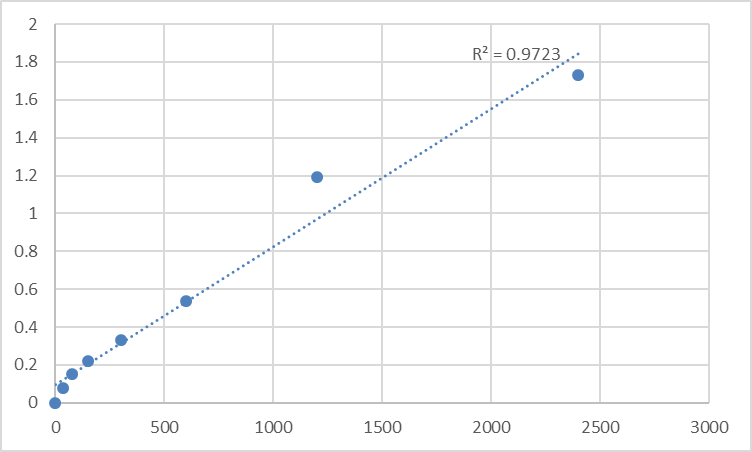
The kit features a validated standard curve with R²=0.9723 — designed specifically for the low endogenous abundance of soluble MINA fragments in biological fluids[reference:13].
Epigenetics and Chromatin Biology
MINA is a histone H3K9me3 demethylase that directly regulates chromatin accessibility at growth-promoting genes[reference:14]. Epigenetics researchers use this kit to:
- Quantify MINA in chromatin fractions and nuclear extracts
- Study the interplay between MINA-mediated demethylation and MYC transcriptional output
- Investigate epigenetic reprogramming in cancer and development
- Monitor MINA dynamics during differentiation and cellular stress
Lung Injury and Mineral Dust-Induced Stress
MINA also plays a role in mineral dust-induced cellular stress and lung injury[reference:15]. Pulmonary researchers use this kit to:
- Quantify MINA in lung tissue lysates and bronchoalveolar lavage fluid (BALF)
- Study environmental toxin-induced epigenetic changes
- Investigate MINA as a biomarker for lung injury and fibrosis
Why Choose This Kit for Your MINA Research?
| Feature | Benefit |
|---|---|
| Two-site sandwich ELISA | Quantitative, specific detection[reference:16] |
| Monoclonal antibody pair | Binds unique, non-conserved epitopes of human MINA[reference:17] |
| No cross-reactivity | No interference from other c-MYC downstream targets or nuclear proteins[reference:18] |
| Streptavidin-HRP amplification | Critical for low-abundance nuclear protein detection[reference:19] |
| Validated standard curve | R²=0.9723 — publishable data quality[reference:20] |
| Multiple sample types | Cell culture supernatants, plasma, serum, other biological fluids |
Kit Components at a Glance
- Human MINA microplate (pre-coated with capture antibody)
- Human MINA standard
- Human MINA detection antibody (biotin-conjugated)
- Streptavidin-HRP
- Standard diluent, assay buffer, HRP substrate, stop solution, wash buffer, plate covers
🔬 Which research field does your work belong to?
MYC-Driven Cancer Research | Epigenetics & Chromatin Biology | Lung Injury Research | Cell Cycle & Proliferation | Other
Share your application with us — we'd love to hear how you're using this kit in your studies!
📌 Reference Link: Human MYC-Induced Nuclear Antigen (MINA) ELISA Kit — KTE61613