ERK1/2 (phospho Thr202/Y204) Polyclonal Antibody (ABP50531): Dual-Phospho-Site Precision for MAPK Pathway Research
The ERK Activation Problem: One Antibody, Two Phospho-Sites
ERK1/2 sits at the terminal node of the RAS-RAF-MEK-ERK cascade—the signaling axis that drives proliferation, differentiation, and cell cycle progression in response to extracellular cues[reference:0]. Its activation requires dual phosphorylation at Thr202 and Tyr204 within the activation loop, a molecular switch that converts ERK from a dormant kinase into a nuclear-translocating transcriptional regulator.
The detection challenge is structural: antibodies raised against a single phospho-site (T202 or Y204 alone) can capture partially phosphorylated ERK species that lack full catalytic activity, generating a signal that overestimates pathway activation. Conversely, pan-ERK antibodies detect total ERK regardless of phosphorylation status, providing no information about the activation state.
Dual-Phospho-Site Immunogen Design
Abbkine's ERK1/2 (phospho Thr202/Y204) Polyclonal Antibody (ABP50531) is raised against a synthesized peptide derived from human ERK1/2 around the phosphorylation site of both T202 and Y204[reference:1]. The product page explicitly states that this antibody "detects endogenous levels of ERK 1/2 protein only when phosphorylated at T202 or Y204"[reference:2]—meaning the immunogen spans the dually phosphorylated activation loop epitope, enriching for clones that recognize the activated kinase conformation.
Broad Species Reactivity: Including Fish
| Parameter | ABP50531 |
|---|---|
| Reactivity | Human, Mouse, Rat, Fish |
| Host | Rabbit |
| Clonality | Polyclonal |
| Concentration | 1 mg/mL |
| Formulation | PBS, 50% glycerol, 0.5% BSA, 0.02% sodium azide |
The inclusion of fish reactivity is a differentiation point few commercial phospho-ERK antibodies offer. For researchers working in zebrafish developmental models or teleost stress biology, ABP50531 eliminates the need for a separate reagent.
Validated Across Four Applications
| Application | Suggested Dilution | Notes |
|---|---|---|
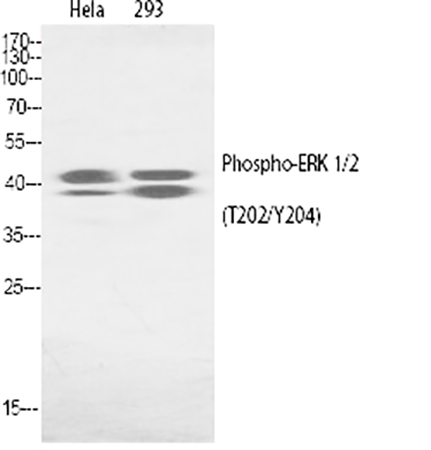
| Western Blot | 1:500–1:2000 | Detects phospho-ERK1/2 at expected molecular weights |
| Immunofluorescence | 1:50–1:200 | Compatible with standard IF protocols |
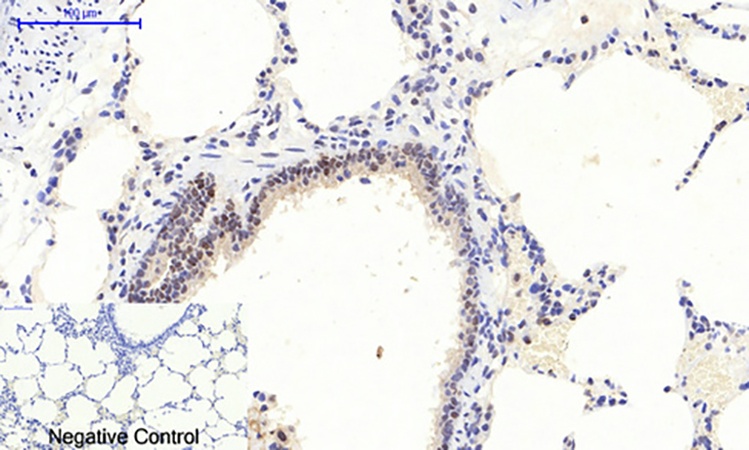
| IHC | 1:100–1:300 | Validated in tissue sections |
| ELISA | 1:20,000 | High-titer performance |
Head-to-Head: Phospho-ERK Antibody Comparison
| Feature | ABP50531 | Single-Site Phospho-ERK Antibodies | Pan-ERK Antibodies |
|---|---|---|---|
| Phospho-Site Coverage | T202 + Y204 (dual) | T202 or Y204 alone | None (total ERK) |
| Activation State Discrimination | Yes | Partial | No |
| Species Reactivity | Human, Mouse, Rat, Fish | Variable | Often limited |
| Applications | IF, WB, IHC, ELISA | Variable | Variable |
| Affinity Purification | Epitope-specific | Variable | Variable |
The Bottom Line
For researchers quantifying MAPK pathway output—whether in cancer cell lines, neuronal activity paradigms, or developmental models—ABP50531 delivers dual-phospho-site specificity that distinguishes fully activated ERK1/2 from its partially phosphorylated and unphosphorylated pools.
📎 Reference: ERK1/2 (phospho Thr202/Y204) Polyclonal Antibody (ABP50531)