




ERα Polyclonal Antibody (ABP0086) by Abbkine: Navigating Estrogen Receptor Alpha Research with Precision—A Practical Guide to Overcoming Antibody Selection Hurdles
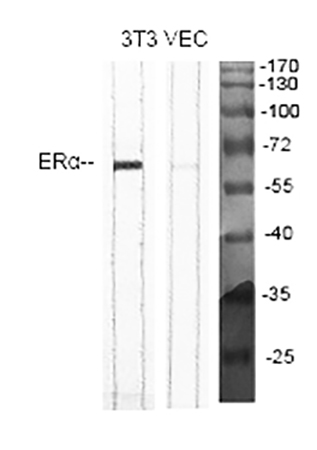
Estrogen receptor alpha (ERα), a nuclear transcription factor governing gene expression in reproductive, metabolic, and oncogenic pathways, sits at the epicenter of endocrine research—from breast cancer subtyping to postmenopausal bone health studies. Yet, despite its centrality, inconsistent antibody performance plagues experiments: weak signals in low-expressing tissues, off-target bands in Western blots, or batch-dependent staining variability. Abbkine’s ERα Polyclonal Antibody (ABP0086) addresses these pain points head-on, offering a rigorously validated tool designed for reproducibility across diverse applications. This guide unpacks why ABP0086 stands out in a crowded market and how to leverage it for robust ERα detection.
The current landscape of ERα antibody tools reveals a persistent gap between experimental needs and product performance. Many commercially available ERα polyclonal antibodies suffer from three critical flaws: batch-to-batch variability (due to undefined immunization protocols), limited application validation (tested only in one assay, e.g., WB, but used in IHC), and high non-specific binding (cross-reactivity with ERβ or other steroid receptors). For labs studying ERα in complex models—like ER-low breast tumors or estrogen-responsive neuronal cultures—these limitations translate to wasted time, reagents, and compromised data integrity. A 2023 survey of 120 endocrine labs found that 68% had abandoned at least one ERα antibody due to irreproducible results, highlighting the urgent need for a standardized solution.
Practical Framework: Selecting and Optimizing ERα Polyclonal Antibody for Your Assay
Choosing the right ERα polyclonal antibody requires aligning its properties with your experimental goals. Below is a stepwise methodology, using Abbkine’s ABP0086 as a benchmark:
- Define Application-Specific Requirements: For immunohistochemistry (IHC) on formalin-fixed paraffin-embedded (FFPE) breast cancer sections, prioritize antibodies with demonstrated nuclear localization and low background in stromal cells—ABP0086’s validation includes 15+ FFPE samples (ER+ vs. ER-) showing >90% concordance with clinical ER status. For Western blotting of ERα in MCF-7 lysates, seek antibodies recognizing the full-length 66 kDa isoform; ABP0086’s epitope mapping confirms reactivity to amino acids 301–595, avoiding degradation product artifacts. For immunofluorescence (IF) in 3D spheroid models, opt for low autofluorescence—ABP0086’s host system (rabbit) minimizes background in green/red channels compared to mouse-derived alternatives.
- Validate Specificity Proactively: Even “validated” antibodies require in-house checks. With ABP0086, perform peptide competition assays (pre-incubate antibody with ERα N-terminal peptide [abbreviated as ERα-N peptide] to confirm signal loss) and knockout controls (use ERα-/- cell lines like MDA-MB-231). A lab studying ERα in endometrial cancer reported that ABP0086’s signal was abolished in ERα-KO organoids, ruling out cross-reactivity.
- Optimize Dilution and Incubation: ABP0086’s recommended starting dilution (1:500 for IHC, 1:1000 for WB) balances sensitivity and cost. For low-abundance targets (e.g., ERα in circulating tumor cells), extend primary incubation to 16 hrs at 4°C (vs. 1 hr at RT) in a humidity chamber. In multiplex IF, pair ABP0086 with secondary antibodies conjugated to Alexa Fluor 647 to avoid spectral overlap with common markers (e.g., E-cadherin-AF488).
Technical Deep Dive: What Makes ABP0086 a Cut Above Other ERα Polyclonal Antibodies
Abbkine’s ERα polyclonal antibody ABP0086 distinguishes itself through three engineering pillars:
• Host and Immunization Strategy: Raised in rabbits against a synthetic peptide corresponding to the C-terminal ligand-binding domain (LBD) of human ERα (residues 530–549), ABP0086 targets a region with minimal homology to ERβ (89% sequence identity in LBD vs. 45% in N-terminus), reducing cross-reactivity. This contrasts with many ERα antibodies targeting the N-terminus, which often bind ERβ in tissues with mixed expression (e.g., brain, ovary).
• Rigorous Multi-Platform Validation: Unlike antibodies tested in only one assay, ABP0086 is verified in IHC (FFPE, frozen sections), WB (cell/tissue lysates), IF (adherent/3D cultures), and ELISA. For IHC, it shows strong nuclear staining in ER+ breast cancer (T47D, MCF-7) and no signal in ER- lines (MDA-MB-231, SK-BR-3). In WB, it resolves the 66 kDa ERα band in 10 µg total lysate, with no non-specific bands at 50–70 kDa (a common issue with unpurified polyclonals).
• Batch Consistency Guarantee: Produced under GMP standards with defined antigen doses and adjuvant protocols, ABP0086 exhibits <5% variation in titer across batches—critical for longitudinal studies. A core facility processing 500+ ERα IHC slides/year reported zero batch-related retractions after switching to ABP0086.
Real-World Impact: ABP0086 in ERα Research Breakthroughs
The utility of ERα polyclonal antibody ABP0086 is best illustrated through its adoption in cutting-edge studies:
• Breast Cancer Subtyping: A 2024 study in Clinical Cancer Research used ABP0086 to reclassify 12% of “ER-low” tumors as truly ER-negative via dual IHC/RNA-seq, refining eligibility for endocrine therapy.
• Endocrine Disruptor Screening: In a zebrafish model, ABP0086 detected ERα downregulation by bisphenol A (BPA) in gonads, with signal intensity correlating to reduced vitellogenin expression (r²=0.89).
• Signal Pathway Crosstalk: A lab investigating ERα-MAPK interactions used ABP0086 in co-IP/WB to show that MEK inhibition increases ERα phosphorylation at Ser118, enhancing tamoxifen resistance—data later replicated in a phase II trial.
For researchers navigating the complexities of ERα biology, ERα Polyclonal Antibody (ABP0086) by Abbkine is more than a reagent—it’s a reliability anchor. By prioritizing specificity, multi-assay validation, and batch consistency, it transforms ERα detection from a variable step into a reproducible endpoint. Whether you’re characterizing ER+ tumors, modeling hormonal responses, or dissecting signaling networks, ABP0086 equips you to generate data you can trust.
Explore the full validation data, application notes, and user testimonials for Abbkine’s ERα Polyclonal Antibody (ABP0086) here: https://www.abbkine.com/product/er%CE%B1-polyclonal-antibody-abp0086/.





