




ABP50010 by Abbkine: The Ultimate Cleaved-Caspase-9 p35 (D315) Antibody for Accurate Apoptosis & Cancer Research
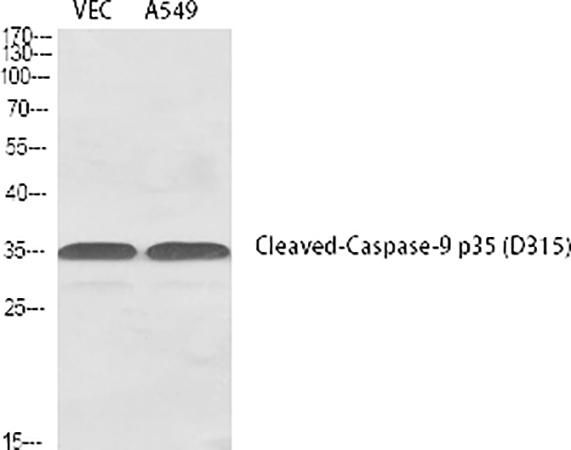
To tackle the trickiest part of apoptosis research—detecting the active, cleaved form of Caspase-9—researchers often hunt for an antibody that’s specific, reliable, and versatile. That’s where Abbkine’s Cleaved-Caspase-9 p35 (D315) Polyclonal Antibody (catalog number: ABP50010) comes in. Priced at $109 for 30μl, this reagent isn’t just another antibody on the shelf; it’s a tailored tool for studying the earliest steps of the caspase activation cascade, and it’s built to fit the messy, real-world needs of lab work. Let’s break down why it stands out, starting with what makes its core design a win for researchers.
First off, let’s talk about specificity—because if your antibody doesn’t hit the right target, all that pipetting goes to waste. This antibody’s immunogen is a synthesized peptide from the internal region of human Caspase-9 p35, spanning amino acids 240-320. Why does that matter? Because it’s engineered to home in on the fragment of Caspase-9 that’s activated by cleavage near D315—a key step in turning inactive pro-Caspase-9 into the enzyme that kicks off apoptotic cell death. And since it’s a rabbit-derived polyclonal antibody, it brings the bonus of recognizing multiple epitopes, which often translates to stronger, more consistent signals compared to some monoclonals, especially when targeting post-translationally modified proteins like cleaved Caspase-9. Oh, and it works across human, rat, and mouse samples—no need to swap antibodies if you’re testing multiple species. That’s a huge time-saver for labs doing cross-species studies.
Applications-wise, this antibody is pretty flexible—WB, IHC, IF, ELISA, you name it. But here’s the thing: optimal dilutions aren’t one-size-fits-all. Abbkine suggests starting with 1:500-2000 for WB, 1:50-300 for IHC/IF, but I’ve heard from colleagues that tweaking based on your sample type (like whole-cell lysates vs. tissue sections) makes a big difference. Another pro tip from the product specs: after thawing, centrifuge the vial before opening. It sounds small, but those tiny protein aggregates can mess up your blots or staining—trust me, I’ve learned that the hard way. And aliquotting? Non-negotiable. Repeated freezing and thawing kills antibody activity, so split it into small portions if you’re not using it all at once. That way, it stays stable for a full year at -20°C, which is way longer than some cheaper alternatives that start degrading after 6 months.
Storage and shipping are another area where Abbkine doesn’t cut corners. The antibody comes in a liquid formulation with PBS, 50% glycerol, 0.5% BSA, and 0.02% sodium azide—standard for keeping proteins stable, but the real win is the shipping method: gel packs with blue ice. I’ve had antibodies arrive melted before, and it’s a nightmare. This setup ensures it stays cold enough during transit, so you don’t have to worry about losing activity before you even unbox it. Just a heads-up, though: like most research-grade antibodies, it’s for lab use only—no human or clinical diagnosis. That’s a given, but worth repeating to stay compliant.
Now, let’s dive into the science behind why this antibody matters for your work. CASP9 (Gene ID: 842) is a big deal in apoptosis—it’s the “initiator caspase” that gets activated by the apoptosome (cytochrome c + APAF-1), and once it’s cleaved into the p35 active fragment, it triggers the downstream caspase cascade that leads to cell death. Mutations or dysregulation of CASP9 are linked to cancer (since it acts as a tumor suppressor) and neurodegenerative diseases, so detecting its active form is crucial for understanding these pathways. This antibody specifically picks up endogenous levels of the cleaved p35 fragment—no cross-reactivity with the inactive pro-form, which means your data is more accurate. The Western blot images on Abbkine’s site (like Fig.1 showing VEC and A549 cells, or Fig.4 with Etoposide-treated 293 cells) back this up—clear bands at ~37 kDa, no messy nonspecific staining when blocked with the immunizing peptide.
From an industry perspective, polyclonal antibodies like this one fill a niche that monoclonals can’t. Monoclonals are great for consistency, but they can struggle with modified targets (like cleaved proteins) because they only recognize one epitope. Polyclonals, by contrast, bind multiple epitopes on the cleaved fragment, making them more robust for detecting subtle changes in expression—perfect for studies where you’re looking at how drugs or gene edits affect Caspase-9 activation. Compared to similar products (like the 25μl rabbit anti-CASP9 antibody from Shanghai Bio-Net), Abbkine’s 30μl vial gives you more volume for the price, which is a plus for labs on a budget. And with its SwissProt accession P55211, you can easily cross-reference with databases to confirm it matches your target—no guesswork.
At the end of the day, the best antibodies are the ones that fit seamlessly into your workflow. Abbkine’s ABP50010 checks all the boxes: specific, versatile, stable, and cost-effective. Whether you’re running WB to quantify cleaved Caspase-9 in drug-treated cells, doing IHC on tumor tissue to look at in vivo apoptosis, or IF to visualize its localization, this antibody takes the guesswork out of detecting active Caspase-9. It’s not just a reagent—it’s a way to get reliable data faster, so you can spend less time troubleshooting and more time focusing on the science that matters. If you’re working on apoptosis, cancer, or any field where CASP9 plays a role, this is one antibody worth adding to your lab’s toolkit—check it out directly via its official product page: https://www.abbkine.com/product/cleaved-caspase-9-p35-d315-polyclonal-antibody-abp50010/





