




The Unseen Architect: Decoding Disease with the EliKine™ Human MMP-9 ELISA Kit
Let's talk about a molecule that’s a true shape-shifter in our bodies. Matrix Metalloproteinase-9 (MMP-9), often called the 92 kDa gelatinase, is like a master sculptor and demolition crew rolled into one. It's essential for carving out paths during embryonic development, healing wounds, and even helping neurons form connections for memory. But when its activity goes unchecked, this powerful enzyme becomes a key player in tearing things down, driving the destructive pathology in conditions like arthritis, heart failure, and the relentless spread of cancer. For researchers, accurately measuring MMP-9 isn't just a lab task; it's like taking the vital signs of disease progression and tissue remodeling. That's where the precision of a tool like the EliKine™ Human MMP-9 ELISA Kit (KTE6027) from Abbkine becomes non-negotiable.
So, why is nailing down MMP-9 quantification so notoriously tricky? The challenge lies in its dual nature and dynamic range. MMP-9 exists in different forms—as a latent pro-enzyme, an active enzyme, and often bound to inhibitors. A robust sandwich ELISA immunoassay needs antibodies that can reliably capture and detect the target form without cross-reacting with its many family members. Furthermore, its concentration can swing dramatically, from very low levels in healthy serum to massively elevated amounts in inflammatory or tumor microenvironments. You need an assay with a broad dynamic range and excellent sensitivity to capture this full spectrum. The EliKine™ Human MMP-9 ELISA Kit is engineered for this complexity. With a reported sensitivity of 16 pg/mL and high specificity, it’s built to deliver a clear, unambiguous signal even in challenging sample matrices like serum, plasma, or cell culture supernatant.
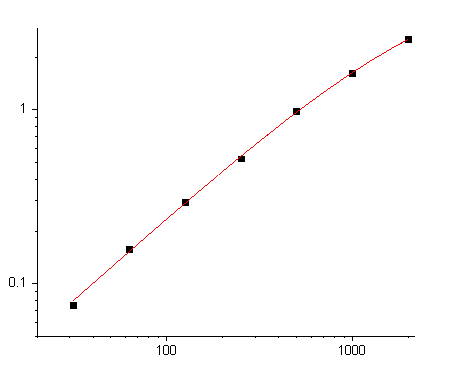
Alright, you've got the kit on your bench. How do you move from a standard protocol to generating publication-grade data? First, respect your sample. MMP-9 can be a fragile analyte. If you're working with tissue lysates, remember that protease inhibitors aren't just a suggestion—they're essential to prevent your target protein from being degraded before you even start the assay. For cell culture studies, the timing of supernatant collection is critical; you're capturing a moment in a dynamic secretory process. And let's be honest, the most common pitfall is assuming your sample will fit neatly on the standard curve. Always, always run a pilot dilution series. A sample that's too concentrated can lead to a false low reading (the prozone effect), completely skewing your conclusions. The kit provides a standardized protocol, but your critical insight in sample prep is what ensures the numbers you get are the numbers that reflect biological reality.
Looking at the bigger picture, the data from this assay is finding itself at the heart of some of the most exciting translational research. It's no longer just about reporting a concentration. Scientists are using precise MMP-9 biomarker detection to stratify patient risks. For instance, in diabetic foot ulcers—a devastating complication leading to countless amputations—research has shown that higher levels of active MMP-9 correlate with more severe and infected wounds. This isn't just an observation; it's a potential therapeutic roadmap. Similarly, in cardiovascular research, MMP-9 has a shockingly complex role in heart attack recovery, where it both hampers and helps the healing process at different stages. Distinguishing these context-dependent roles starts with reliable measurement. The cited use of the EliKine™ kit in studying the link between inflammation, genetics, and heart disease risk is a prime example of it serving as a foundational tool in hypothesis-driven research.
Of course, the landscape is crowded. A quick search shows dozens of suppliers for human MMP-9 ELISA kits, from global giants to niche biotech firms. In this competitive field, a product distinguishes itself through validated performance and consistency. What a focused tool like the EliKine™ kit offers is a streamlined, optimized system. Everything from the pre-coated plate to the specific Streptavidin-HRP is matched for performance. For a lab, this translates to fewer optimization headaches, lower risk of inter-batch variability, and ultimately, more time spent interpreting data than troubleshooting assays. In a market driven by the need for reliable data in drug development and basic research, that operational reliability is a currency of its own.
Ultimately, working with a molecule like MMP-9 is a lesson in biological nuance. It reminds us that few things in physiology are purely "good" or "bad." The EliKine™ Human MMP-9 ELISA Kit provides the quantitative clarity needed to navigate this nuance. By delivering precise, sensitive, and specific measurements, it empowers researchers to move beyond simply detecting MMP-9 to truly understanding its role—whether that's unraveling a mechanism of tumor metastasis, identifying a patient subgroup for targeted therapy, or monitoring the response to a new anti-inflammatory treatment. In the meticulous world of biomarker research, having confidence in your primary data is the first, and most crucial, step toward discovery.
For detailed specifications, validation data, and ordering information, visit the official product page: EliKine™ Human MMP-9 ELISA Kit - KTE6027.





